Ode Koji L, Shi Shoi, Katori Machiko, Mitsui Kentaro, Takanashi Shin, Oguchi Ryo, Aoki Daisuke, Ueda Hiroki R
Department of Systems Pharmacology, Graduate School of Medicine, The University of Tokyo, Bunkyo-ku, Tokyo 113-0033, Japan.
Laboratory for Synthetic Biology, RIKEN Center for Biosystems Dynamics Research, Suita, Osaka 565-0871, Japan.
iScience. 2022 Jan 1;25(2):103727. doi: 10.1016/j.isci.2021.103727. eCollection 2022 Feb 18.
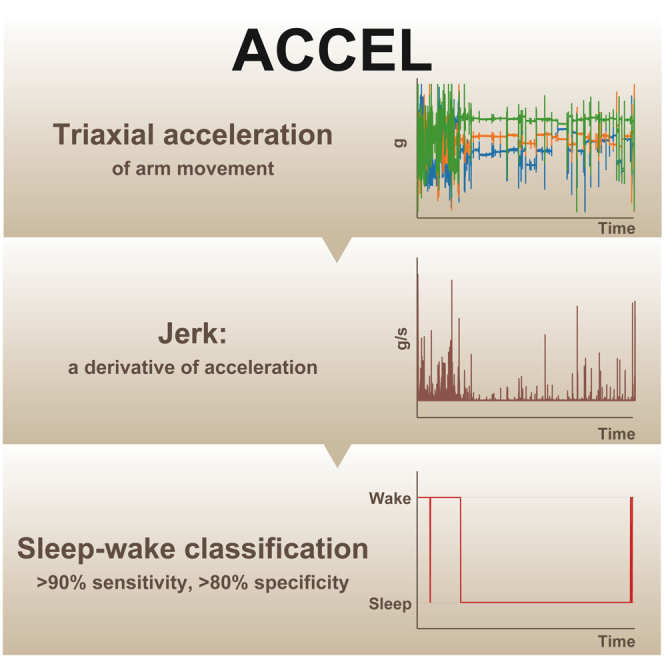
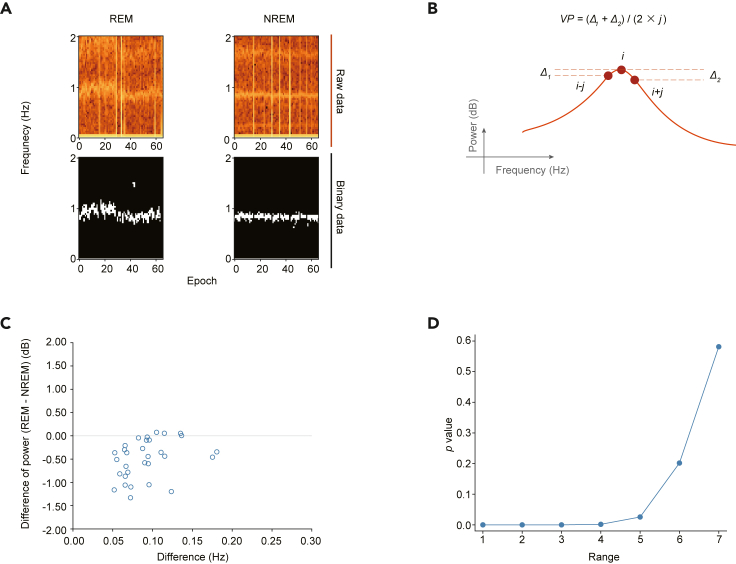
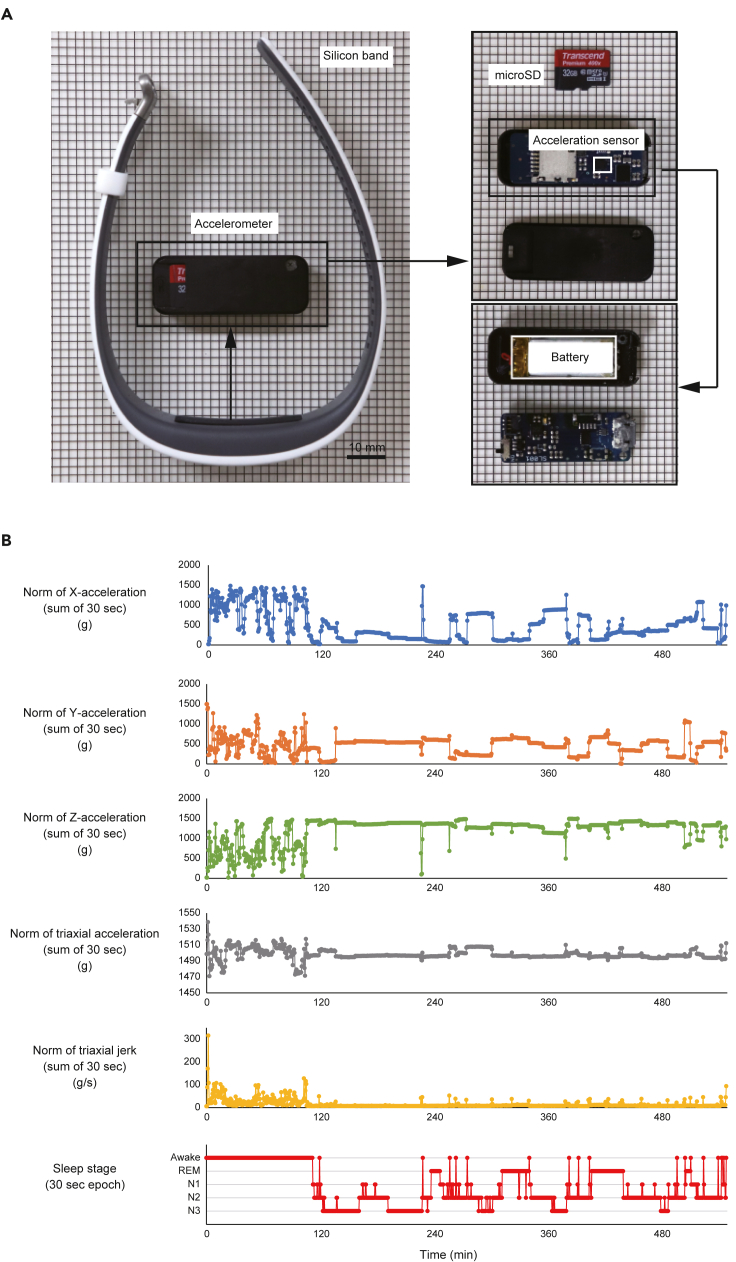
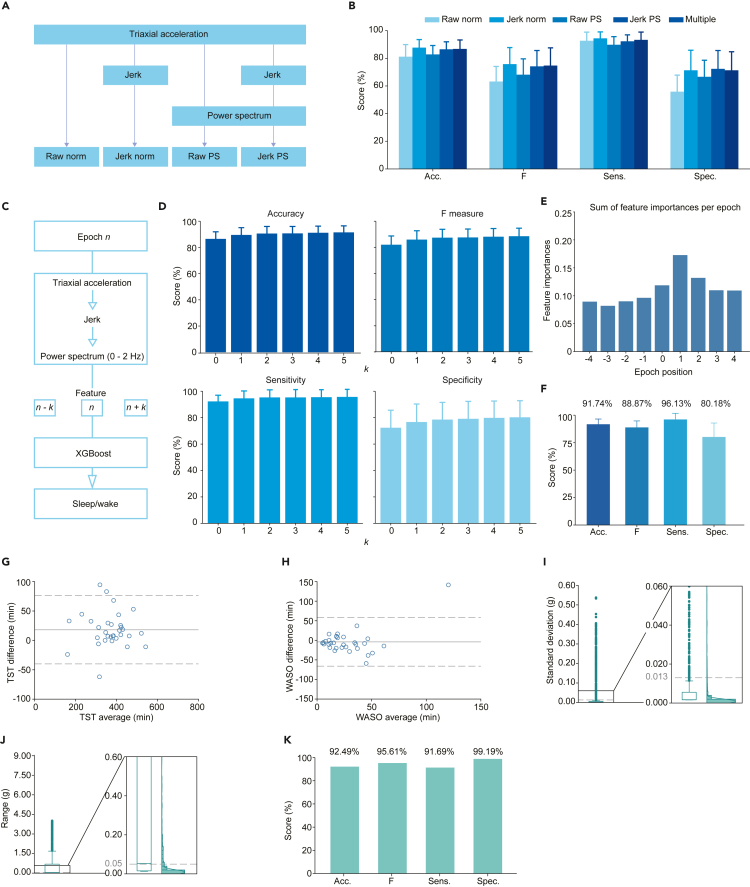
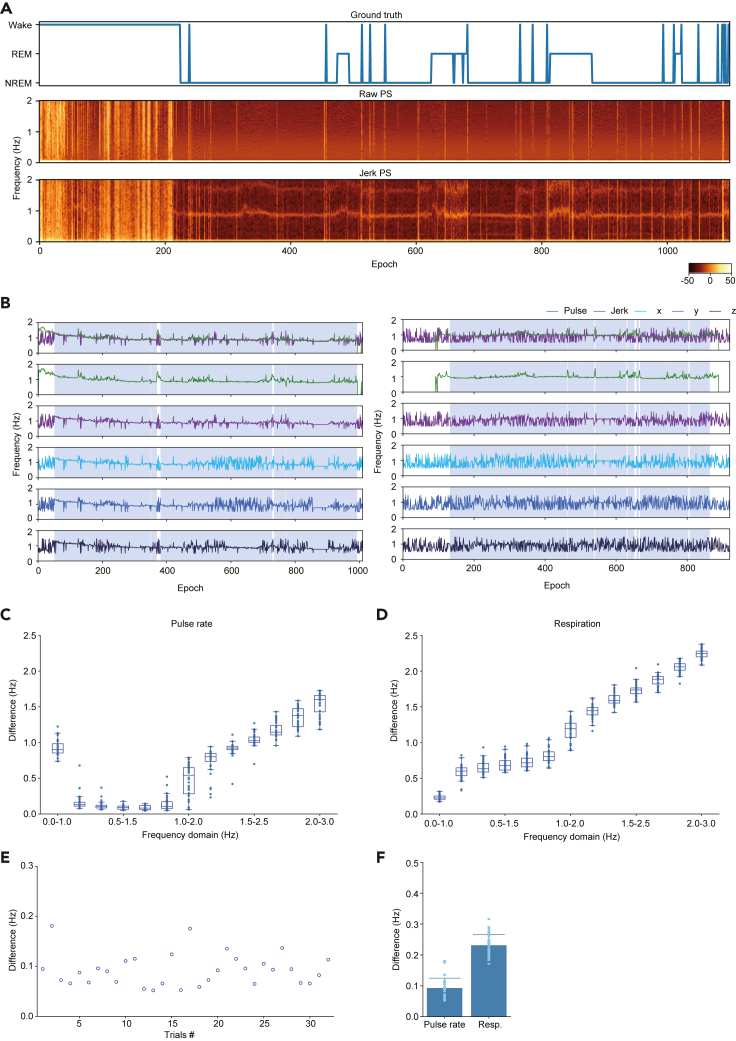
Arm acceleration data have been used to measure sleep-wake rhythmicity. Although several methods have been developed for the accurate classification of sleep-wake episodes, a method with both high sensitivity and specificity has not been fully established. In this study, we developed an algorithm, named ACceleration-based Classification and Estimation of Long-term sleep-wake cycles (ACCEL) that classifies sleep and wake episodes using only raw accelerometer data, without relying on device-specific functions. The algorithm uses a derivative of triaxial acceleration (jerk), which can reduce individual differences in the variability of acceleration data. Applying a machine learning algorithm to the jerk data achieved sleep-wake classification with a high sensitivity (>90%) and specificity (>80%). A jerk-based analysis also succeeded in recording periodic activities consistent with pulse waves. Therefore, the ACCEL algorithm will be a useful method for large-scale sleep measurement using simple accelerometers in real-world settings.
手臂加速度数据已被用于测量睡眠-觉醒节律性。尽管已经开发了几种用于准确分类睡眠-觉醒阶段的方法,但尚未完全建立一种兼具高灵敏度和特异性的方法。在本研究中,我们开发了一种算法,名为基于加速度的长期睡眠-觉醒周期分类与估计(ACCEL),该算法仅使用原始加速度计数据对睡眠和觉醒阶段进行分类,而不依赖于特定设备的功能。该算法使用三轴加速度的导数(加加速度),这可以减少加速度数据变异性中的个体差异。将机器学习算法应用于加加速度数据实现了具有高灵敏度(>90%)和特异性(>80%)的睡眠-觉醒分类。基于加加速度的分析还成功记录了与脉搏波一致的周期性活动。因此,ACCEL算法将成为在现实环境中使用简单加速度计进行大规模睡眠测量的一种有用方法。