Department of Molecular and Clinical Medicine, Institute of Medicine, Sahlgrenska Academy, University of Gothenburg, Gothenburg, Sweden.
Sahlgrenska University Hospital VG-Region, Gothenburg, Sweden.
Sci Rep. 2022 Feb 2;12(1):1810. doi: 10.1038/s41598-022-05951-z.
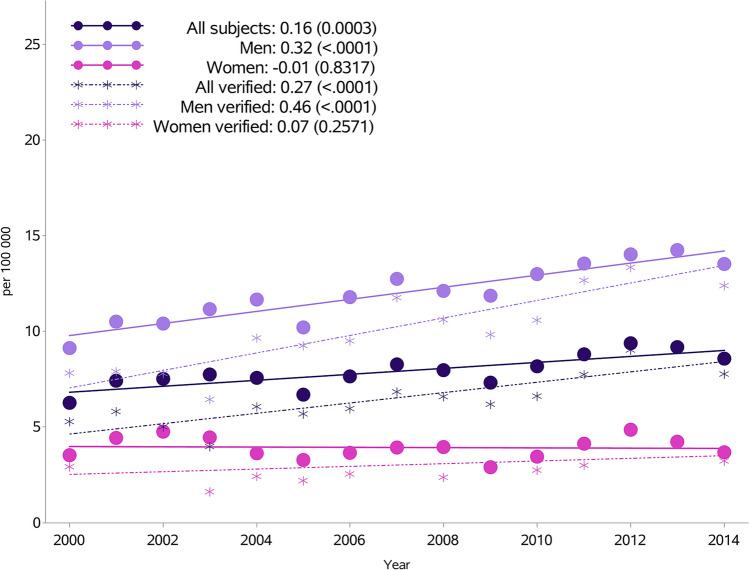
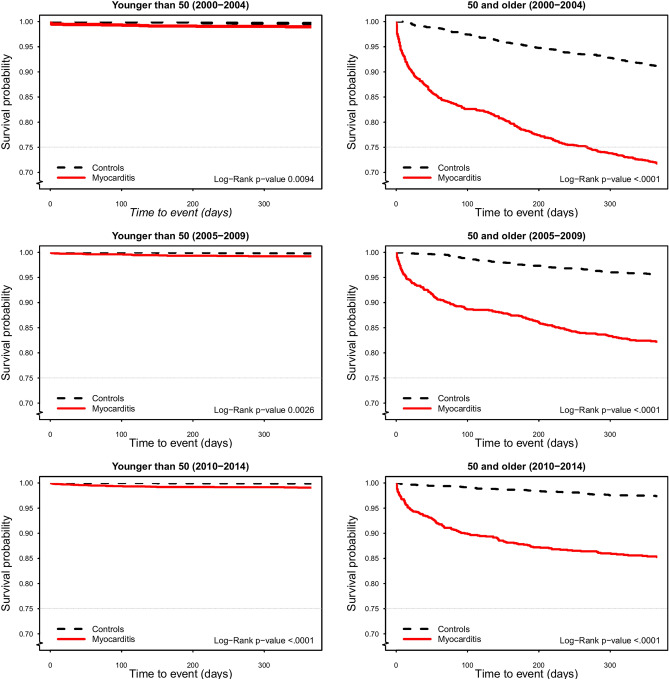
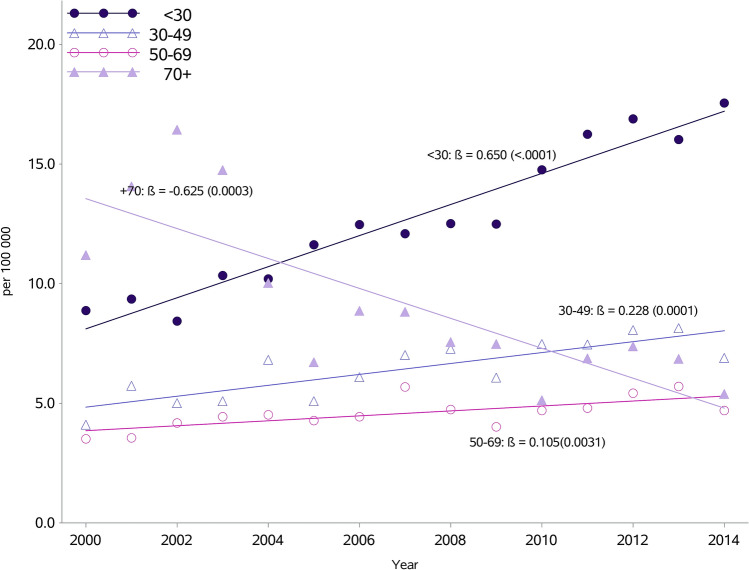
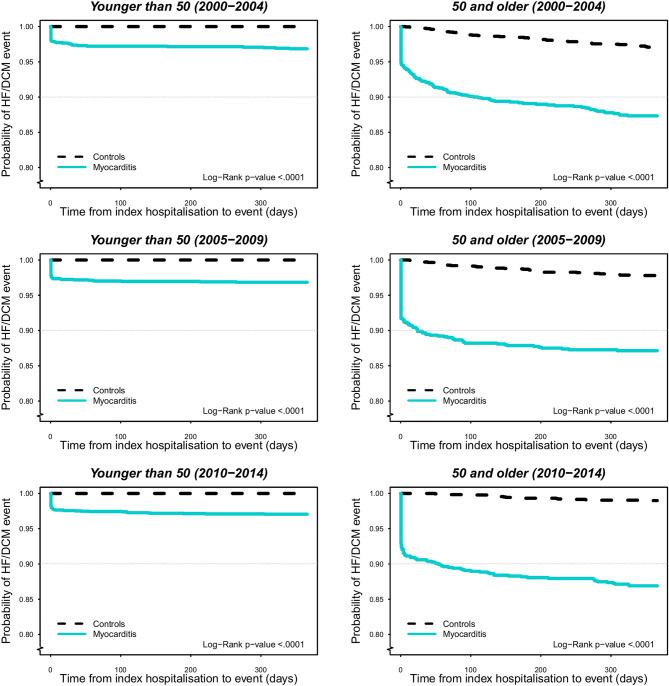
Investigate trends in myocarditis incidence and prognosis in Sweden during 2000-2014. Little data exist concerning population-trends in incidence of hospitalizations for myocarditis and subsequent prognosis. Linking Swedish National Patient and Cause of Death Registers, we identified individuals ≥ 16 years with first-time diagnosis of myocarditis during 2000-2014. Reference population, matched for age and birth year (n = 16,622) was selected from Swedish Total Population Register. Among the 8 679 cases (75% men, 64% < 50 years), incidence rate/100,000 inhabitants rose from 6.3 to 8.6 per 100,000, mostly in men and those < 50 years. Incident heart failure/dilated cardiomyopathy occurred in 6.2% within 1 year after index hospitalization and in 10.2% during 2000-2014, predominantly in those ≥ 50 years (12.1% within 1 year, 20.8% during 2000-2014). In all 8.1% died within 1 year, 0.9% (< 50 years) and 20.8% (≥ 50 years). Hazard ratios (adjusted for age, sex) for 1-year mortality comparing cases and controls were 4.00 (95% confidence interval 1.37-11.70), 4.48 (2.57-7.82), 4.57 (3.31-6.31) and 3.93 (3.39-4.57) for individuals aged < 30, 30 to < 50, 50 to < 70, and ≥ 70 years, respectively. The incidence of myocarditis during 2000-2014 increased, predominantly in men < 50 years. One-year mortality was low, but fourfold higher compared with reference population.
调查 2000-2014 年期间瑞典心肌炎发病率和预后的趋势。关于因心肌炎住院的发病率和随后的预后的人群趋势,数据很少。通过链接瑞典国家患者和死因登记册,我们确定了 2000-2014 年期间首次诊断为心肌炎的年龄≥16 岁的个体。参考人群通过瑞典总人口登记册按年龄和出生年份匹配(n=16622)。在 8679 例病例中(75%为男性,64%<50 岁),发病率/每 10 万人从 6.3 上升到 8.6,主要发生在男性和<50 岁的人群中。索引住院后 1 年内发生心力衰竭/扩张型心肌病的比例为 6.2%,2000-2014 年期间为 10.2%,主要发生在≥50 岁的人群中(1 年内为 12.1%,2000-2014 年期间为 20.8%)。所有患者在 1 年内的死亡率为 8.1%,0.9%(<50 岁)和 20.8%(≥50 岁)。病例与对照组比较,1 年死亡率的危险比(按年龄、性别调整)分别为 4.00(95%置信区间 1.37-11.70)、4.48(2.57-7.82)、4.57(3.31-6.31)和 3.93(3.39-4.57),年龄<30 岁、30-<50 岁、50-<70 岁和≥70 岁的患者分别为 4.00(95%置信区间 1.37-11.70)、4.48(2.57-7.82)、4.57(3.31-6.31)和 3.93(3.39-4.57)。2000-2014 年期间心肌炎的发病率增加,主要发生在<50 岁的男性中。1 年死亡率较低,但比参考人群高四倍。