Démosthènes Amélie, Sion Benoît, Giraudet Fabrice, Moisset Xavier, Daulhac Laurence, Eschalier Alain, Bégou Mélina
Université Clermont Auvergne, Inserm, Neuro-Dol, Faculté de Pharmacie, Faculté de Médecine, Institut Analgesia, BP38, Clermont-Ferrand, France.
Université Clermont Auvergne, CHU de Clermont-Ferrand, Inserm, Neuro-Dol, Faculté de Médecine, Institut Analgesia, BP38, Clermont-Ferrand, France.
Front Neurol. 2022 Jan 17;12:789432. doi: 10.3389/fneur.2021.789432. eCollection 2021.
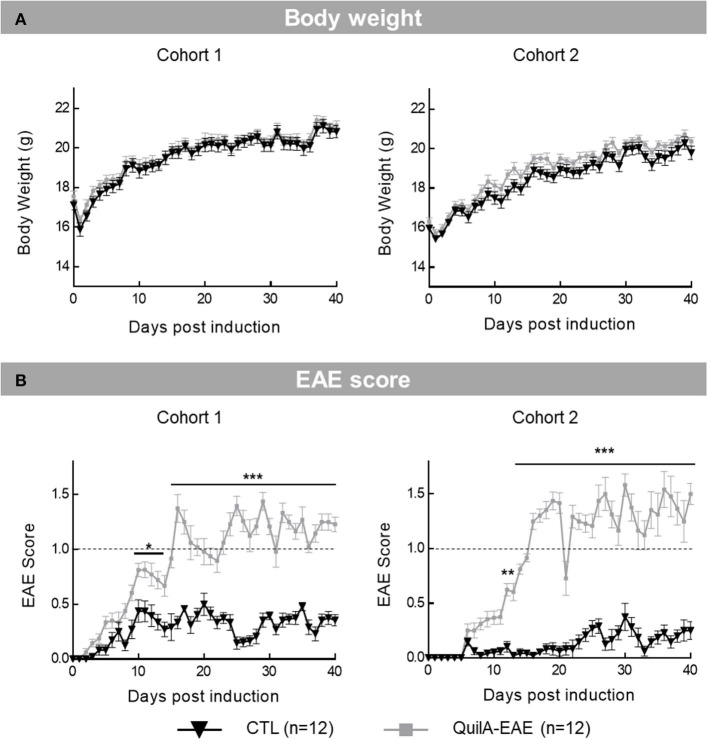
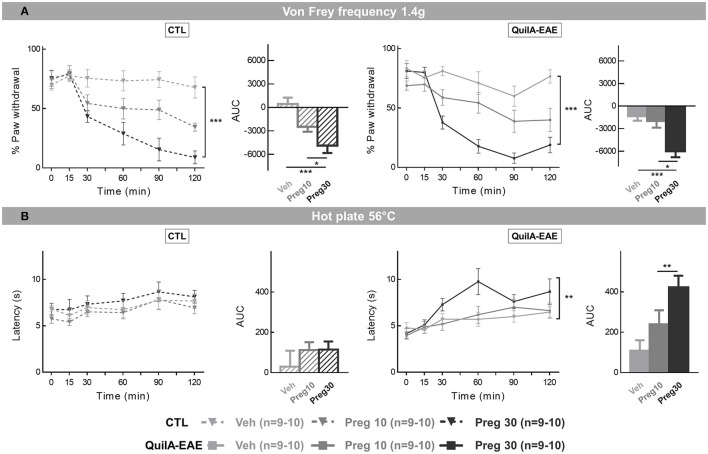
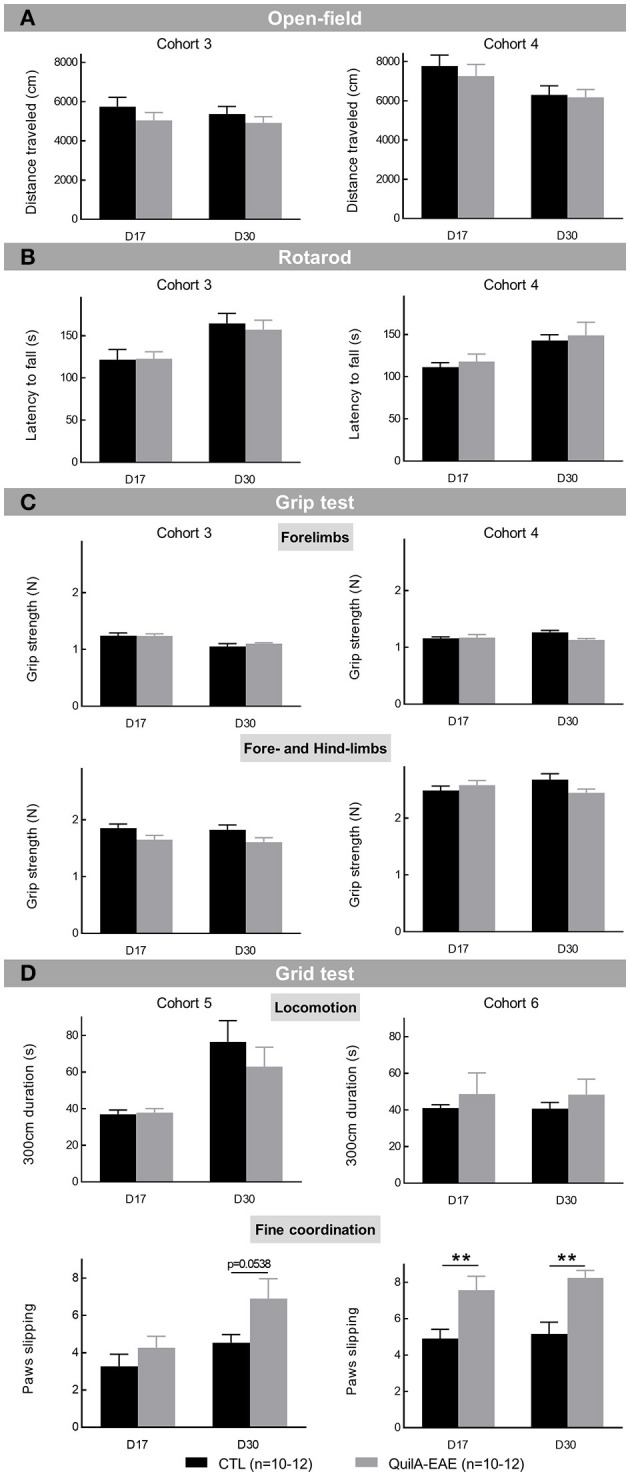
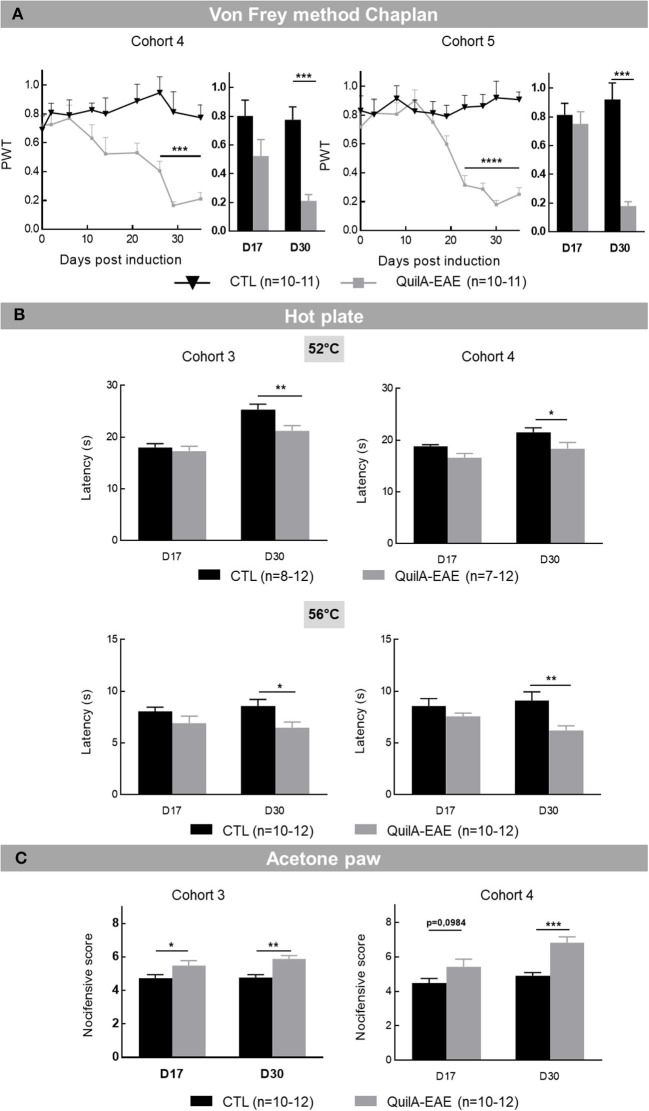
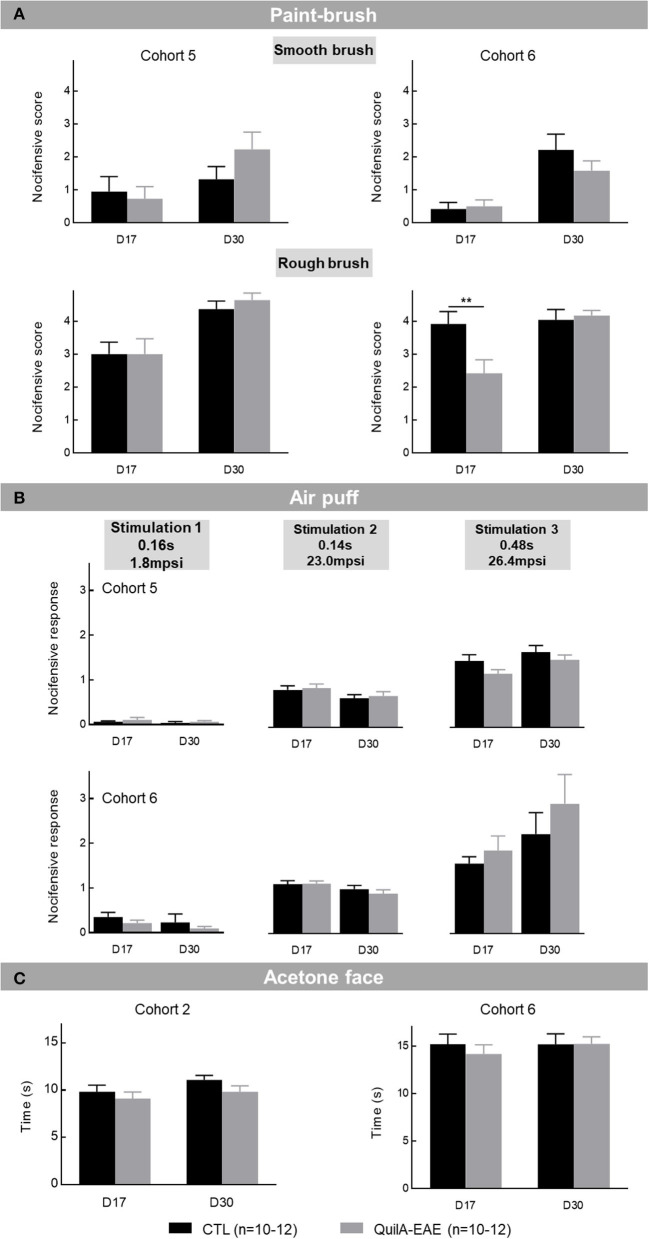
Among the many symptoms (motor, sensory, and cognitive) associated with multiple sclerosis (MS), chronic pain is a common disabling condition. In particular, neuropathic pain symptoms are very prevalent and debilitating, even in early stages of the disease. Unfortunately, chronic pain still lacks efficient therapeutic agents. Progress is needed (i) clinically by better characterizing pain symptoms in MS and understanding the underlying mechanisms, and (ii) preclinically by developing a more closely dedicated model to identify new therapeutic targets and evaluate new drugs. In this setting, new variants of experimental autoimmune encephalomyelitis (EAE) are currently developed in mice to exhibit less severe motor impairments, thereby avoiding confounding factors in assessing pain behaviors over the disease course. Among these, the optimized relapsing-remitting EAE (QuilA-EAE) mouse model, induced using myelin oligodendrocyte glycoprotein peptide fragment (35-55), pertussis toxin, and quillaja bark saponin, seems very promising. Our study sought (i) to better define sensitive dysfunctions and (ii) to extend behavioral characterization to interfering symptoms often associated with pain during MS, such as mood disturbances, fatigue, and cognitive impairment, in this optimized QuilA-EAE model. We made an in-depth characterization of this optimized QuilA-EAE model, describing for the first time somatic thermal hyperalgesia associated with mechanical and cold allodynia. Evaluation of orofacial pain sensitivity showed no mechanical or thermal allodynia. Detailed evaluation of motor behaviors highlighted slight defects in fine motor coordination in the QuilA-EAE mice but without impact on pain evaluation. Finally, no anxiety-related or cognitive impairment was observed during the peak of sensitive symptoms. Pharmacologically, as previously described, we found that pregabalin, a treatment commonly used in neuropathic pain patients, induced an analgesic effect on mechanical allodynia. In addition, we showed an anti-hyperalgesic thermal effect on this model. Our results demonstrate that this QuilA-EAE model is clearly of interest for studying pain symptom development and so could be used to identify and evaluate new therapeutic targets. The presence of interfering symptoms still needs to be further characterized.
在与多发性硬化症(MS)相关的众多症状(运动、感觉和认知方面)中,慢性疼痛是一种常见的致残状况。特别是,神经性疼痛症状非常普遍且使人衰弱,即便在疾病的早期阶段也是如此。不幸的是,慢性疼痛仍然缺乏有效的治疗药物。需要在以下两方面取得进展:(i)临床上,通过更好地描述MS中的疼痛症状并理解其潜在机制;(ii)临床前,通过开发一个更紧密专门的模型来识别新的治疗靶点并评估新药。在这种情况下,目前正在小鼠中开发实验性自身免疫性脑脊髓炎(EAE)的新变体,以表现出不太严重的运动障碍,从而避免在疾病过程中评估疼痛行为时出现混杂因素。其中,使用髓鞘少突胶质细胞糖蛋白肽片段(35 - 55)、百日咳毒素和皂树皂苷诱导的优化复发缓解型EAE(QuilA - EAE)小鼠模型似乎非常有前景。我们的研究旨在(i)更好地定义敏感功能障碍,以及(ii)在此优化的QuilA - EAE模型中,将行为特征扩展到MS期间常与疼痛相关的干扰症状,如情绪障碍、疲劳和认知障碍。我们对这个优化的QuilA - EAE模型进行了深入表征,首次描述了与机械性和冷觉异常性疼痛相关的躯体热痛觉过敏。对面部疼痛敏感性的评估显示没有机械性或热觉异常性疼痛。对运动行为的详细评估突出了QuilA - EAE小鼠在精细运动协调方面的轻微缺陷,但对疼痛评估没有影响。最后,在敏感症状高峰期未观察到焦虑相关或认知障碍。在药理学方面,如前所述,我们发现加巴喷丁(一种常用于神经性疼痛患者的治疗药物)对机械性异常性疼痛有镇痛作用。此外,我们在该模型上显示出抗痛觉过敏的热效应。我们的结果表明,这个QuilA - EAE模型对于研究疼痛症状的发展显然具有重要意义,因此可用于识别和评估新的治疗靶点。干扰症状的存在仍需要进一步表征。