Department of Neurology, Washington University School of Medicine, Campus Box 8111, 660 S. Euclid Avenue, St. Louis, MO 63110, USA.
Department of Neurology, Washington University School of Medicine, Campus Box 8111, 660 S. Euclid Avenue, St. Louis, MO 63110, USA; Neurology Unit, Department of Pathophysiology and Transplantation, University of Milan, Fondazione Cà Granda, IRCCS Ospedale Policlinico, Milan, Italy.
Cell Metab. 2018 Jun 5;27(6):1222-1235.e6. doi: 10.1016/j.cmet.2018.05.006.
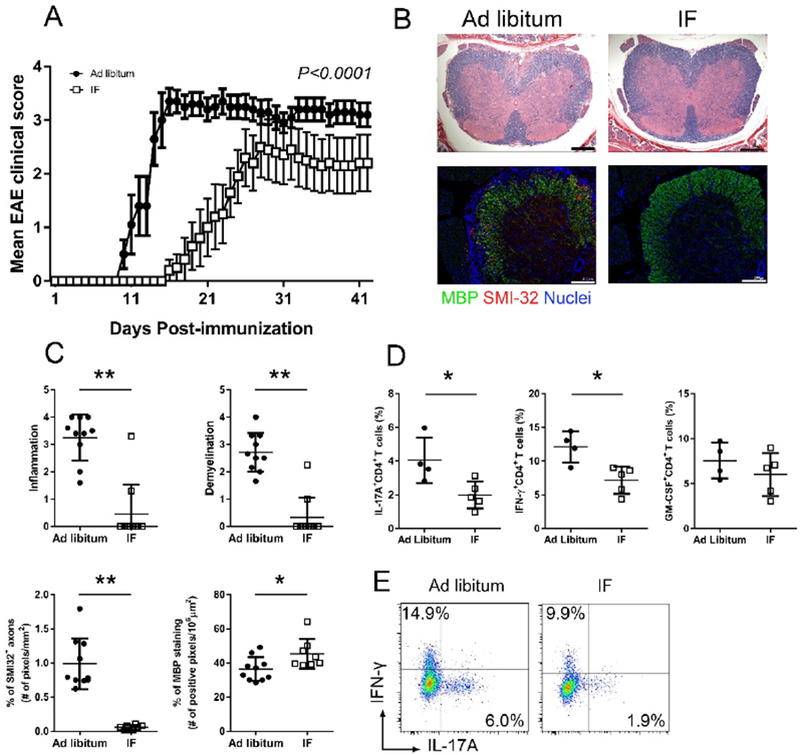
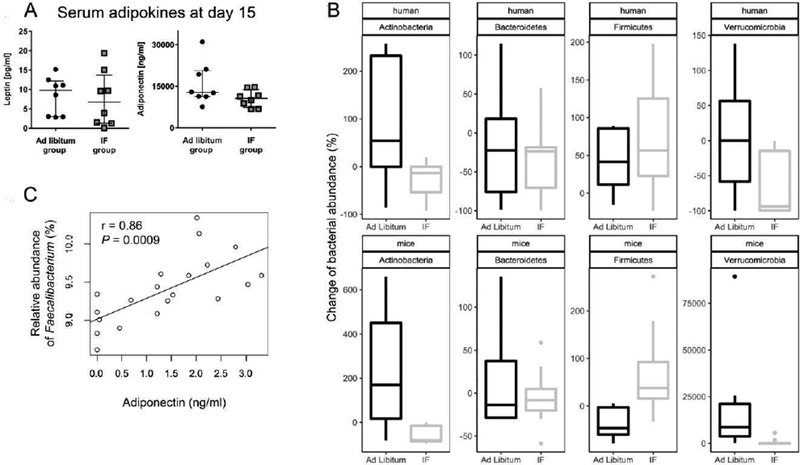
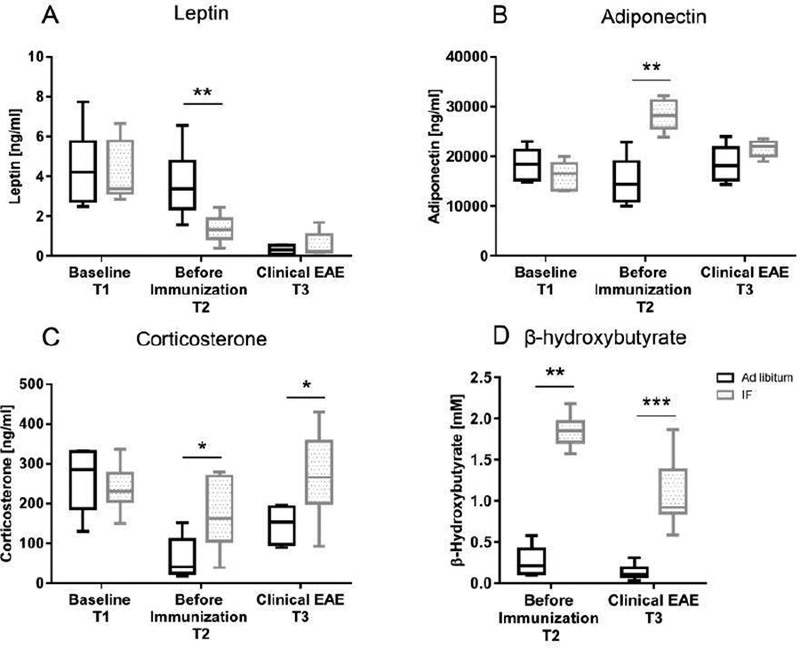
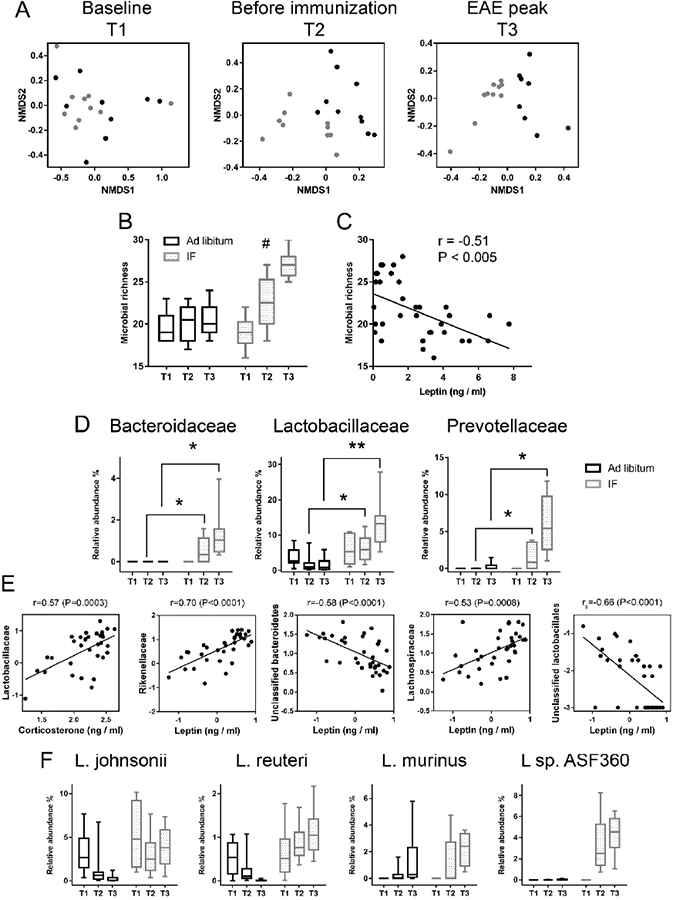
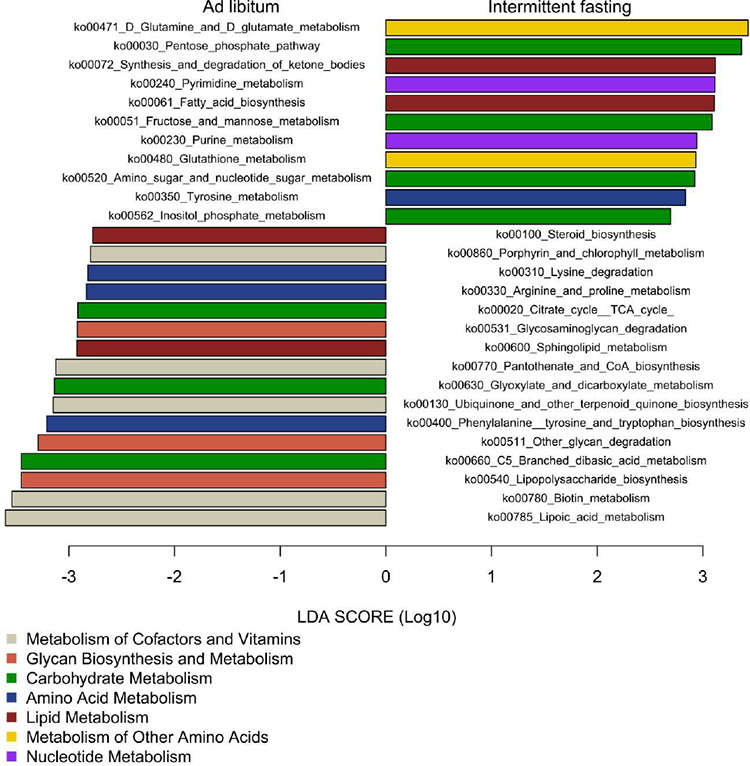
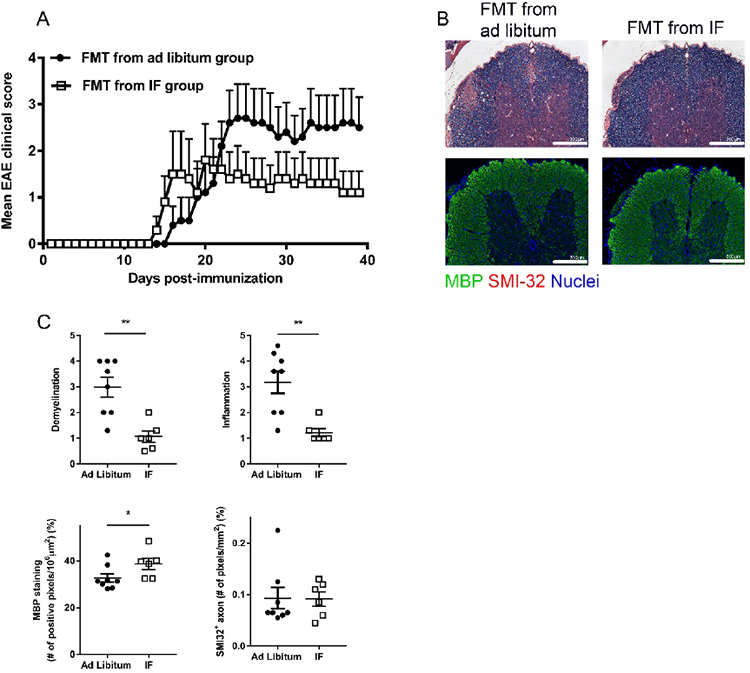
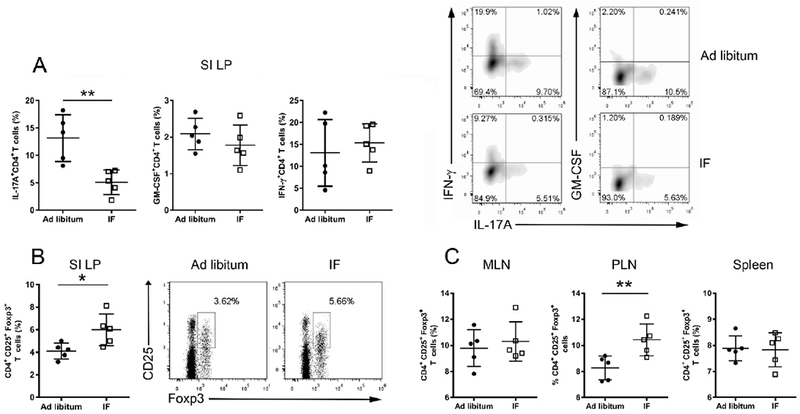
Multiple sclerosis (MS) is more common in western countries with diet being a potential contributing factor. Here we show that intermittent fasting (IF) ameliorated clinical course and pathology of the MS model, experimental autoimmune encephalomyelitis (EAE). IF led to increased gut bacteria richness, enrichment of the Lactobacillaceae, Bacteroidaceae, and Prevotellaceae families and enhanced antioxidative microbial metabolic pathways. IF altered T cells in the gut with a reduction of IL-17 producing T cells and an increase in regulatory T cells. Fecal microbiome transplantation from mice on IF ameliorated EAE in immunized recipient mice on a normal diet, suggesting that IF effects are at least partially mediated by the gut flora. In a pilot clinical trial in MS patients, intermittent energy restriction altered blood adipokines and the gut flora resembling protective changes observed in mice. In conclusion, IF has potent immunomodulatory effects that are at least partially mediated by the gut microbiome.
多发性硬化症(MS)在西方国家更为常见,饮食是一个潜在的致病因素。在这里,我们发现间歇性禁食(IF)改善了多发性硬化症模型,实验性自身免疫性脑脊髓炎(EAE)的临床病程和病理学。IF 导致肠道细菌丰富度增加,乳杆菌科、拟杆菌科和普雷沃氏菌科富集,并增强了抗氧化微生物代谢途径。IF 改变了肠道中的 T 细胞,减少了产生白介素 17 的 T 细胞,增加了调节性 T 细胞。来自 IF 组小鼠的粪便微生物群移植可改善正常饮食免疫小鼠的 EAE,这表明 IF 作用至少部分是通过肠道菌群介导的。在多发性硬化症患者的一项初步临床试验中,间歇性能量限制改变了血液中的脂肪因子和肠道菌群,类似于在小鼠中观察到的保护性变化。总之,IF 具有强大的免疫调节作用,至少部分是通过肠道微生物群介导的。