Istituto FIRC (Fondazione Italiana per la Ricerca sul Cancro) di Oncologia Molecolare (IFOM), the FIRC Institute of Molecular Oncology, 20139 Milan, Italy.
Dipartimento di Oncologia ed Emato-Oncologia, Università degli Studi di Milano, 20122 Milan, Italy.
Genes Dev. 2022 Feb 1;36(3-4):167-179. doi: 10.1101/gad.349207.121. Epub 2022 Feb 3.
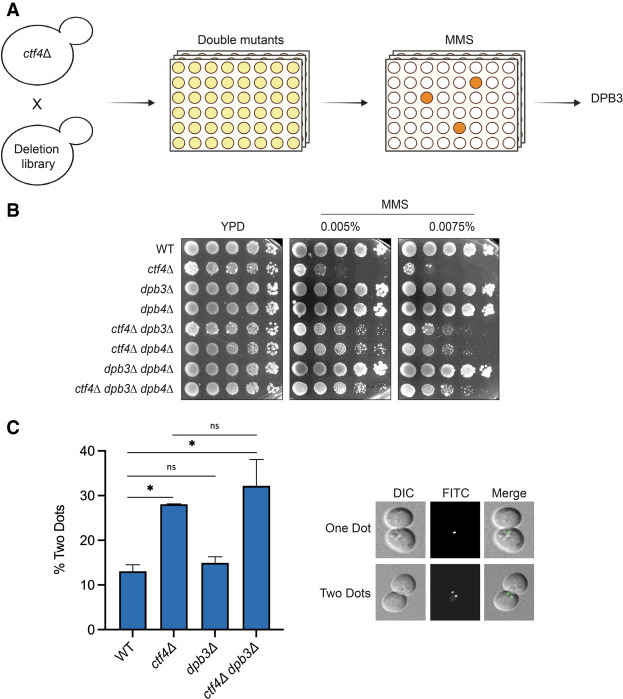
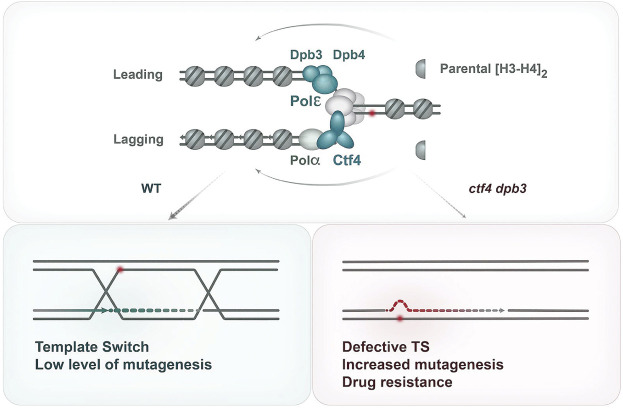
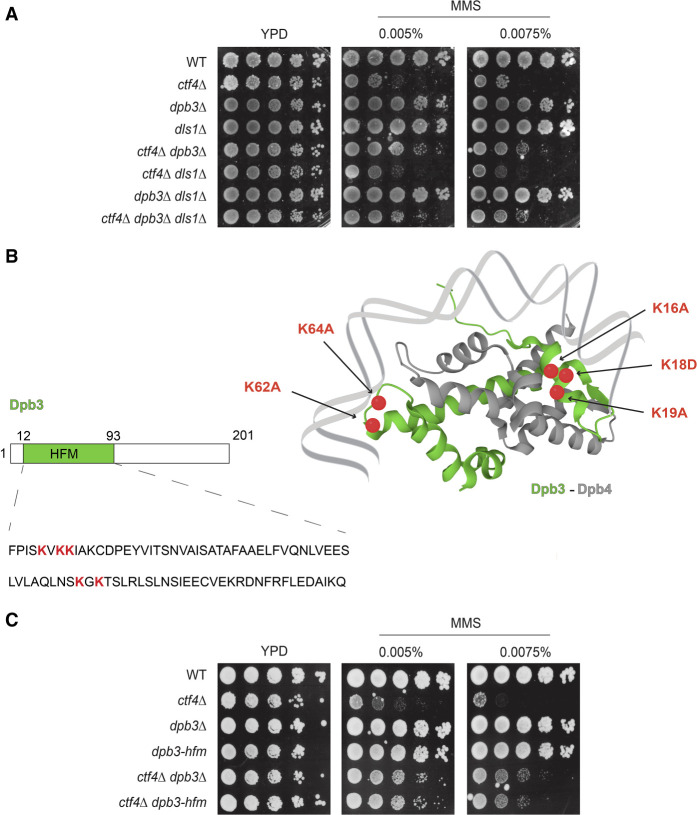
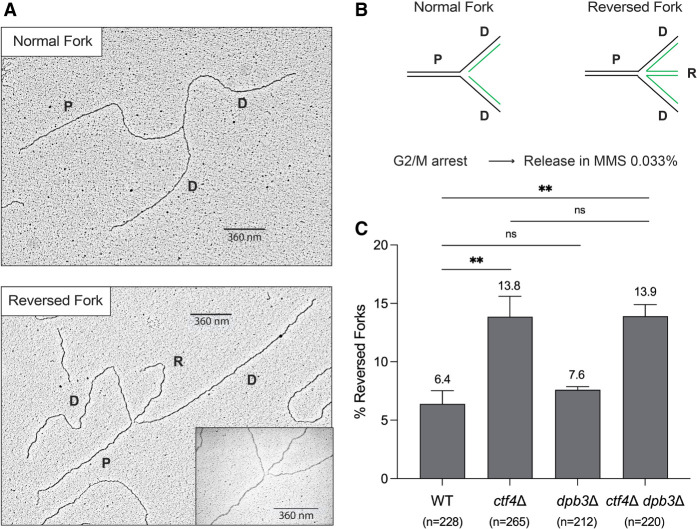
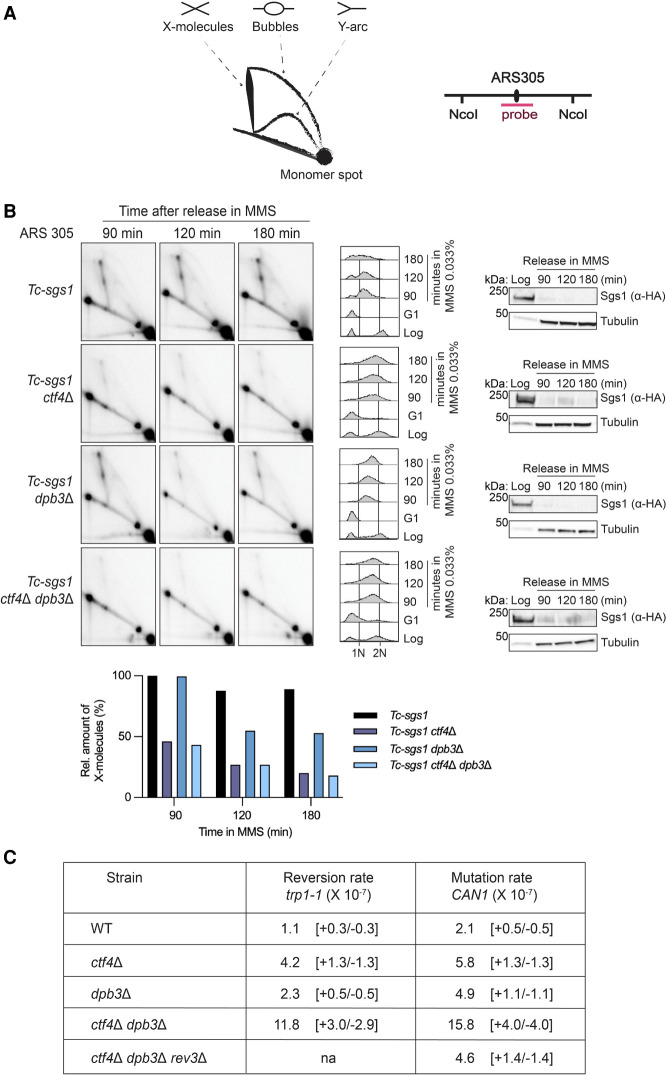
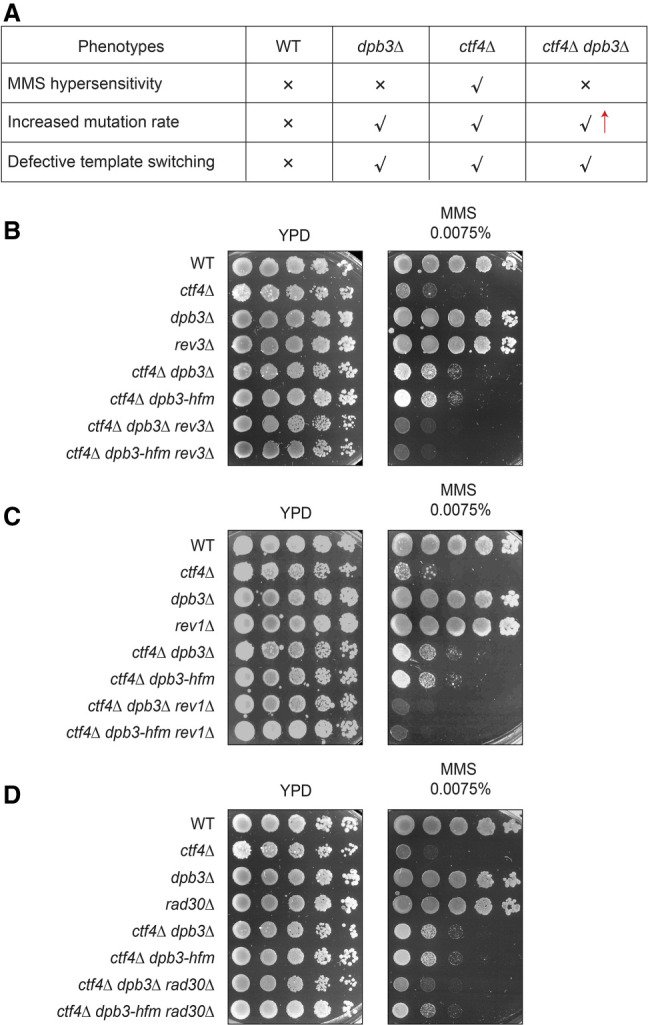
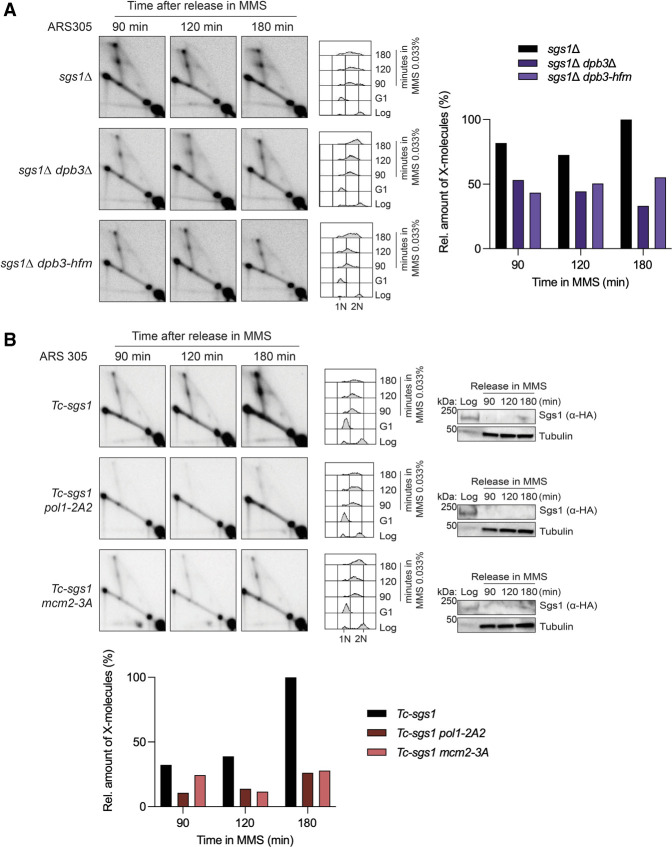
Ctf4 is a conserved replisome component with multiple roles in DNA metabolism. To investigate connections between Ctf4-mediated processes involved in drug resistance, we conducted a suppressor screen of Δ sensitivity to the methylating agent MMS. We uncovered that mutations in Dpb3 and Dpb4 components of polymerase ε result in the development of drug resistance in Δ via their histone-binding function. Alleviated sensitivity to MMS of the double mutants was not associated with rescue of Δ defects in sister chromatid cohesion, replication fork architecture, or template switching, which ensures error-free replication in the presence of genotoxic stress. Strikingly, the improved viability depended on translesion synthesis (TLS) polymerase-mediated mutagenesis, which was drastically increased in double mutants. Importantly, mutations in Mcm2-Ctf4-Polα and Dpb3-Dpb4 axes of parental (H3-H4) deposition on lagging and leading strands invariably resulted in reduced error-free DNA damage tolerance through gap filling by template switch recombination. Overall, we uncovered a chromatin-based drug resistance mechanism in which defects in parental histone transfer after replication fork passage impair error-free recombination bypass and lead to up-regulation of TLS-mediated mutagenesis and drug resistance.
Ctf4 是一个保守的复制体成分,在 DNA 代谢中具有多种作用。为了研究 Ctf4 介导的与耐药性相关过程之间的联系,我们对 MMS 甲基化剂敏感性缺失(Δ)进行了抑制筛选。我们发现,聚合酶 ε 的 Dpb3 和 Dpb4 组成部分的突变通过其组蛋白结合功能导致 Δ 产生耐药性。双突变体对 MMS 的敏感性降低与 Δ 在姐妹染色单体黏合、复制叉结构或模板转换方面缺陷的挽救无关,这些过程可确保在存在遗传毒性应激时进行无差错复制。引人注目的是,改善的生存能力依赖于跨损伤合成(TLS)聚合酶介导的突变,而在双突变体中,这种突变大大增加。重要的是,在母代(H3-H4)滞后链和前导链上的 Mcm2-Ctf4-Polα 和 Dpb3-Dpb4 轴的突变,总是通过模板转换重组进行缺口填充,导致无差错 DNA 损伤容忍性降低。总的来说,我们发现了一种基于染色质的耐药机制,其中复制叉通过后母代组蛋白转移缺陷会损害无差错重组绕过,并导致 TLS 介导的突变和耐药性的上调。