Institute of Industrial Mathematics, Johannes Kepler University Linz, Linz, Austria.
Institute of Applied Physics, TU Wien, Vienna, Austria.
PLoS One. 2022 Feb 4;17(2):e0263500. doi: 10.1371/journal.pone.0263500. eCollection 2022.
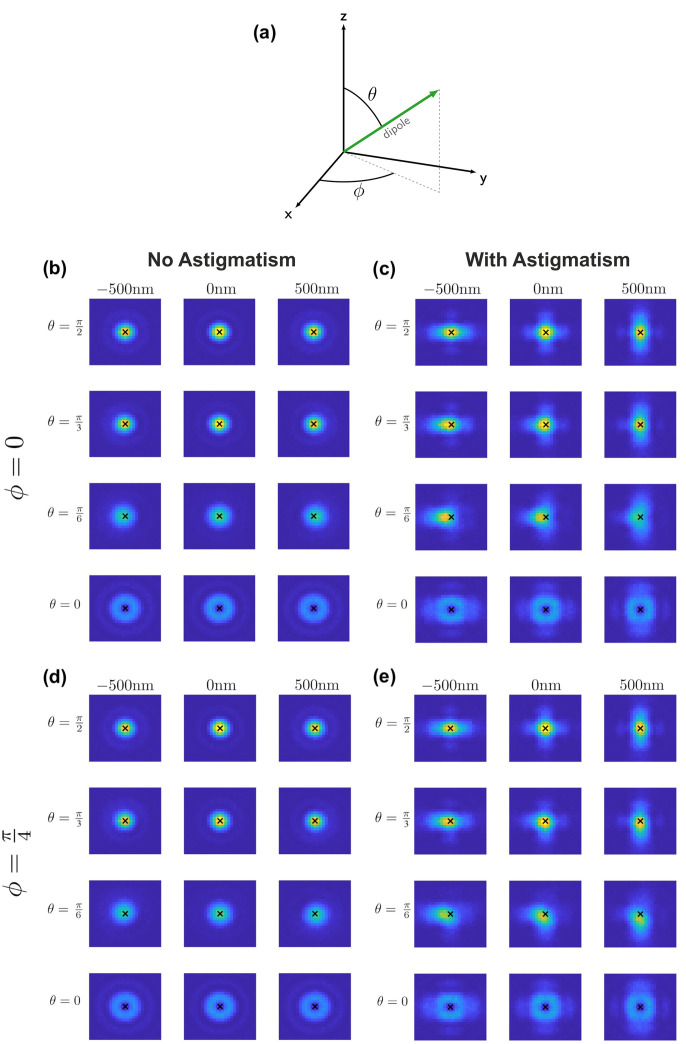
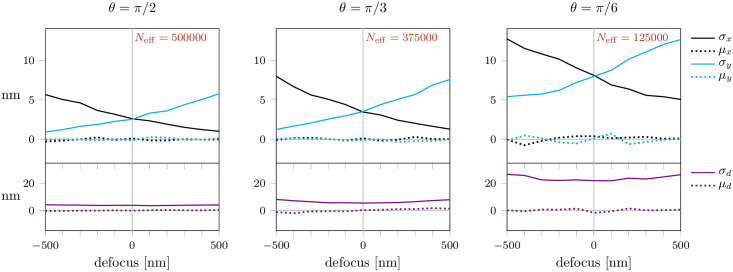
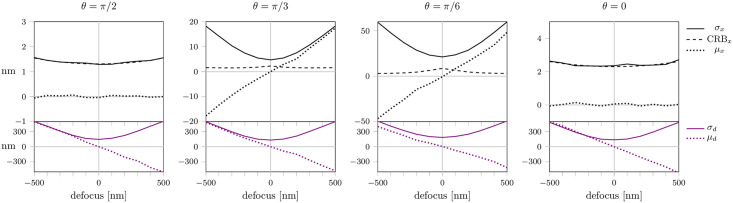
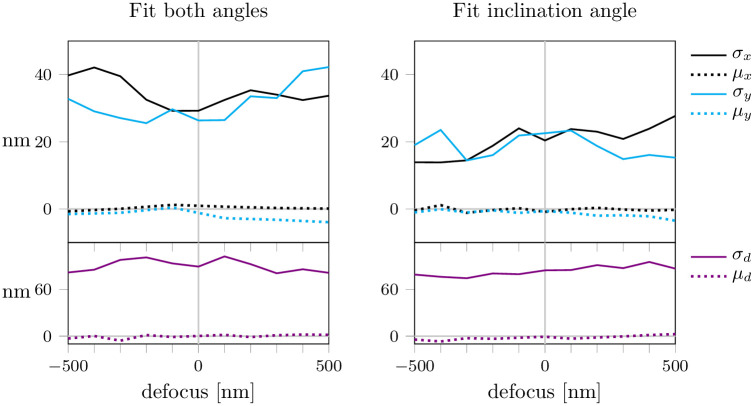
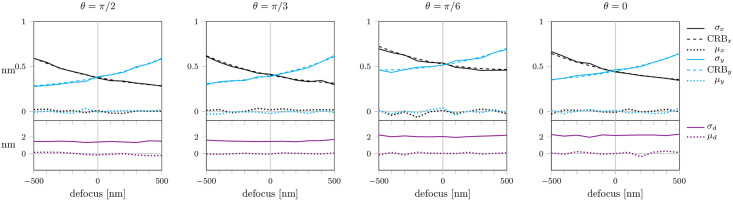
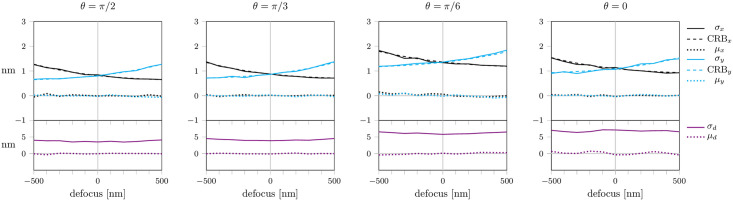
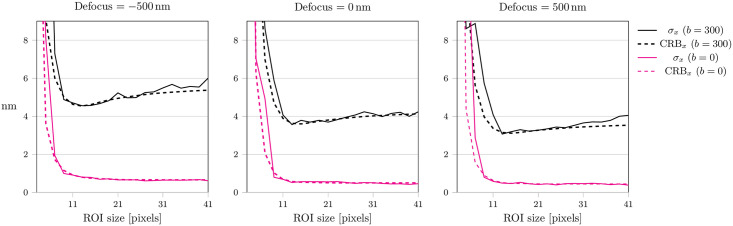
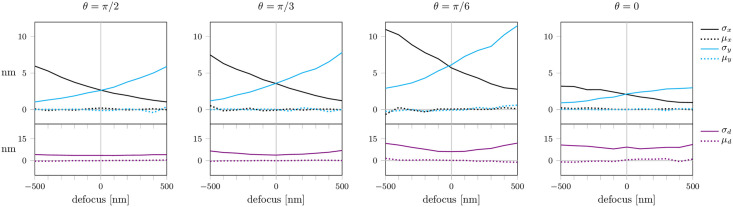
Single molecule localization microscopy (SMLM) has the potential to resolve structural details of biological samples at the nanometer length scale. Compared to room temperature experiments, SMLM performed under cryogenic temperature achieves higher photon yields and, hence, higher localization precision. However, to fully exploit the resolution it is crucial to account for the anisotropic emission characteristics of fluorescence dipole emitters with fixed orientation. In case of slight residual defocus, localization estimates may well be biased by tens of nanometers. We show here that astigmatic imaging in combination with information about the dipole orientation allows to extract the position of the dipole emitters without localization bias and down to a precision of 1 nm, thereby reaching the corresponding Cramér Rao bound. The approach is showcased with simulated data for various dipole orientations, and parameter settings realistic for real life experiments.
单分子定位显微镜 (SMLM) 具有在纳米长度尺度上解析生物样本结构细节的潜力。与室温实验相比,在低温下进行的 SMLM 可实现更高的光子产率,从而实现更高的定位精度。然而,为了充分利用分辨率,对于具有固定取向的荧光偶极子的各向异性发射特性进行准确描述至关重要。在存在轻微残余离焦的情况下,定位估计可能会受到数十纳米的偏差影响。我们在此表明,结合关于偶极子取向的信息的像散成像可以在没有定位偏差的情况下提取偶极子的位置,精度可达 1nm,从而达到相应的克拉美罗界。该方法通过针对各种偶极子取向以及对于实际实验而言现实的参数设置的模拟数据进行了展示。