
在十字花科油料作物中从芥子碱转移苯丙素途径通量以生产工业上有用的羟基肉桂酸 4-乙烯基衍生物。
Diverting phenylpropanoid pathway flux from sinapine to produce industrially useful 4-vinyl derivatives of hydroxycinnamic acids in Brassicaceous oilseeds.
机构信息
Department of Plant Science, Rothamsted Research, Harpenden, Hertfordshire, AL5 2JQ, UK.
Department of Plant Science, Rothamsted Research, Harpenden, Hertfordshire, AL5 2JQ, UK.
出版信息
Metab Eng. 2022 Mar;70:196-205. doi: 10.1016/j.ymben.2022.01.016. Epub 2022 Feb 1.
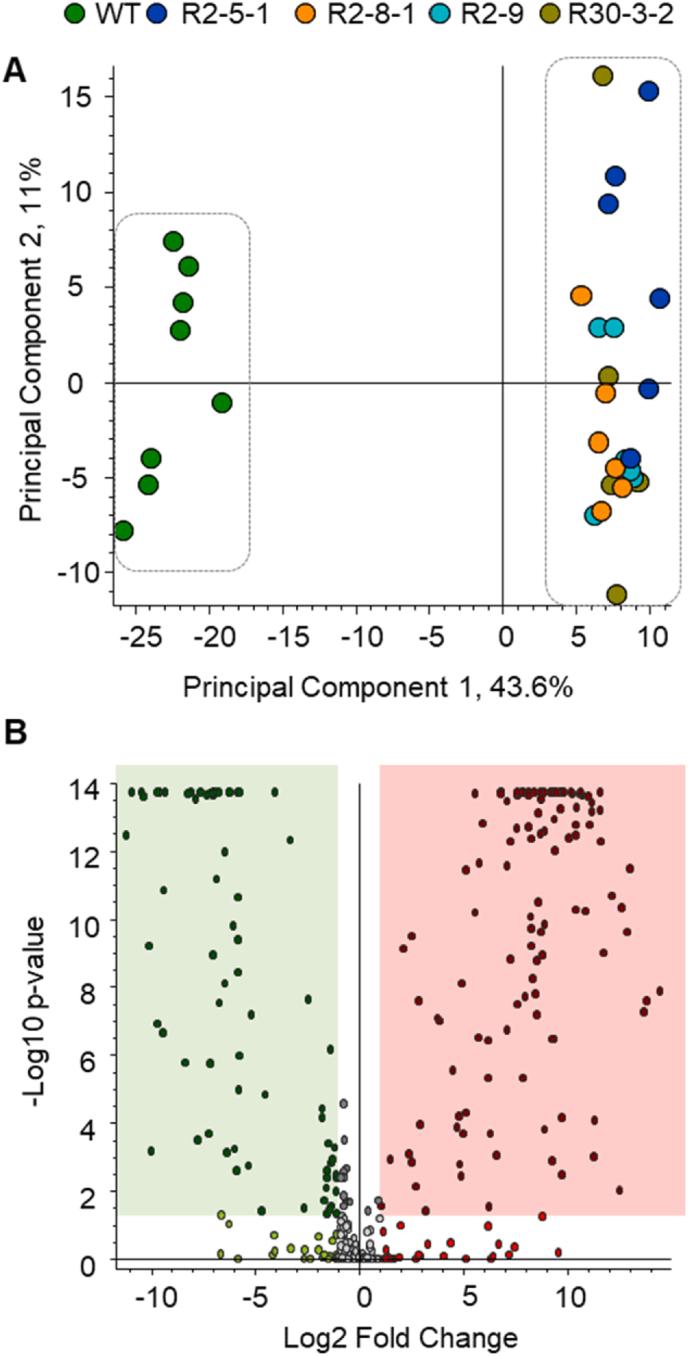
Sinapine (sinapoylcholine) is an antinutritive phenolic compound that can account for up to 2% of seed weight in brassicaceous oilseed crops and reduces the suitability of their protein-rich seed meal for use as animal feed. Sinapine biosynthesis draws on hydroxycinnamic acid precursors produced by the phenylpropanoid pathway. The 4-vinyl derivatives of several hydroxycinnamic acids have industrial applications. For example, 4-vinyl phenol (4-hydroxystyrene) is a building block for a range of synthetic polymers applied in resins, inks, elastomers, and coatings. Here we have expressed a modified bacterial phenolic acid decarboxylase (PAD) in developing seed of Camelina sativa to redirect phenylpropanoid pathway flux from sinapine biosynthesis to the production of 4-vinyl phenols. PAD expression led to a ∼95% reduction in sinapine content in seeds of both glasshouse and field grown C. sativa and to an accumulation of 4-vinyl derivatives of hydroxycinnamic acids, primarily as glycosides. The most prevalent aglycone was 4-vinyl phenol, but 4-vinyl guaiacol, 6-hydroxy-4-vinyl guaiacol and 4-vinylsyringol (Canolol) were also detected. The molar quantity of 4-vinyl phenol glycosides was more than twice that of sinapine in wild type seeds. PAD expression was not associated with an adverse effect on seed yield, harvest index, seed morphology, storage oil content or germination in either glasshouse or field experiments. Our data show that expression of PAD in brassicaceous oilseeds can supress sinapine accumulation, diverting phenylpropanoid pathway flux into 4-vinyl phenol derivatives, thereby also providing a non-petrochemical source of this class of industrial chemicals.
芥子碱(sinapoylcholine)是一种抗营养的酚类化合物,在十字花科油料作物中可占种子重量的 2%,降低了富含蛋白质的种子粉作为动物饲料的适用性。芥子碱的生物合成利用苯丙烷途径产生的羟基肉桂酸前体。几种羟基肉桂酸的 4-乙烯基衍生物具有工业应用。例如,4-乙烯基苯酚(4-羟基苯乙烯)是一系列合成聚合物的构建块,用于树脂、油墨、弹性体和涂料。在这里,我们在发展中的荠菜籽中表达了一种改良的细菌酚酸脱羧酶(PAD),以将苯丙烷途径的通量从芥子碱生物合成重新定向到 4-乙烯基苯酚的生产。PAD 的表达导致温室和田间种植的荠菜籽中芥子碱的含量降低了约 95%,并积累了羟基肉桂酸的 4-乙烯基衍生物,主要是糖苷。最常见的非糖部分是 4-乙烯基苯酚,但也检测到 4-乙烯基愈创木酚、6-羟基-4-乙烯基愈创木酚和 4-乙烯基丁香酚(Canolol)。野生型种子中 4-乙烯基苯酚糖苷的摩尔量是芥子碱的两倍多。在温室和田间实验中,PAD 的表达与种子产量、收获指数、种子形态、储存油含量或发芽率的不利影响无关。我们的数据表明,在十字花科油料作物中表达 PAD 可以抑制芥子碱的积累,将苯丙烷途径的通量转移到 4-乙烯基苯酚衍生物中,从而为这类工业化学品提供非石化来源。


 Zotero 插件