Department of Chemistry, University of Pittsburgh, Pittsburgh, Pennsylvania, USA.
Department of Chemistry, University of Pittsburgh, Pittsburgh, Pennsylvania, USA.
J Biol Chem. 2022 Apr;298(4):101683. doi: 10.1016/j.jbc.2022.101683. Epub 2022 Feb 3.
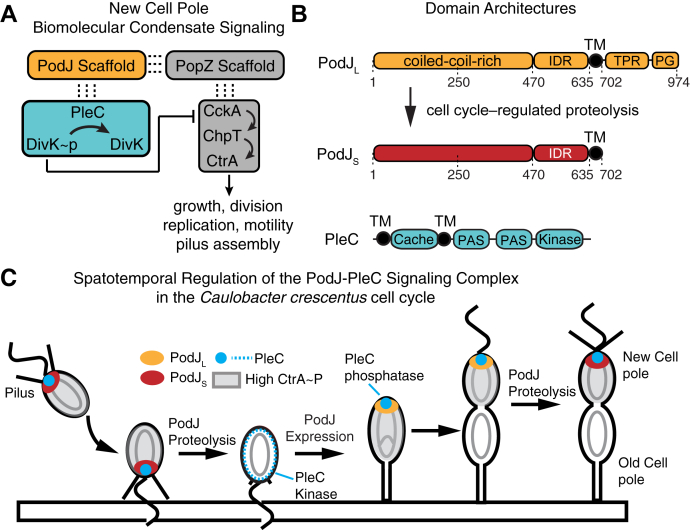
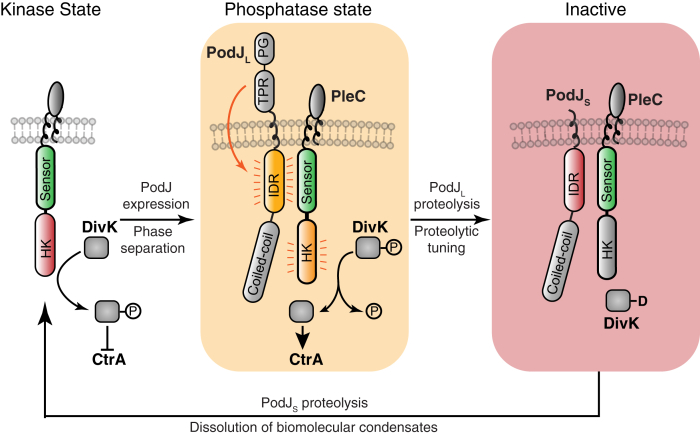
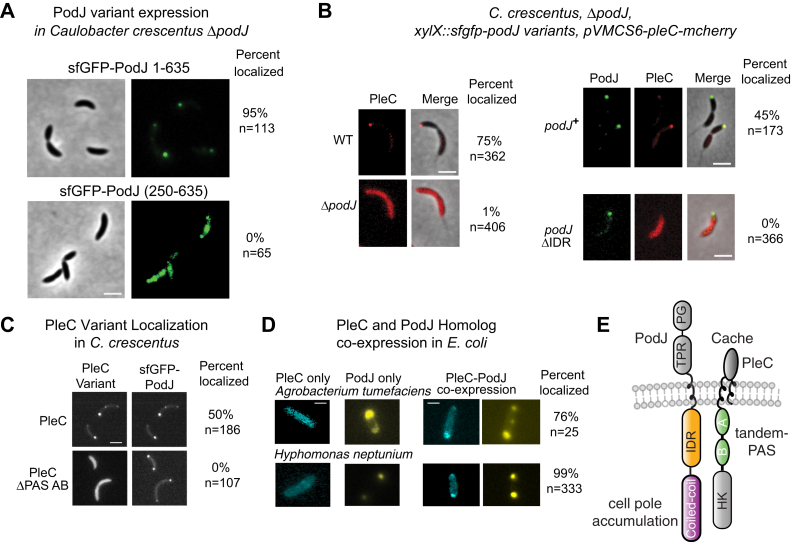
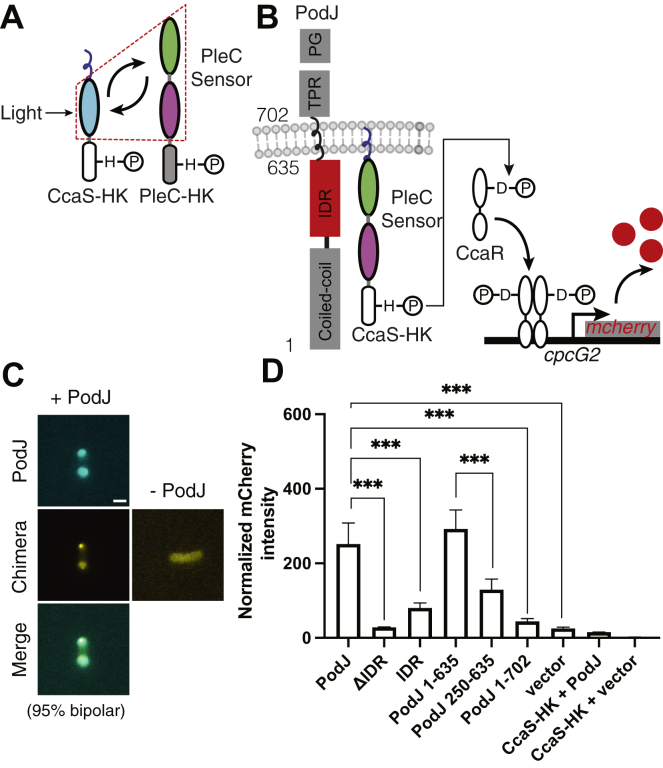
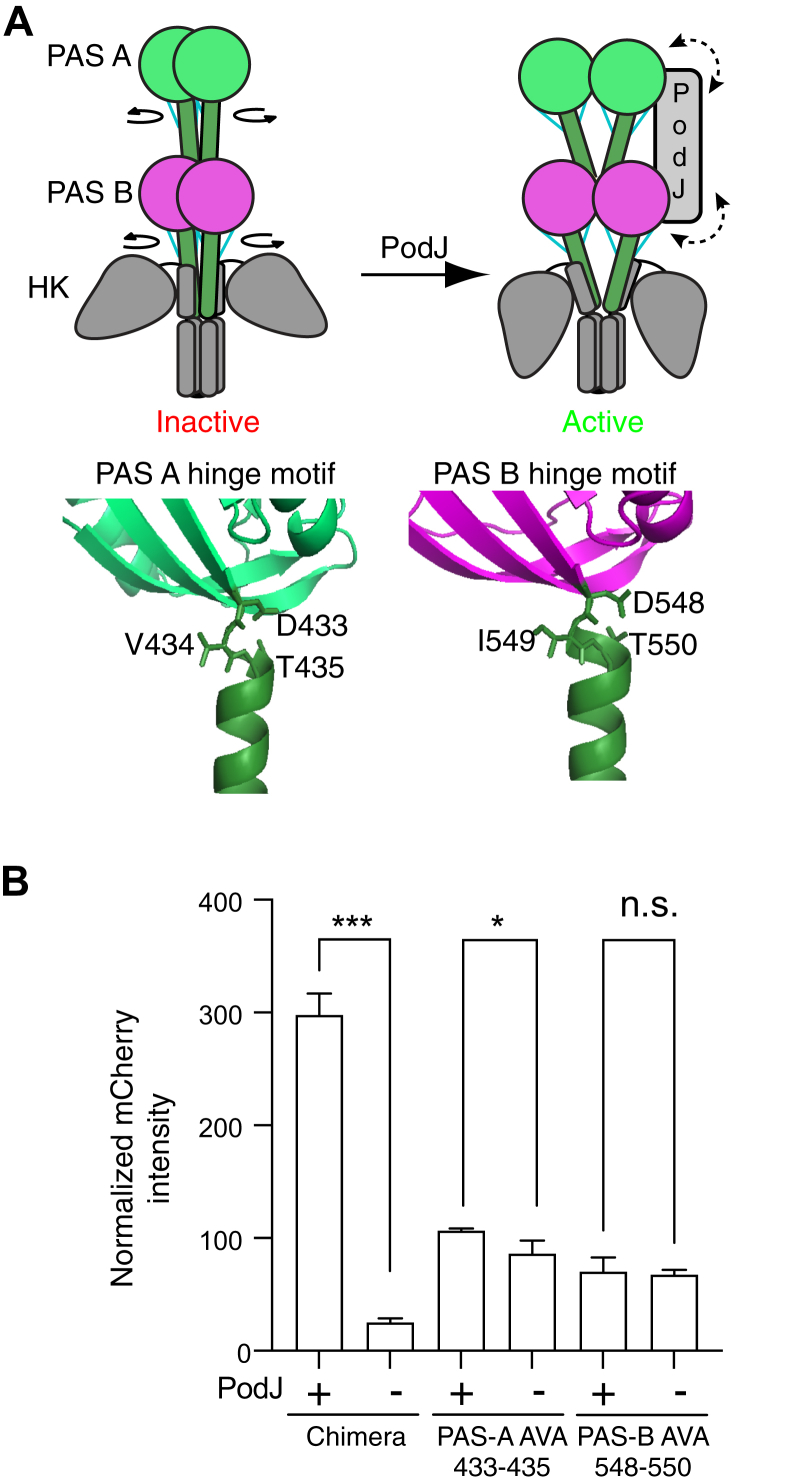
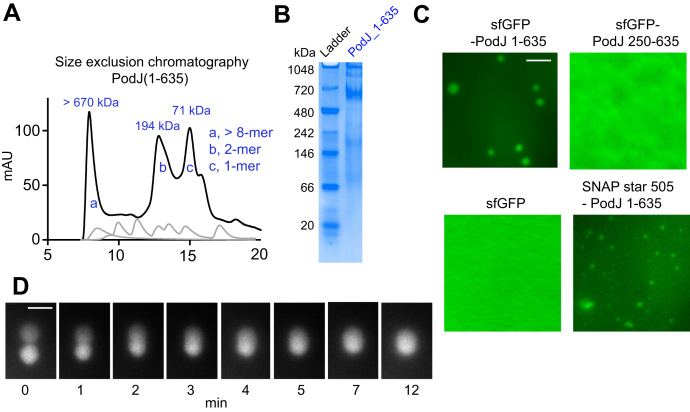
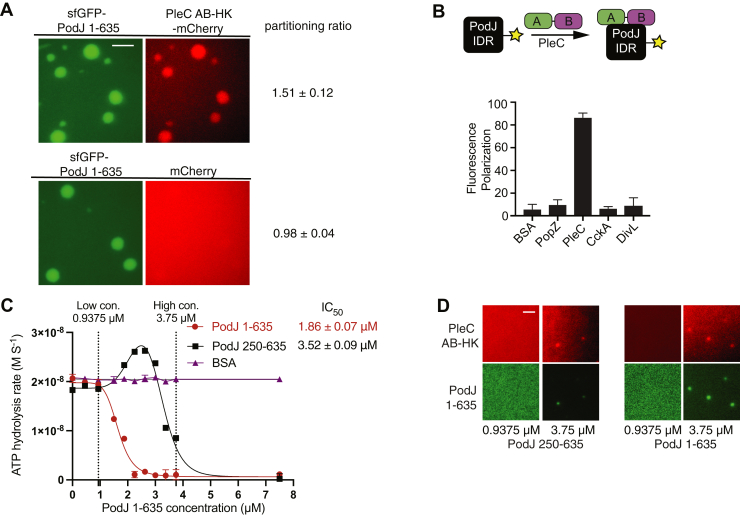
Scaffolding proteins can customize the response of signaling networks to support cell development and behaviors. PleC is a bifunctional histidine kinase whose signaling activity coordinates asymmetric cell division to yield a motile swarmer cell and a stalked cell in the gram-negative bacterium Caulobacter crescentus. Past studies have shown that PleC's switch in activity from kinase to phosphatase correlates with a change in its subcellular localization pattern from diffuse to localized at the new cell pole. Here we investigated how the bacterial scaffolding protein PodJ regulates the subcellular positioning and activity of PleC. We reconstituted the PleC-PodJ signaling complex through both heterologous expressions in Escherichia coli and in vitro studies. In vitro, PodJ phase separates as a biomolecular condensate that recruits PleC and inhibits its kinase activity. We also constructed an in vivo PleC-CcaS chimeric histidine kinase reporter assay and demonstrated using this method that PodJ leverages its intrinsically disordered region to bind to PleC's PAS sensory domain and regulate PleC-CcaS signaling. Regulation of the PleC-CcaS was most robust when PodJ was concentrated at the cell poles and was dependent on the allosteric coupling between PleC-CcaS's PAS sensory domain and its downstream histidine kinase domain. In conclusion, our in vitro biochemical studies suggest that PodJ phase separation may be coupled to changes in PleC enzymatic function. We propose that this coupling of phase separation and allosteric regulation may be a generalizable phenomenon among enzymes associated with biomolecular condensates.
支架蛋白可以定制信号网络的反应,以支持细胞的发育和行为。PleC 是一种双功能组氨酸激酶,其信号活性协调不对称细胞分裂,产生革兰氏阴性菌新月柄杆菌中的游动 swarm 细胞和杆状细胞。过去的研究表明,PleC 从激酶到磷酸酶的活性转变与它的亚细胞定位模式从弥散到新细胞极的局部化的变化相关。在这里,我们研究了细菌支架蛋白 PodJ 如何调节 PleC 的亚细胞定位和活性。我们通过大肠杆菌的异源表达和体外研究重新构建了 PleC-PodJ 信号复合物。在体外,PodJ 相分离为生物分子凝聚物,招募 PleC 并抑制其激酶活性。我们还构建了体内 PleC-CcaS 嵌合组氨酸激酶报告基因测定,并使用该方法证明 PodJ 利用其固有无序区域结合 PleC 的 PAS 感觉域并调节 PleC-CcaS 信号。当 PodJ 集中在细胞极时,对 PleC-CcaS 的调节最为显著,并且依赖于 PleC-CcaS 的 PAS 感觉域与其下游组氨酸激酶域之间的变构偶联。总之,我们的体外生化研究表明,PodJ 的相分离可能与 PleC 酶功能的变化相关。我们提出,这种相分离和变构调节的耦合可能是与生物分子凝聚物相关的酶的一种普遍现象。