Wu Yanping, Luo Xiang, Zhou Qingqing, Gong Haibiao, Gao Huaying, Liu Tongzheng, Chen Jiaxu, Liang Lei, Kurihara Hiroshi, Li Yi-Fang, He Rong-Rong
Guangdong Engineering Research Center of Chinese Medicine & Disease Susceptibility, Jinan University, Guangzhou 510632, China.
International Cooperative Laboratory of Traditional Chinese Medicine Modernization and Innovative Drug Development of Chinese Ministry of Education, College of Pharmacy, Jinan University, Guangzhou 510632, China.
Acta Pharm Sin B. 2022 Jan;12(1):197-209. doi: 10.1016/j.apsb.2021.06.002. Epub 2021 Jun 8.
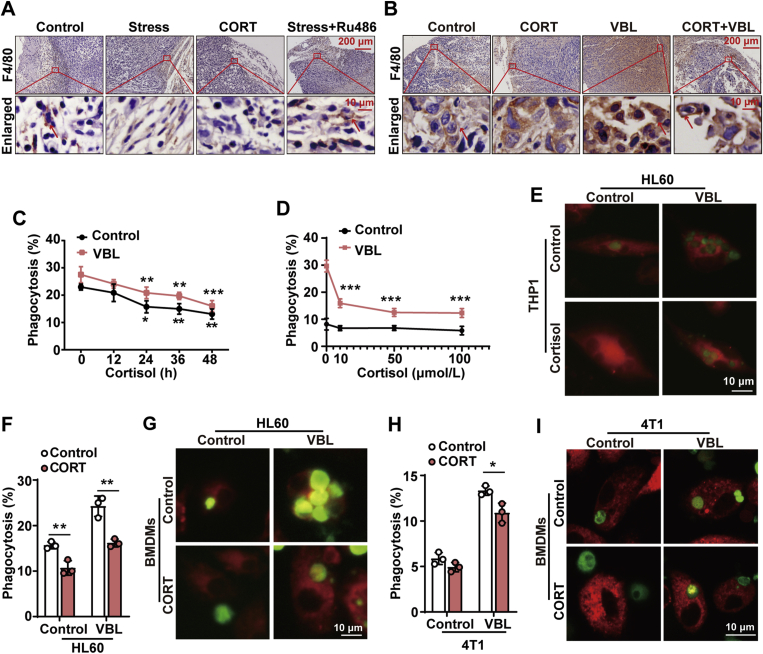
The relationship between chronic psychological stress and tumorigenesis has been well defined in epidemiological studies; however, the underlying mechanism remains underexplored. In this study, we discovered that impaired macrophage phagocytosis contributed to the psychological stress-evoked tumor susceptibility, and the stress hormone glucocorticoid (GC) was identified as a principal detrimental factor. Mechanistically, GC disturbed the balance of the "eat me" signal receptor (low-density lipoprotein receptor-related protein-1, LRP1) and the "don't eat me" signal receptor (signal regulatory protein alpha, SIRP). Further analysis revealed that GC led to a direct, glucocorticoid receptor (GR)-dependent trans-repression of LRP1 expression, and the repressed LRP1, in turn, resulted in the elevated gene level of SIRP by down-regulating miRNA-4695-3p. These data collectively demonstrate that stress induces the imbalance of the LRP1/SIRP axis and entails the disturbance of tumor cell clearance by macrophages. Our findings provide the mechanistic insight into psychological stress-evoked tumor susceptibility and indicate that the balance of LRP1/SIRP axis may serve as a potential therapeutic strategy for tumor treatment.
慢性心理应激与肿瘤发生之间的关系在流行病学研究中已得到明确界定;然而,其潜在机制仍未得到充分探索。在本研究中,我们发现巨噬细胞吞噬功能受损导致了心理应激诱发的肿瘤易感性,并且应激激素糖皮质激素(GC)被确定为一个主要的有害因素。从机制上讲,GC扰乱了“吃我”信号受体(低密度脂蛋白受体相关蛋白1,LRP1)和“别吃我”信号受体(信号调节蛋白α,SIRP)之间的平衡。进一步分析表明,GC导致LRP1表达的直接的、糖皮质激素受体(GR)依赖性反式抑制,而被抑制的LRP1反过来通过下调miRNA-4695-3p导致SIRP基因水平升高。这些数据共同表明,应激诱导LRP1/SIRP轴失衡,并导致巨噬细胞对肿瘤细胞清除的干扰。我们的研究结果为心理应激诱发的肿瘤易感性提供了机制性见解,并表明LRP1/SIRP轴的平衡可能作为肿瘤治疗的潜在策略。