Yang Qiyao, Guo Ningning, Zhou Yi, Chen Jiejian, Wei Qichun, Han Min
Institute of Pharmaceutics, College of Pharmaceutical Sciences, Zhejiang University, Hangzhou 310058, China.
Department of Radiation Oncology, Key Laboratory of Cancer Prevention and Intervention, The Second Affiliated Hospital, College of Medicine, Zhejiang University, Hangzhou 310058, China.
Acta Pharm Sin B. 2020 Nov;10(11):2156-2170. doi: 10.1016/j.apsb.2020.04.004. Epub 2020 Apr 19.
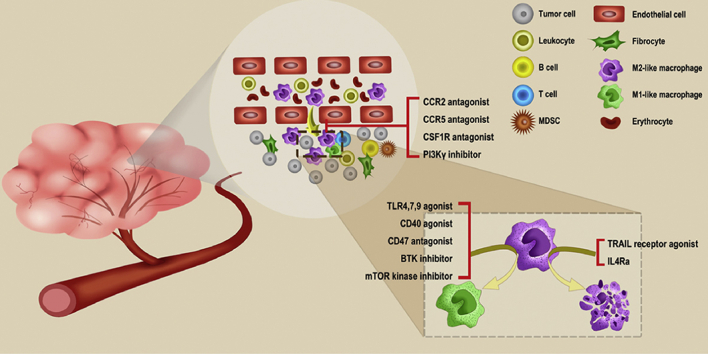
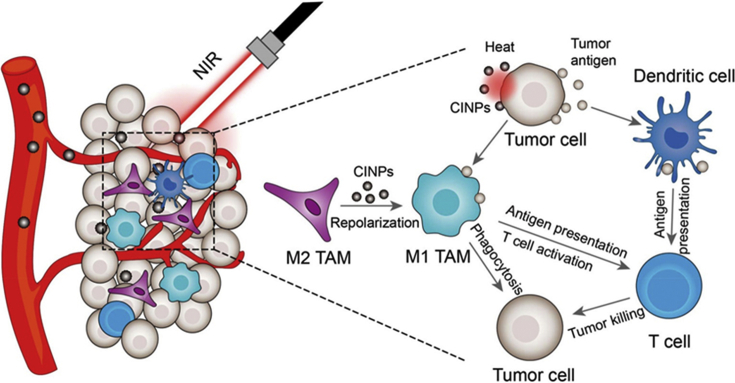
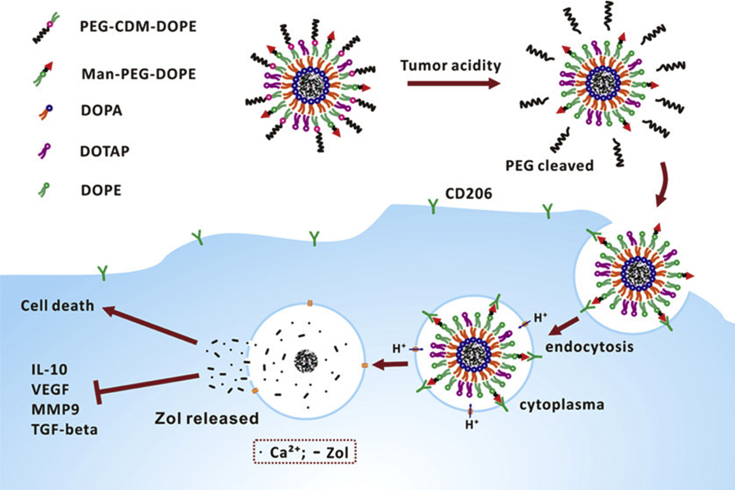
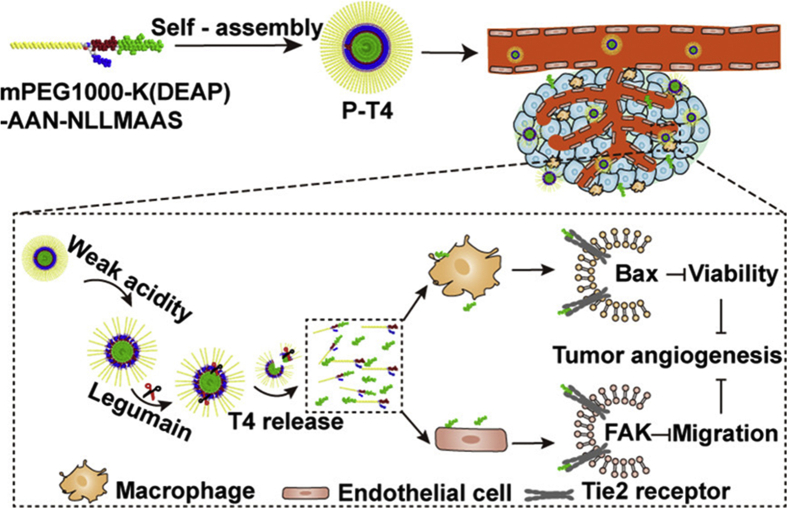
Macrophages have a leading position in the tumor microenvironment (TME) which paves the way to carcinogenesis. Initially, monocytes and macrophages are recruited to the sites where the tumor develops. Under the guidance of different microenvironmental signals, macrophages would polarize into two functional phenotypes, named as classically activated macrophages (M1) and alternatively activated macrophages (M2). Contrary to the anti-tumor effect of M1, M2 exerts anti-inflammatory and tumorigenic characters. In progressive tumor, M2 tumor-associated macrophages (TAMs) are in the majority, being vital regulators reacting upon TME. This review elaborates on the role of TAMs in tumor progression. Furthermore, prospective macrophage-focused therapeutic strategies, including drugs not only in clinical trials but also at primary research stages, are summarized followed by a discussion about their clinical application values. Nanoparticulate systems with efficient drug delivery and improved antitumor effect are also summed up in this article.
巨噬细胞在肿瘤微环境(TME)中占据主导地位,为肿瘤发生铺平了道路。最初,单核细胞和巨噬细胞被招募到肿瘤发生的部位。在不同微环境信号的引导下,巨噬细胞会极化为两种功能表型,即经典活化巨噬细胞(M1)和替代活化巨噬细胞(M2)。与M1的抗肿瘤作用相反,M2具有抗炎和促肿瘤特性。在进展期肿瘤中,M2肿瘤相关巨噬细胞(TAM)占大多数,是对TME起反应的重要调节因子。这篇综述阐述了TAM在肿瘤进展中的作用。此外,总结了以巨噬细胞为靶点的前瞻性治疗策略,包括不仅处于临床试验阶段而且处于基础研究阶段的药物,随后讨论了它们的临床应用价值。本文还总结了具有高效药物递送和改善抗肿瘤效果的纳米颗粒系统。