Department of Oncology and Metabolism, University of Sheffield, Sheffield, UK.
Reprod Fertil. 2021 Jan 5;2(1):R1-R12. doi: 10.1530/RAF-20-0034. eCollection 2021 Jan.
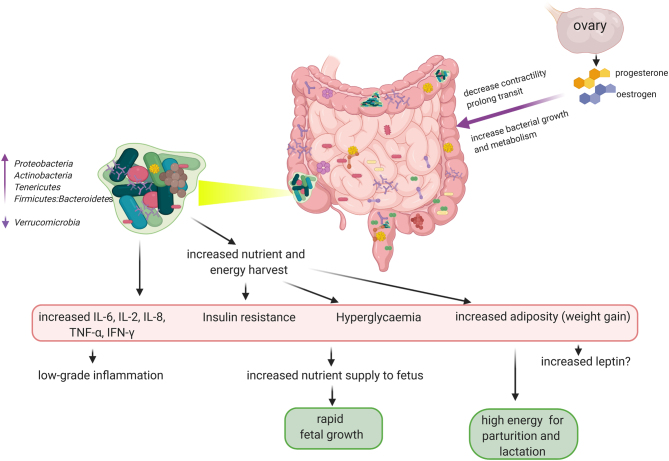
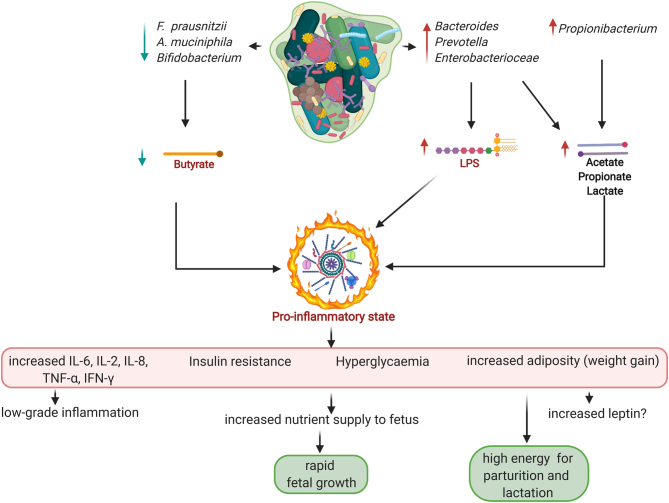
Altered gut microbiota (dysbiosis), inflammation and weight gain are pivotal to the success of normal pregnancy. These are features of metabolic syndrome that ordinarily increase the risk of type 2 diabetes in non-pregnant individuals. Though gut microbiota influences host energy metabolism and homeostasis, the outcome (healthy or unhealthy) varies depending on pregnancy status. In a healthy pregnancy, the gut microbiota is altered to promote metabolic and immunological changes beneficial to the mother and foetus but could connote a disease state in non-pregnant individuals. During the later stages of gestation, metabolic syndrome-like features, that is, obesity-related gut dysbiotic microbiota, increased insulin resistance, and elevated pro-inflammatory cytokines, promote energy storage in adipose tissue for rapid foetal growth and development, and in preparation for energy-consuming processes such as parturition and lactation. The origin of this gestation-associated host-microbial interaction is still elusive. Therefore, this review critically examined the host-microbial interactions in the gastrointestinal tract of pregnant women at late gestation (third trimester) that shift host metabolism in favour of a diabetogenic or metabolic syndrome-like phenotype. Whether the diabetogenic effects of such interactions are indeed beneficial to both mother and foetus was also discussed with plausible mechanistic pathways and associations highlighted.
In non-pregnant women, increased blood glucose, fat accumulation, and prolonged immune response lead to obesity and diabetes. However, during the later stages of pregnancy, the changes in the body's metabolism described previously do not lead to disease, instead pregnancy facilitates the storage of sufficient energy in fat cells for rapid growth and development of the foetus. The excess energy stores also prepares the mother for labour and breastfeeding. This review examines the role of the normal bacteria in the digestive tract in this beneficial energy accumulation and transfer between the mother and foetus without leading to obesity, diabetes and hypertension in pregnancy.
改变的肠道微生物群(失调)、炎症和体重增加是正常妊娠成功的关键。这些是代谢综合征的特征,通常会增加非孕妇患 2 型糖尿病的风险。尽管肠道微生物群会影响宿主的能量代谢和体内平衡,但结果(健康或不健康)取决于妊娠状态。在健康的妊娠中,肠道微生物群会发生改变,以促进对母亲和胎儿有益的代谢和免疫变化,但在非孕妇中可能意味着疾病状态。在妊娠后期,会出现代谢综合征样特征,即肥胖相关的肠道菌群失调、胰岛素抵抗增加和促炎细胞因子水平升高,促进脂肪组织中能量储存,以促进胎儿快速生长和发育,并为分娩和哺乳等耗能过程做准备。这种与妊娠相关的宿主-微生物相互作用的起源仍然难以捉摸。因此,本综述批判性地检查了妊娠晚期(第三孕期)孕妇胃肠道中的宿主-微生物相互作用,这些相互作用改变了宿主代谢,有利于糖尿病或代谢综合征样表型。还讨论了这些相互作用的致糖尿病作用是否确实对母亲和胎儿都有益,并强调了可能的机制途径和关联。
在非孕妇中,血糖升高、脂肪堆积和免疫反应延长会导致肥胖和糖尿病。然而,在妊娠后期,身体代谢的变化不会导致疾病,相反,妊娠促进了足够的能量在脂肪细胞中的储存,以促进胎儿的快速生长和发育。多余的能量储备也为母亲的分娩和哺乳做好了准备。本综述检查了消化道中正常细菌在这种有益的能量积累和在母亲和胎儿之间转移中的作用,而不会导致妊娠期间肥胖、糖尿病和高血压。