Baião Rita, Capitão Liliana P, Higgins Cameron, Browning Michael, Harmer Catherine J, Burnet Philip W J
Department of Psychiatry, University of Oxford, Warneford Hospital, Oxford, OX3 7JX, UK.
Oxford Health NHS Foundation Trust, Oxford, UK.
Psychol Med. 2023 Jun;53(8):3437-3447. doi: 10.1017/S003329172100550X. Epub 2022 Feb 7.
The potential antidepressant properties of probiotics have been suggested, but their influence on the emotional processes that may underlie this effect is unclear.
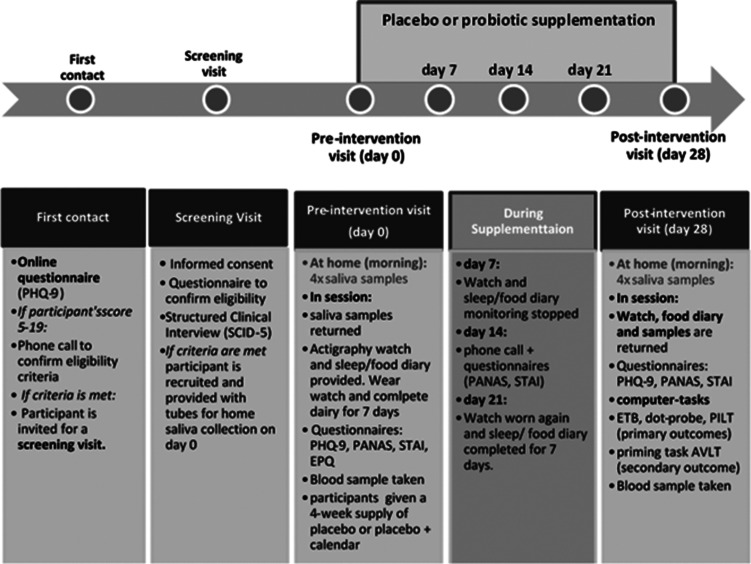
Depressed volunteers ( = 71) were recruited into a randomised double-blind, placebo-controlled study to explore the effects of a daily, 4-week intake of a multispecies probiotic or placebo on emotional processing and cognition. Mood, anxiety, positive and negative affect, sleep, salivary cortisol and serum C-reactive peptide (CRP) were assessed before and after supplementation.
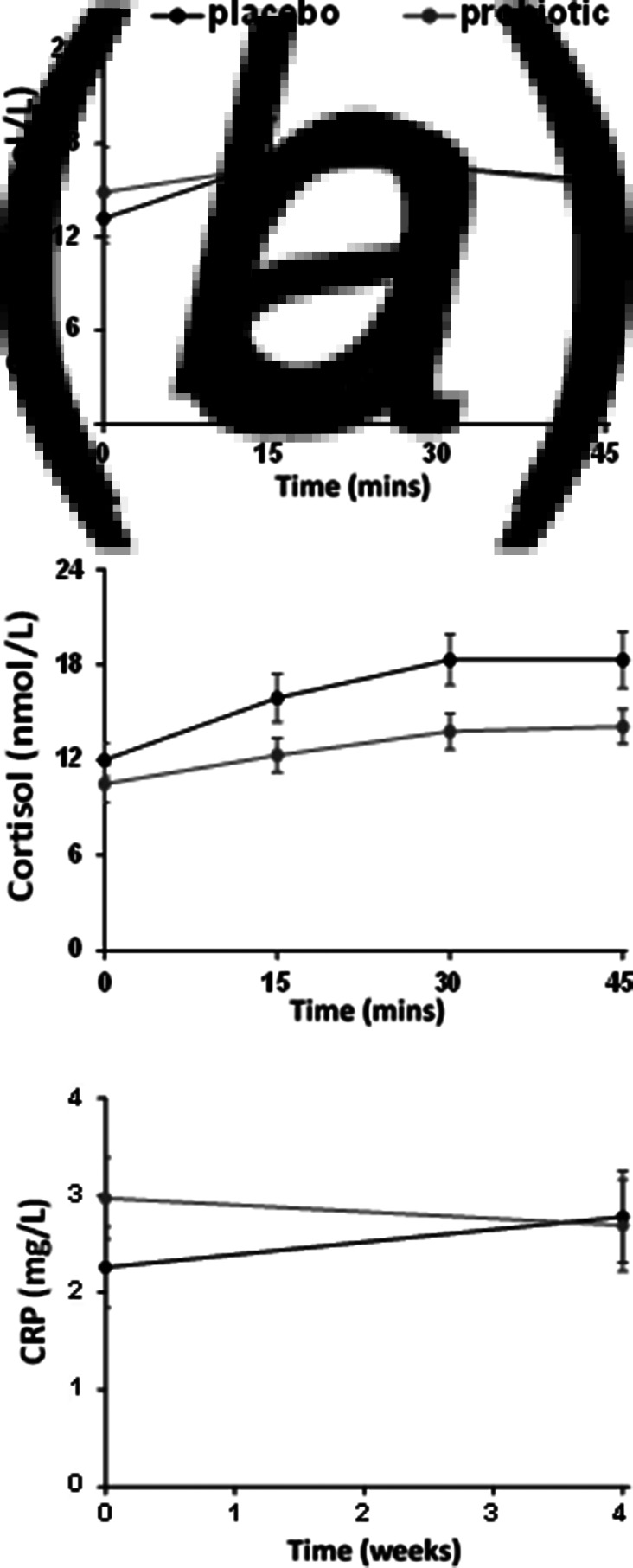
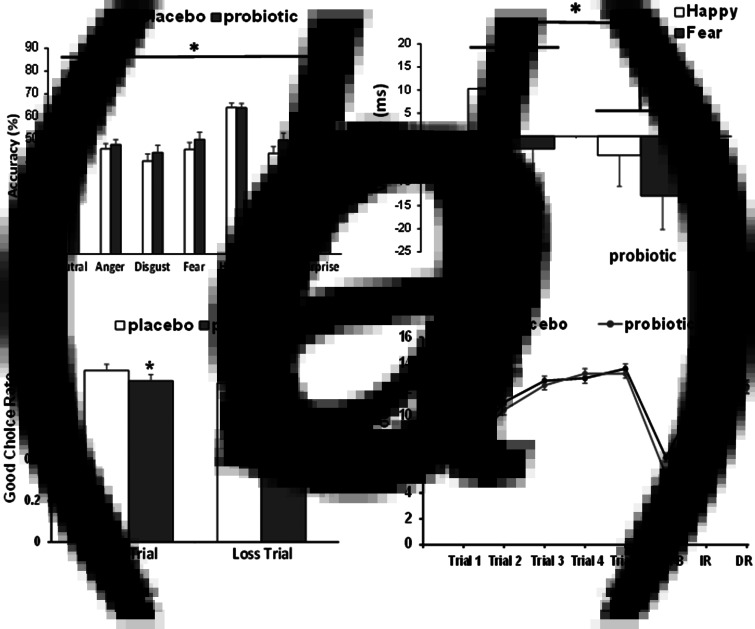
Compared with placebo, probiotic intake increased accuracy at identifying faces expressing all emotions (+12%, < 0.05, total = 51) and vigilance to neutral faces (mean difference between groups = 12.28 ms ± 6.1, < 0.05, total = 51). Probiotic supplementation also reduced reward learning (-9%, < 0.05, total = 51), and interference word recall on the auditory verbal learning task (-18%, < 0.05, total = 50), but did not affect other aspects of cognitive performance. Although actigraphy revealed a significant group × night-time activity interaction, follow up analysis was not significant ( = 0.094). Supplementation did not alter salivary cortisol or circulating CRP concentrations. Probiotic intake significantly reduced (-50% from baseline, < 0.05, = 35) depression scores on the Patient Health Questionnaire-9, but these did not correlate with the changes in emotional processing.
The impartiality to positive and negative emotional stimuli or reward after probiotic supplementation have not been observed with conventional antidepressant therapies. Further studies are required to elucidate the significance of these changes with regard to the mood-improving action of the current probiotic.
益生菌已被认为具有潜在的抗抑郁特性,但其对可能构成这种效应基础的情绪过程的影响尚不清楚。
招募了71名抑郁症志愿者,进行一项随机双盲、安慰剂对照研究,以探讨每日服用4周的多种益生菌或安慰剂对情绪加工和认知的影响。在补充前后评估情绪、焦虑、积极和消极情绪、睡眠、唾液皮质醇和血清C反应蛋白(CRP)。
与安慰剂相比,摄入益生菌提高了识别表达所有情绪的面孔的准确性(提高12%,P<0.05,总计n=51)以及对中性面孔的警觉性(组间平均差异=12.28毫秒±6.1,P<0.05,总计n=51)。补充益生菌还减少了奖励学习(-9%,P<0.05,总计n=51),以及听觉言语学习任务中的干扰词回忆(-18%,P<图0.05,总计n=50),但不影响认知表现的其他方面。虽然活动记录仪显示有显著的组×夜间活动交互作用,但后续分析无统计学意义(P=0.094)。补充并未改变唾液皮质醇或循环CRP浓度。摄入益生菌显著降低了患者健康问卷-9上的抑郁评分(较基线降低50%,P<0.05,n=35),但这些评分与情绪加工的变化无关。
传统抗抑郁疗法未观察到补充益生菌后对积极和消极情绪刺激或奖励的不偏不倚性。需要进一步研究以阐明这些变化对于当前益生菌改善情绪作用的意义。