Le Branda, Lawrie Gwendolyn A, Wang Jack T H
School of Chemistry and Molecular Bioscience, University of Queensland (UQ), SCMB, Building 68 Cooper Road, Brisbane, QLD 4067 Australia.
J Sci Educ Technol. 2022;31(3):303-321. doi: 10.1007/s10956-022-09956-1. Epub 2022 Feb 2.
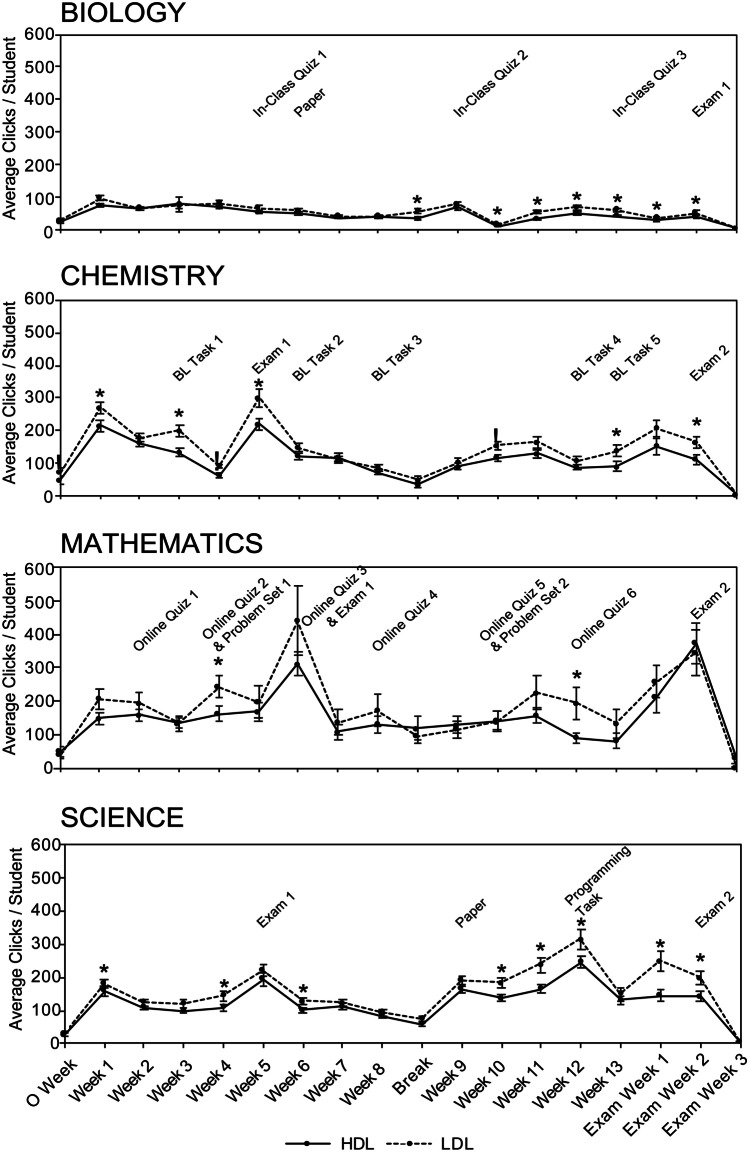
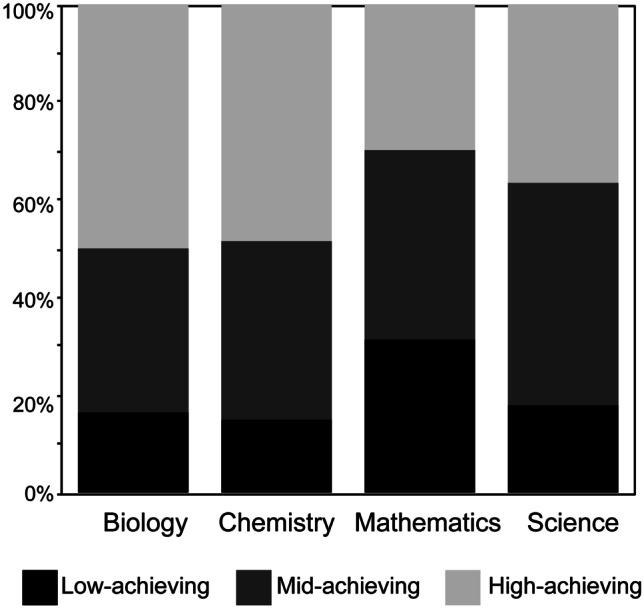
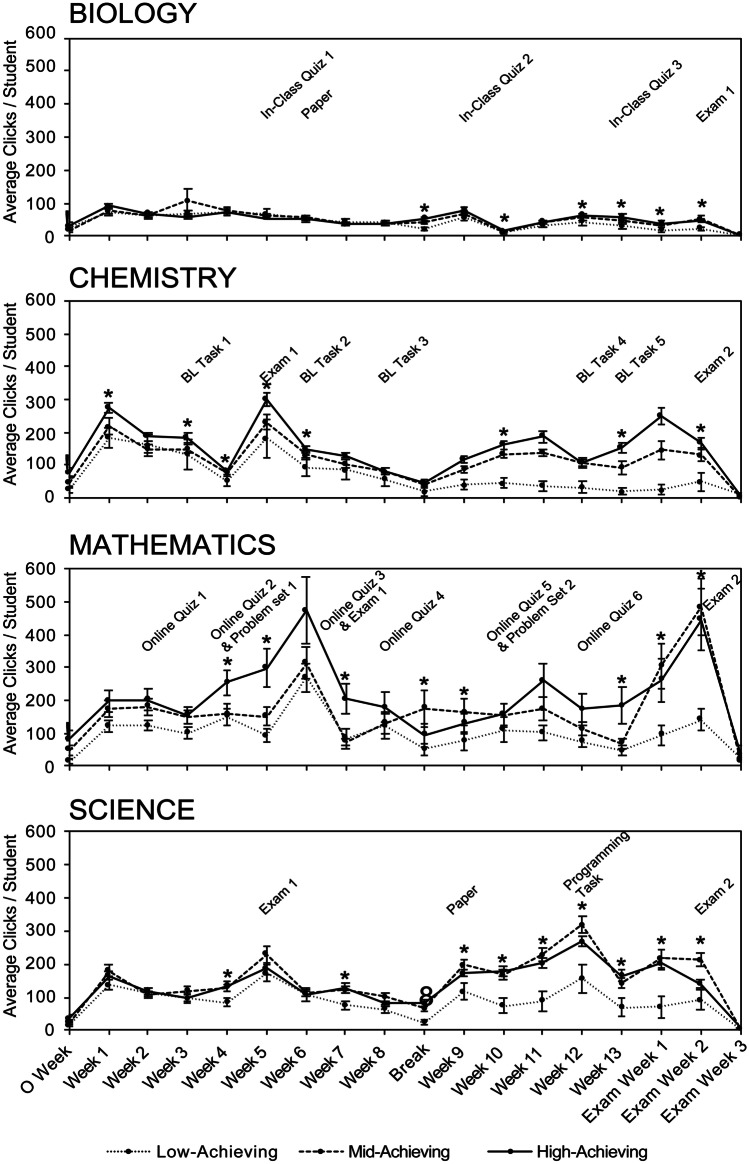
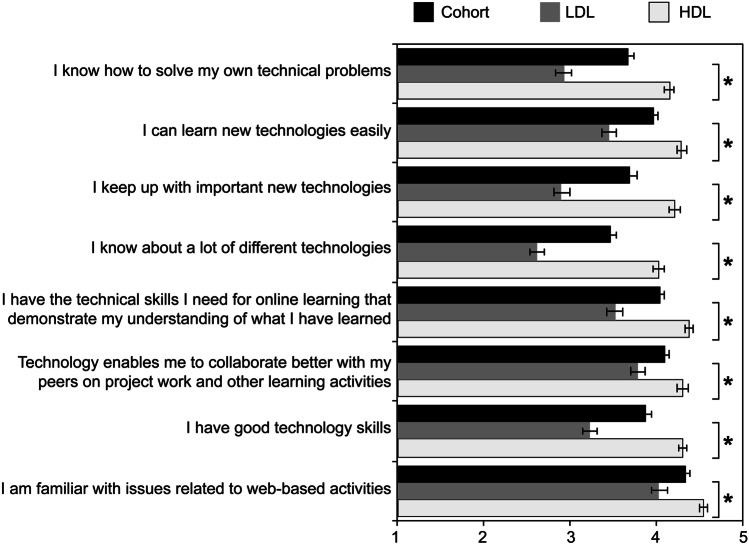
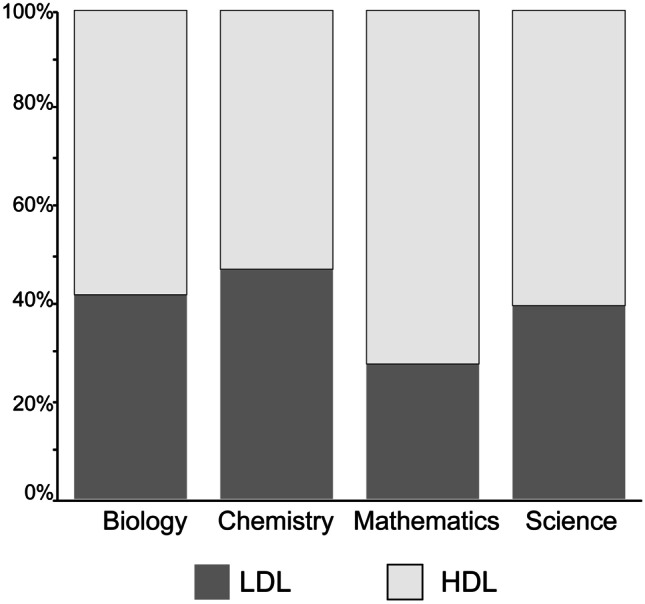
As students transition into tertiary blended learning environments, their digital literacy in terms of technical capabilities have potential to impact on their access to digital resources. The first foundational year of STEM degrees includes compulsory courses across a broad range of scientific areas, each of which incorporates online technology in a discipline-specific manner. Given the diversity of online resources that STEM students need to access across their first-year coursework, this study applies learning analytical methods to determine whether students' perceived level of digital literacy has an effect on their navigation of learning management systems (LMS) and overall academic performance. The frequency and nature of LMS interactivity were examined across four first-year STEM courses offered in the same semester at a single institution, using a K-means cluster analysis to group student responses. It was observed that high achieving students accessed LMS resources more frequently than mid or low-achieving students across all four STEM courses. Students' perceived level of digital literacy was collected via survey ( = 282), and students were sorted high ( = 106) and low-level ( = 176) of perceived digital literacy-HDL and LDL, respectively. HDL students were not consistently found in the high-achieving academic group and did not perform better in their overall grade when compared to LDL students. LDL students were observed to perform better in specific online assessment tasks, which may be attributed to their increased frequency of LMS interactivity. These findings highlight the delicate balance between students' perceived level of digital literacy, motivation for engaging with online learning environments, and academic performance.
随着学生向高等混合学习环境过渡,他们在技术能力方面的数字素养有可能影响其获取数字资源的机会。STEM学位的第一年基础课程包括广泛科学领域的必修课,每门课程都以特定学科的方式融入了在线技术。鉴于STEM专业学生在第一年课程中需要访问的在线资源多种多样,本研究应用学习分析方法来确定学生的数字素养感知水平是否会对他们在学习管理系统(LMS)中的导航以及整体学业成绩产生影响。在同一学期由一所机构提供的四门一年级STEM课程中,使用K均值聚类分析对学生的回答进行分组,以研究LMS交互的频率和性质。结果发现,在所有四门STEM课程中,成绩优异的学生比成绩中等或较差的学生更频繁地访问LMS资源。通过调查收集了学生的数字素养感知水平(n = 282),并将学生分别分为数字素养感知水平高(n = 106)和低(n = 176)的两组——HDL和LDL。在成绩优异的学术群体中并没有一直发现HDL学生,并且与LDL学生相比,他们的总成绩也没有更好。观察发现LDL学生在特定的在线评估任务中表现更好,这可能归因于他们增加了LMS交互的频率。这些发现突出了学生的数字素养感知水平、参与在线学习环境的动机和学业成绩之间的微妙平衡。