National Research Council (CNR), Institute of Clinical Physiology (IFC), Via G. Moruzzi 1, 56124, Pisa, Italy.
Department of Medicine, University of Padova, Via Giustiniani 2, 35128, Padova, Italy.
Curr Osteoporos Rep. 2022 Feb;20(1):65-77. doi: 10.1007/s11914-022-00716-z. Epub 2022 Feb 8.
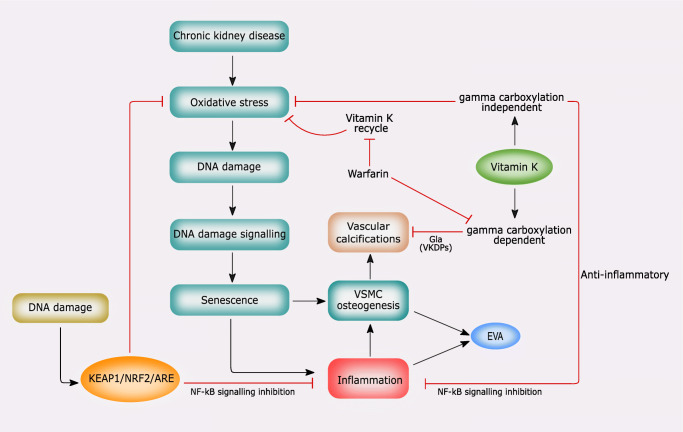
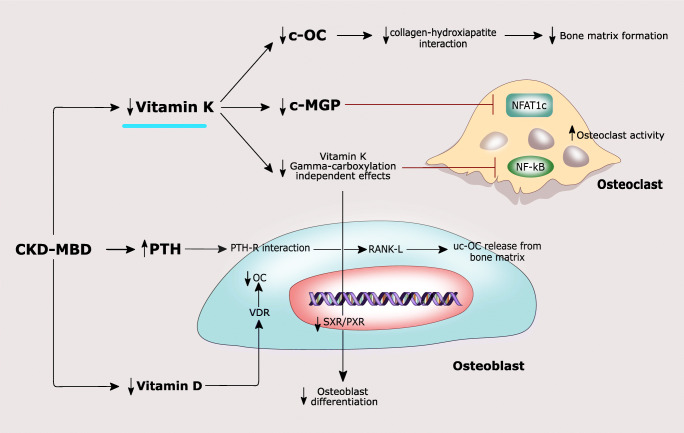
We describe the mechanism of action of vitamin K, and its implication in cardiovascular disease, bone fractures, and inflammation to underline its protective role, especially in chronic kidney disease (CKD).
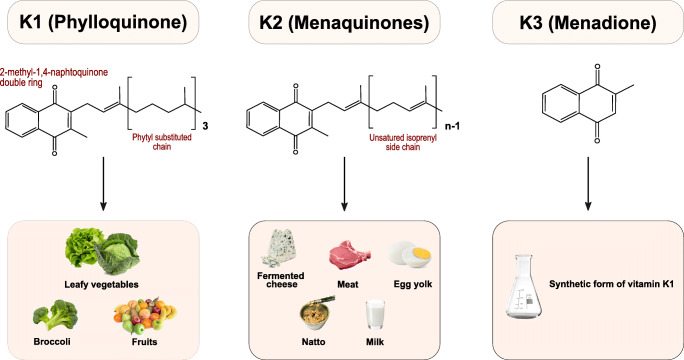
Vitamin K acts as a coenzyme of y-glutamyl carboxylase, transforming undercarboxylated in carboxylated vitamin K-dependent proteins. Furthermore, through the binding of the nuclear steroid and xenobiotic receptor, it activates the expression of genes that encode proteins involved in the maintenance of bone quality and bone remodeling. There are three main types of K vitamers: phylloquinone, menaquinones, and menadione. CKD patients, for several conditions typical of the disease, are characterized by lower levels of vitamin K than the general populations, with a resulting higher prevalence of bone fractures, vascular calcifications, and mortality. Therefore, the definition of vitamin K dosage is an important issue, potentially leading to reduced bone fractures and improved vascular calcifications in the general population and CKD patients.
本文描述了维生素 K 的作用机制及其在心血管疾病、骨折和炎症中的意义,以强调其在慢性肾脏病(CKD)中的保护作用。
维生素 K 作为 γ-谷氨酰羧化酶的辅酶,可将未羧化的维生素 K 转化为羧化的维生素 K 依赖性蛋白。此外,通过与核甾体和异生物质受体结合,它可激活编码参与维持骨质量和骨重塑的蛋白的基因表达。维生素 K 有三种主要类型:叶绿醌、甲萘醌和亚硫酸氢钠甲萘醌。CKD 患者由于疾病的一些典型情况,其维生素 K 水平低于一般人群,导致骨折、血管钙化和死亡率更高。因此,维生素 K 剂量的定义是一个重要问题,可能会降低普通人群和 CKD 患者的骨折发生率并改善血管钙化。