National Heart, Lung, and Blood InstituteNational Institutes of Health Bethesda MD.
Barts Heart CentreBarts Health NHS Trust London United Kingdom.
J Am Heart Assoc. 2022 Feb 15;11(4):e023849. doi: 10.1161/JAHA.121.023849. Epub 2022 Feb 8.
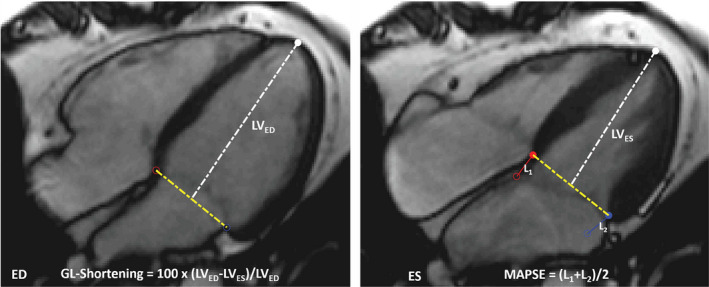
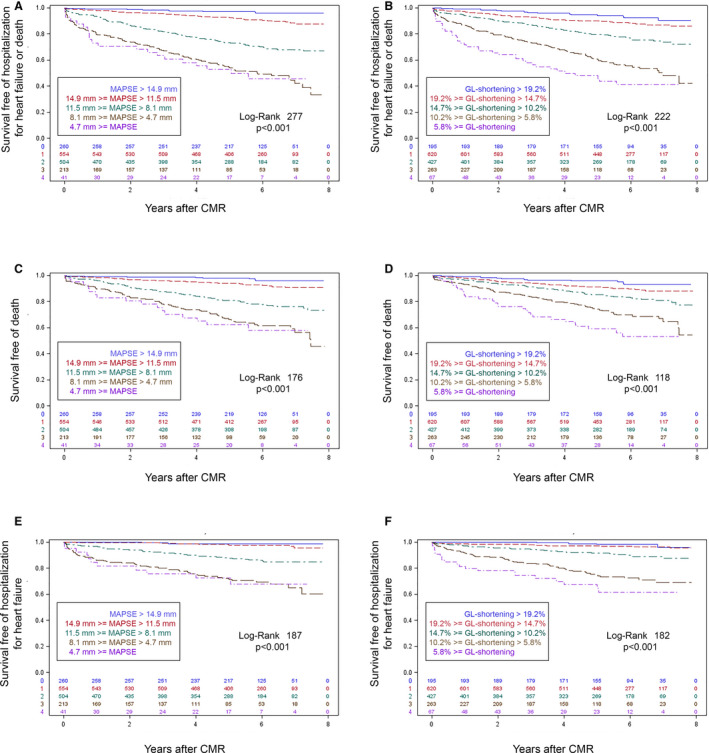
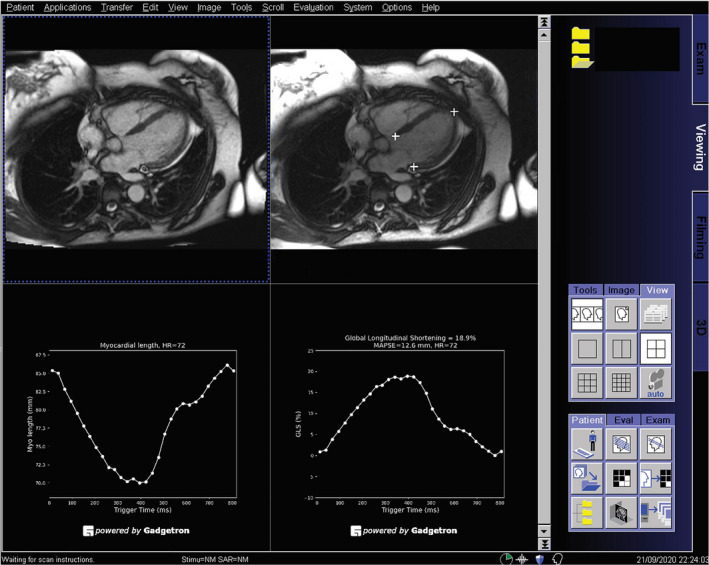
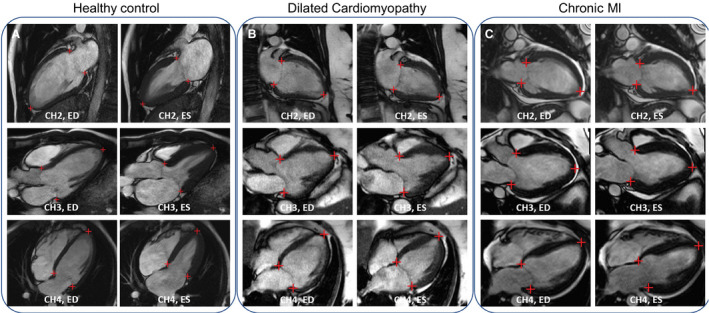
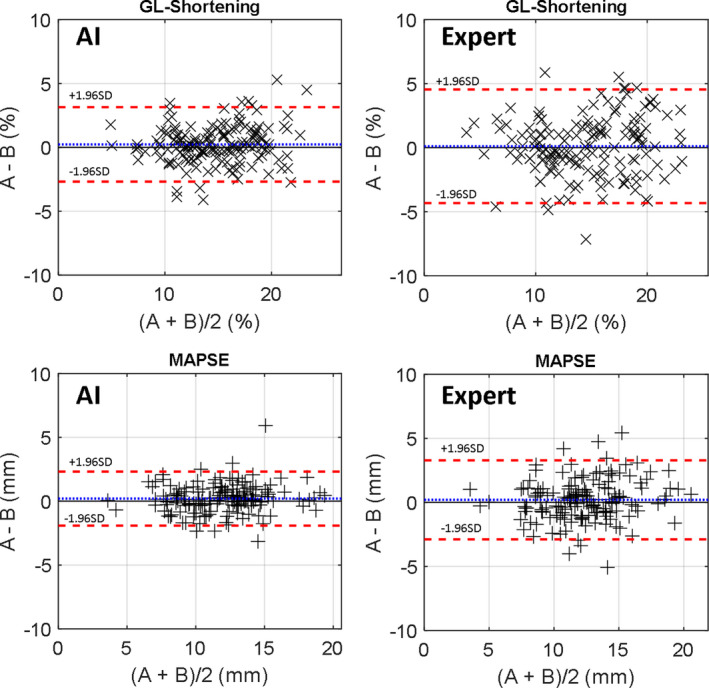
Background Global longitudinal shortening (GL-Shortening) and the mitral annular plane systolic excursion (MAPSE) are known markers in heart failure patients, but measurement may be subjective and less frequently reported because of the lack of automated analysis. Therefore, a validated, automated artificial intelligence (AI) solution can be of strong clinical interest. Methods and Results The model was implemented on cardiac magnetic resonance scanners with automated in-line processing. Reproducibility was evaluated in a scan-rescan data set (n=160 patients). The prognostic association with adverse events (death or hospitalization for heart failure) was evaluated in a large patient cohort (n=1572) and compared with feature tracking global longitudinal strain measured manually by experts. Automated processing took ≈1.1 seconds for a typical case. On the scan-rescan data set, the model exceeded the precision of human expert (coefficient of variation 7.2% versus 11.1% for GL-Shortening, =0.0024; 6.5% versus 9.1% for MAPSE, =0.0124). The minimal detectable change at 90% power was 2.53 percentage points for GL-Shortening and 1.84 mm for MAPSE. AI GL-Shortening correlated well with manual global longitudinal strain (=0.85). AI MAPSE had the strongest association with outcomes (χ, 255; hazard ratio [HR], 2.5 [95% CI, 2.2-2.8]), compared with AI GL-Shortening (χ, 197; HR, 2.1 [95% CI,1.9-2.4]), manual global longitudinal strain (χ, 192; HR, 2.1 [95% CI, 1.9-2.3]), and left ventricular ejection fraction (χ, 147; HR, 1.8 [95% CI, 1.6-1.9]), with <0.001 for all. Conclusions Automated in-line AI-measured MAPSE and GL-Shortening can deliver immediate and highly reproducible results during cardiac magnetic resonance scanning. These results have strong associations with adverse outcomes that exceed those of global longitudinal strain and left ventricular ejection fraction.
全球纵向缩短(GL-Shortening)和二尖瓣环平面收缩期位移(MAPSE)是心力衰竭患者的已知标志物,但由于缺乏自动分析,测量可能具有主观性,并且报告频率较低。因此,经过验证的自动化人工智能(AI)解决方案可能具有重要的临床意义。
该模型在配备自动在线处理的心脏磁共振扫描仪上实施。在扫描-重扫数据集(n=160 例患者)中评估可重复性。在大型患者队列(n=1572 例)中评估与不良事件(死亡或因心力衰竭住院)的预后关联,并与由专家手动测量的特征跟踪整体纵向应变进行比较。自动处理对于典型病例耗时约 1.1 秒。在扫描-重扫数据集上,该模型优于人类专家的精度(GL-Shortening 的变异系数为 7.2%对 11.1%,=0.0024;MAPSE 的变异系数为 6.5%对 9.1%,=0.0124)。在 90%功率下,GL-Shortening 的最小可检测变化为 2.53 个百分点,MAPSE 为 1.84mm。AI GL-Shortening 与手动整体纵向应变相关性良好(=0.85)。与 AI GL-Shortening(χ,197;风险比[HR],2.1[95%CI,1.9-2.4])、手动整体纵向应变(χ,192;HR,2.1[95%CI,1.9-2.3])和左心室射血分数(χ,147;HR,1.8[95%CI,1.6-1.9])相比,AI MAPSE 与结局的关联最强(χ,255;HR,2.5[95%CI,2.2-2.8]),所有比较均<0.001。
自动化在线 AI 测量的 MAPSE 和 GL-Shortening 可在心脏磁共振扫描期间提供即时且高度可重复的结果。这些结果与不良结局具有很强的关联,超过了整体纵向应变和左心室射血分数。