Inserm U1052, CNRS UMR5286, University Claude Bernard Lyon 1, Cancer Research Center of Lyon, Lyon, France.
Endocrinology Department, "C.I. Parhon" National Institute of Endocrinology, Bucharest, Romania.
Acta Neuropathol Commun. 2022 Feb 9;10(1):18. doi: 10.1186/s40478-022-01321-y.
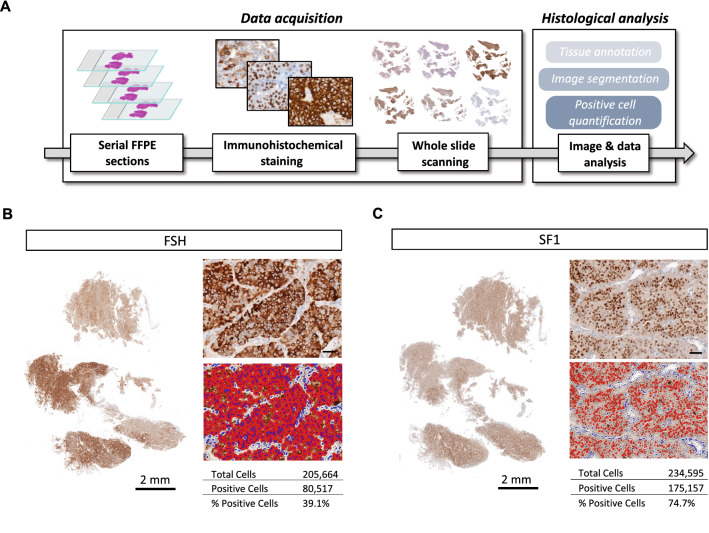
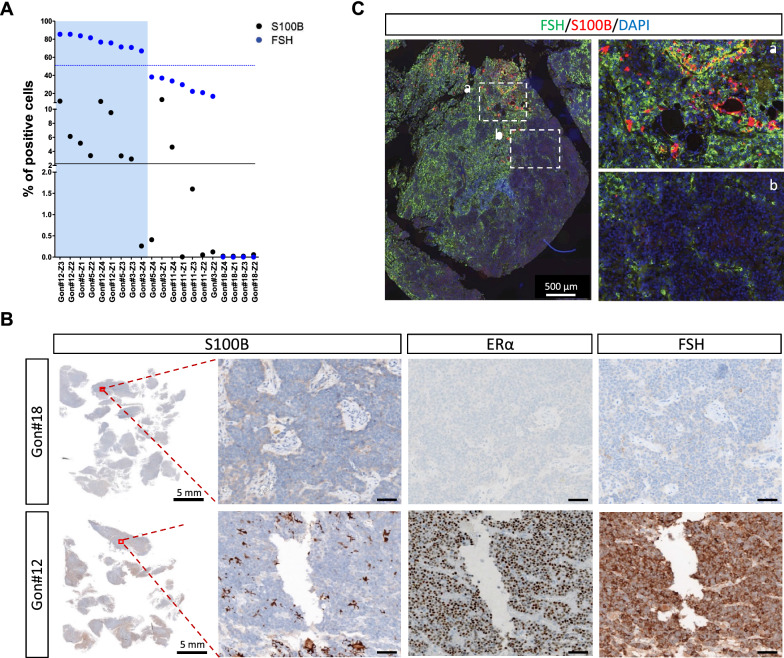
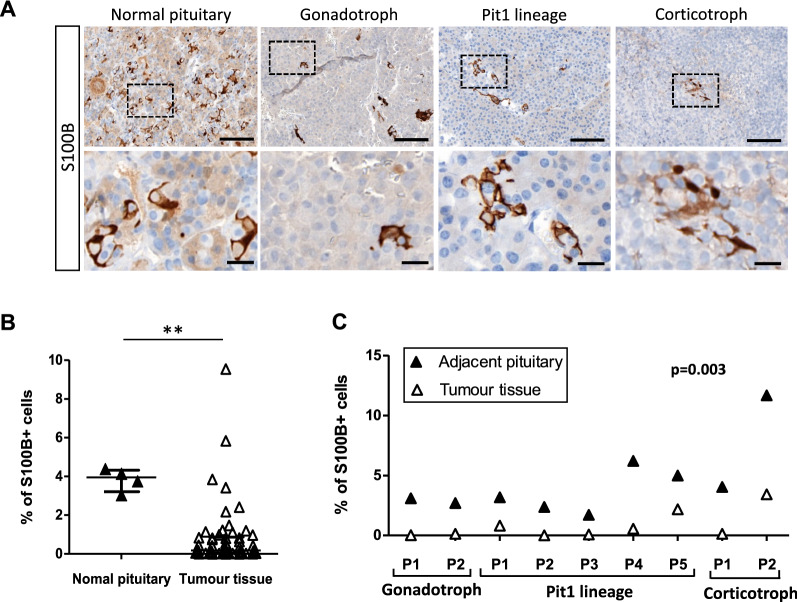
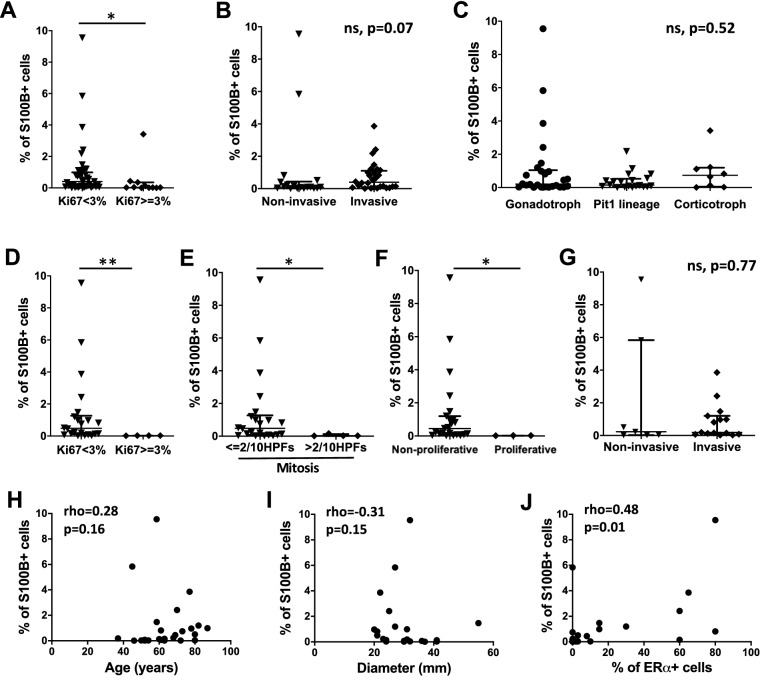
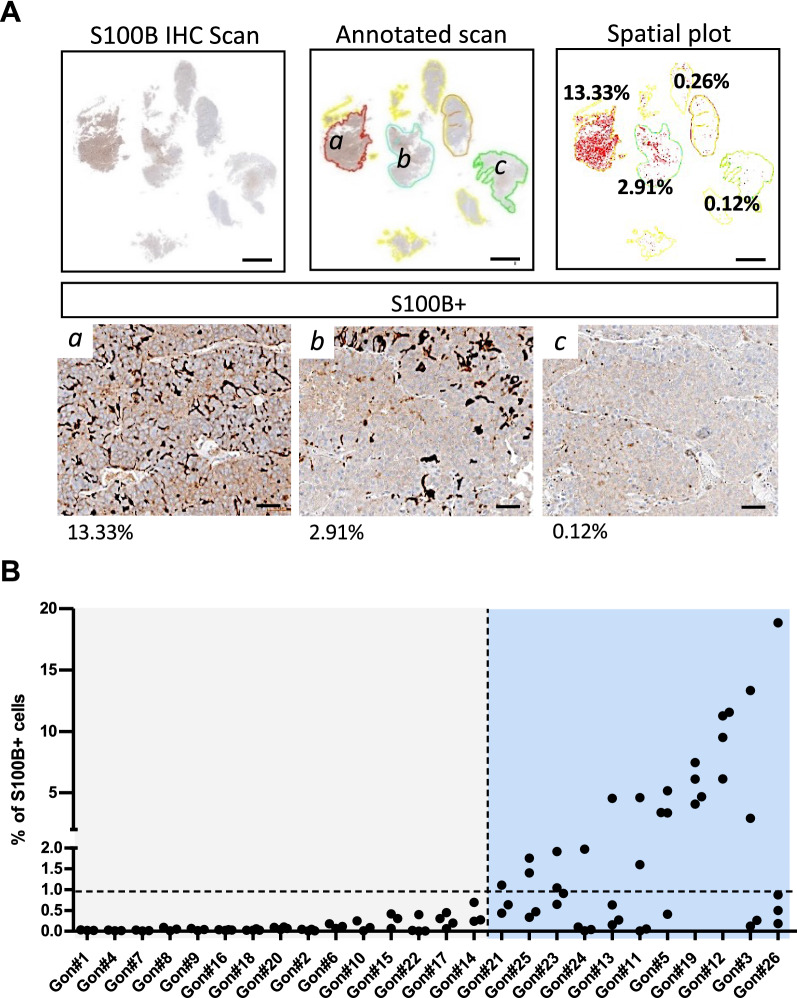
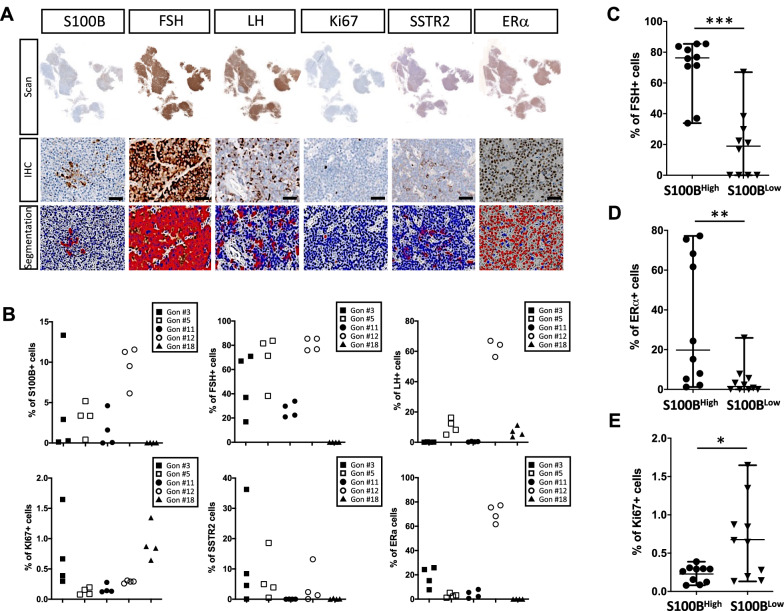
Folliculostellate cells are S100B-expressing cells with numerous functions in the normal anterior pituitary. These cells have also been identified in pituitary neuroendocrine tumours (PitNETs), where their precise role remains elusive. Here, we aimed to build a refined cartography of S100B-expressing cells to characterise their interpatient and intratumoural spatial distribution, and to start identifying their potential functions in PitNETs. High-throughput histological analysis of S100B-stained tumour sections of 54 PitNETs revealed a significant decrease in S100B + cells in PitNETs compared to the normal anterior pituitary. A Ki67 index ≥ 3, a mitosis count > 2/10 per high power fields, and a proliferative status, were all associated with fewer S100B + cells in gonadotroph tumours. Gonadotroph tumours also showed interpatient and intratumoural heterogeneity in the spatial distribution of S100B + cells. The existence of an intratumoural heterogeneity was further confirmed by the incorporation to our spatial analysis of additional markers: Ki67, FSH, LH, ERα and SSTR2. The tumour areas with fewer S100B + cells displayed a higher percentage of Ki67 + cells, whereas strong positive correlations were observed between S100B + , FSH + , and ERα + cells. Such spatial associations suggest that S100B + folliculostellate cells could play a role in gonadotroph tumorigenesis, and may contribute to the maintenance of tumour cells in a low proliferating, FSH + /ERα + differentiated state. Albeit, further in-depth functional studies are required to decipher the mechanisms underlying these spatial associations and to potentially identify a therapeutic use.
卵泡细胞是 S100B 表达细胞,在正常垂体前叶中具有多种功能。这些细胞也在垂体神经内分泌肿瘤(PitNETs)中被识别出来,但它们的确切作用仍然难以捉摸。在这里,我们旨在构建 S100B 表达细胞的精细化图谱,以描述它们在患者间和肿瘤内的空间分布,并开始识别它们在 PitNETs 中的潜在功能。对 54 例 PitNET 肿瘤组织中 S100B 染色切片进行高通量组织学分析,结果显示 PitNETs 中 S100B+细胞明显减少。Ki67 指数≥3、有丝分裂计数>2/10 高倍视野、增殖状态与促性腺激素肿瘤中 S100B+细胞数量减少有关。促性腺激素肿瘤在 S100B+细胞的空间分布上也存在患者间和肿瘤内的异质性。通过将额外的标记物(Ki67、FSH、LH、ERα 和 SSTR2)纳入我们的空间分析,进一步证实了肿瘤内异质性的存在。S100B+细胞较少的肿瘤区域显示出更高比例的 Ki67+细胞,而 S100B+、FSH+和 ERα+细胞之间观察到强烈的正相关。这种空间关联表明,S100B+卵泡细胞可能在促性腺激素肿瘤发生中发挥作用,并可能有助于维持肿瘤细胞处于低增殖、FSH+/ERα+分化状态。尽管如此,需要进一步的深入功能研究来阐明这些空间关联的机制,并有可能确定其治疗用途。