Department of Molecular and Translational Medicine, University of Brescia, Brescia, Italy.
IRCCS Humanitas Research Hospital, Rozzano, Italy.
Front Immunol. 2022 Jan 24;12:797390. doi: 10.3389/fimmu.2021.797390. eCollection 2021.
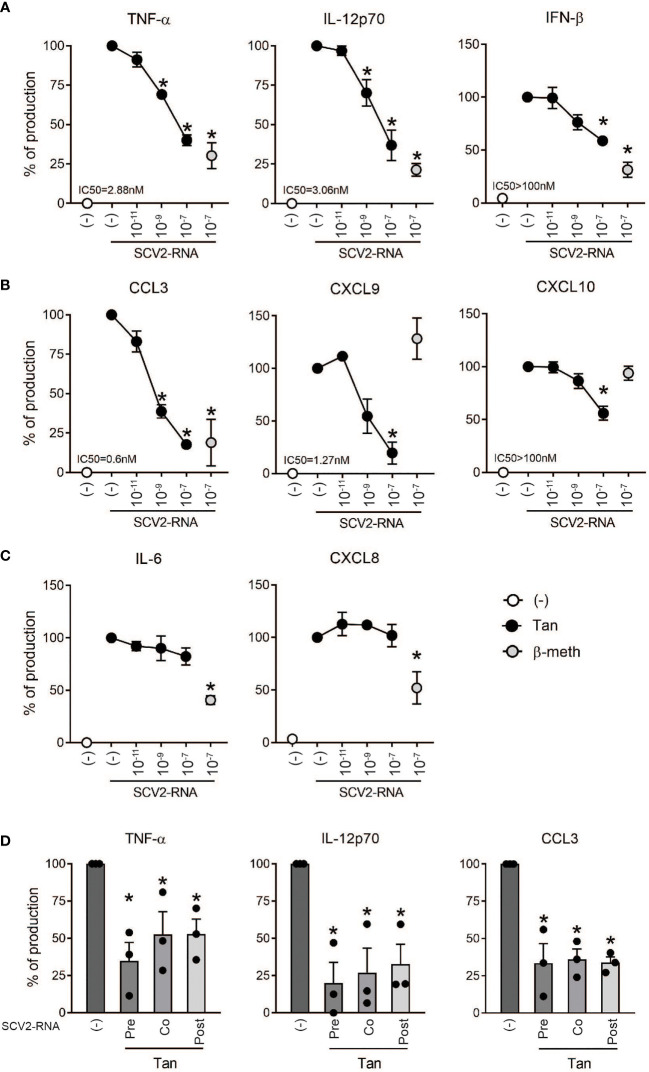
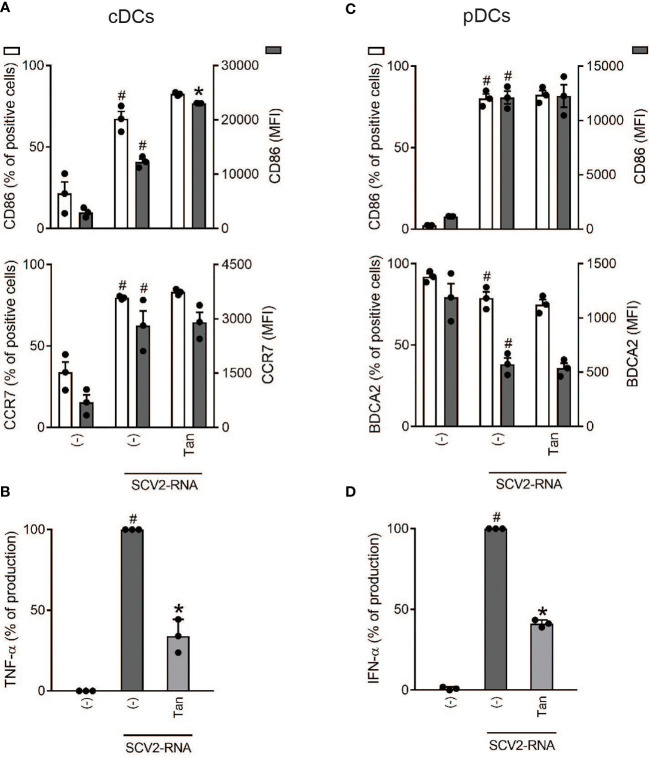
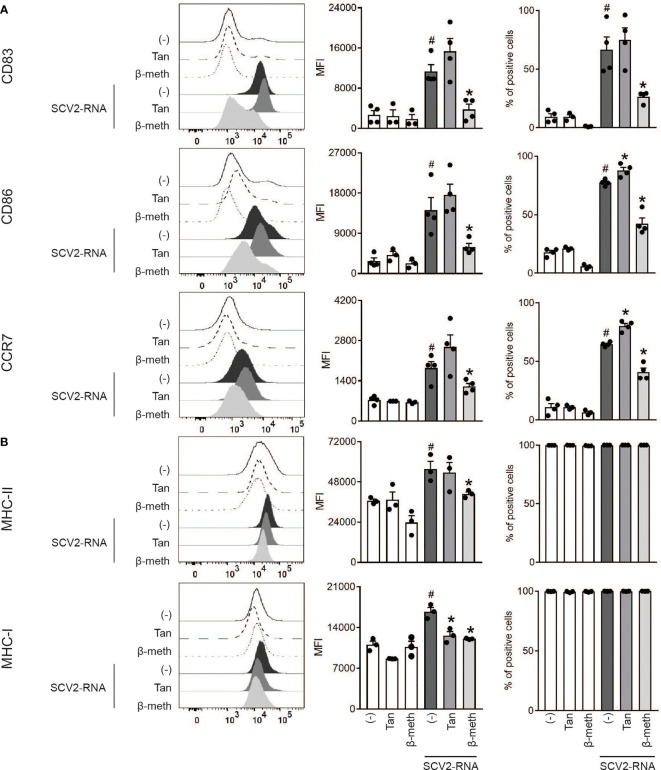
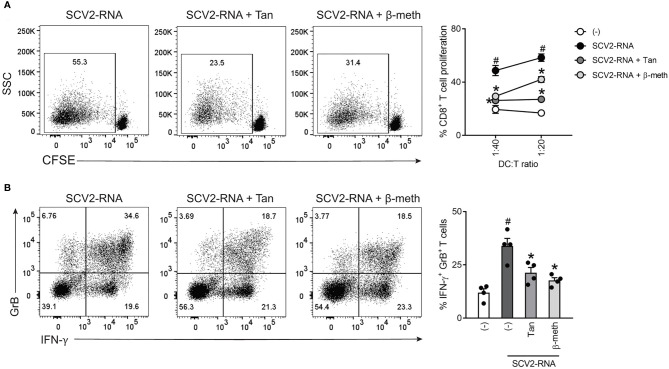
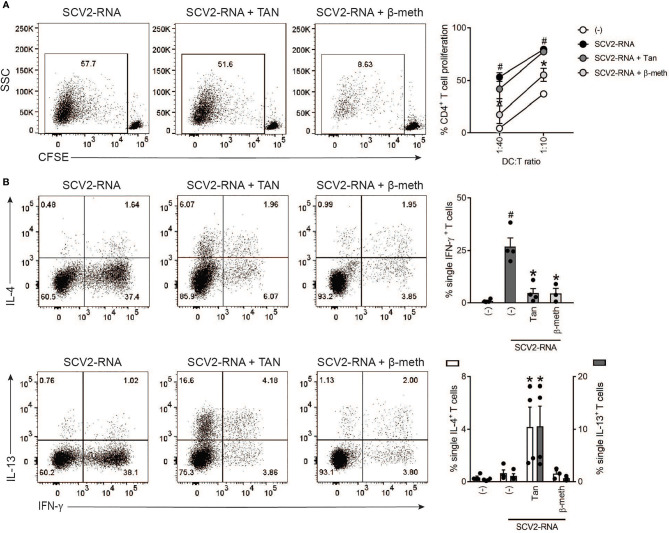
Phosphodiesterase 4 (PDE4) inhibitors are immunomodulatory drugs approved to treat diseases associated with chronic inflammatory conditions, such as COPD, psoriasis and atopic dermatitis. Tanimilast (international non-proprietary name of CHF6001) is a novel, potent and selective inhaled PDE4 inhibitor in advanced clinical development for the treatment of COPD. To begin testing its potential in limiting hyperinflammation and immune dysregulation associated to SARS-CoV-2 infection, we took advantage of an model of dendritic cell (DC) activation by SARS-CoV-2 genomic ssRNA (SCV2-RNA). In this context, Tanimilast decreased the release of pro-inflammatory cytokines (TNF-α and IL-6), chemokines (CCL3, CXCL9, and CXCL10) and of Th1-polarizing cytokines (IL-12, type I IFNs). In contrast to β-methasone, a reference steroid anti-inflammatory drug, Tanimilast did not impair the acquisition of the maturation markers CD83, CD86 and MHC-II, nor that of the lymph node homing receptor CCR7. Consistent with this, Tanimilast did not reduce the capability of SCV2-RNA-stimulated DCs to activate CD4 T cells but skewed their polarization towards a Th2 phenotype. Both Tanimilast and β-methasone blocked the increase of MHC-I molecules in SCV2-RNA-activated DCs and restrained the proliferation and activation of cytotoxic CD8 T cells. Our results indicate that Tanimilast can modulate the SCV2-RNA-induced pro-inflammatory and Th1-polarizing potential of DCs, crucial regulators of both the inflammatory and immune response. Given also the remarkable safety demonstrated by Tanimilast, up to now, in clinical studies, we propose this inhaled PDE4 inhibitor as a promising immunomodulatory drug in the scenario of COVID-19.
磷酸二酯酶 4(PDE4)抑制剂是一种免疫调节药物,已被批准用于治疗与慢性炎症性疾病相关的疾病,如 COPD、银屑病和特应性皮炎。Tanimilast(CHF6001 的国际非专利名称)是一种新型、强效和选择性的吸入 PDE4 抑制剂,正在进行治疗 COPD 的临床开发。为了开始测试其在限制与 SARS-CoV-2 感染相关的过度炎症和免疫失调方面的潜力,我们利用 SARS-CoV-2 基因组 ssRNA(SCV2-RNA)激活树突状细胞(DC)的模型。在这种情况下,Tanimilast 降低了促炎细胞因子(TNF-α和 IL-6)、趋化因子(CCL3、CXCL9 和 CXCL10)和 Th1 极化细胞因子(IL-12、I 型 IFNs)的释放。与参考类固醇抗炎药物β-甲泼尼龙不同,Tanimilast 不会损害成熟标志物 CD83、CD86 和 MHC-II 的获得,也不会损害淋巴结归巢受体 CCR7 的获得。与此一致,Tanimilast 并没有降低 SCV2-RNA 刺激的 DC 激活 CD4 T 细胞的能力,但使它们向 Th2 表型极化。Tanimilast 和β-甲泼尼龙都阻断了 SCV2-RNA 激活的 DC 中 MHC-I 分子的增加,并抑制了细胞毒性 CD8 T 细胞的增殖和激活。我们的结果表明,Tanimilast 可以调节 SCV2-RNA 诱导的 DC 的促炎和 Th1 极化潜能,DC 是炎症和免疫反应的关键调节剂。鉴于 Tanimilast 迄今为止在临床研究中表现出的显著安全性,我们建议将这种吸入 PDE4 抑制剂作为 COVID-19 场景下有前途的免疫调节剂。