• 文献检索
  • 文档翻译
  • 深度研究
  • 学术资讯
  • Suppr Zotero 插件Zotero 插件
  • 邀请有礼
  • 套餐&价格
  • 历史记录
应用&插件
Suppr Zotero 插件Zotero 插件浏览器插件Mac 客户端Windows 客户端微信小程序
定价
高级版会员购买积分包购买API积分包
服务
文献检索文档翻译深度研究API 文档MCP 服务
关于我们
关于 Suppr公司介绍联系我们用户协议隐私条款
关注我们

Suppr 超能文献

核心技术专利:CN118964589B侵权必究
粤ICP备2023148730 号-1Suppr @ 2026

文献检索

告别复杂PubMed语法,用中文像聊天一样搜索,搜遍4000万医学文献。AI智能推荐,让科研检索更轻松。

立即免费搜索

文件翻译

保留排版,准确专业,支持PDF/Word/PPT等文件格式,支持 12+语言互译。

免费翻译文档

深度研究

AI帮你快速写综述,25分钟生成高质量综述,智能提取关键信息,辅助科研写作。

立即免费体验

日本脑炎病毒感染的小鼠模型:使用荟萃回归分析方法的系统评价和荟萃分析。

Mouse models of Japanese encephalitis virus infection: A systematic review and meta-analysis using a meta-regression approach.

机构信息

Oxford Glycobiology Institute, Department of Biochemistry, University of Oxford, Oxford, United Kingdom.

Lao-Oxford-Mahosot Hospital-Wellcome Trust Research Unit (LOMWRU), Microbiology Laboratory, Mahosot Hospital, Vientiane, Lao PDR.

出版信息

PLoS Negl Trop Dis. 2022 Feb 10;16(2):e0010116. doi: 10.1371/journal.pntd.0010116. eCollection 2022 Feb.

DOI:10.1371/journal.pntd.0010116
PMID:35143497
原文链接:https://pmc.ncbi.nlm.nih.gov/articles/PMC8865681/
Abstract

BACKGROUND

Japanese encephalitis (JE) virus (JEV) remains a leading cause of neurological infection across Asia. The high lethality of disease and absence of effective therapies mean that standardised animal models will be crucial in developing therapeutics. However, published mouse models are heterogeneous. We performed a systematic review, meta-analysis and meta-regression of published JEV mouse experiments to investigate the variation in model parameters, assess homogeneity and test the relationship of key variables against mortality.

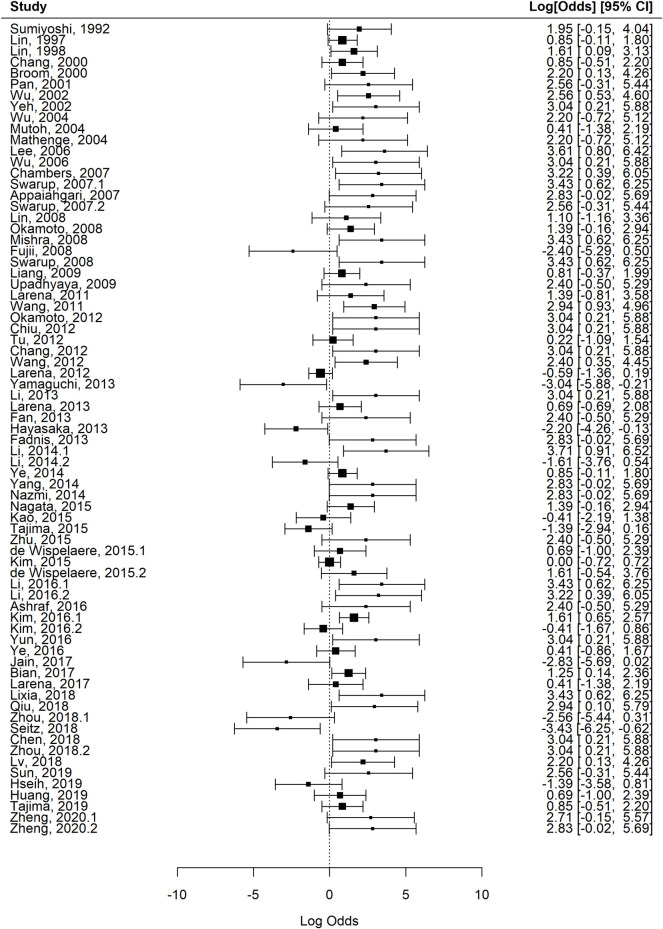
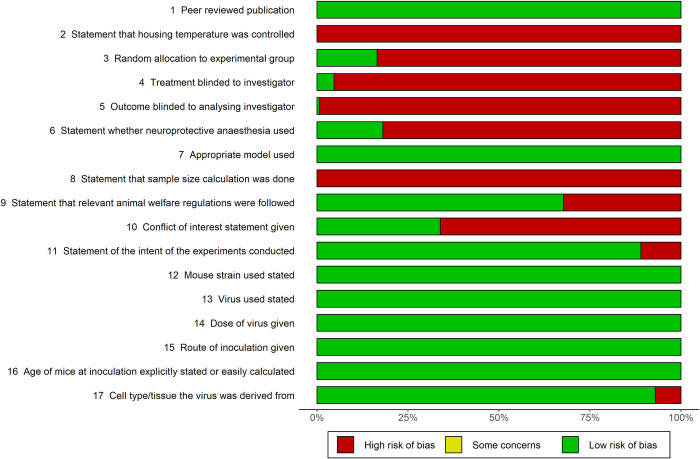
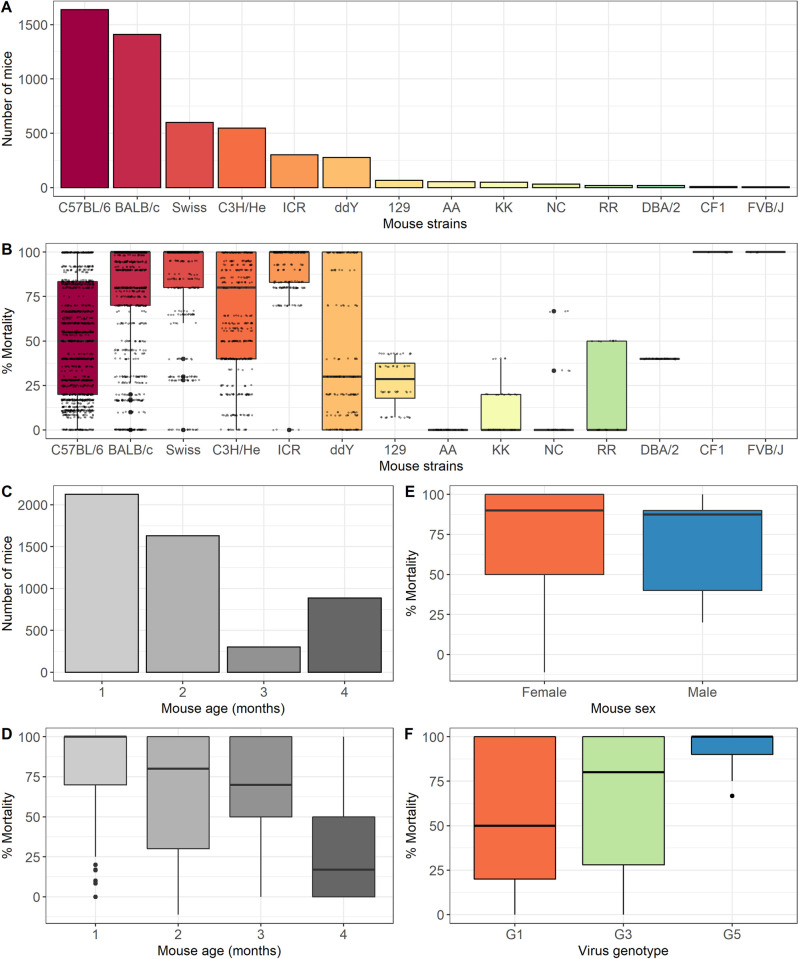
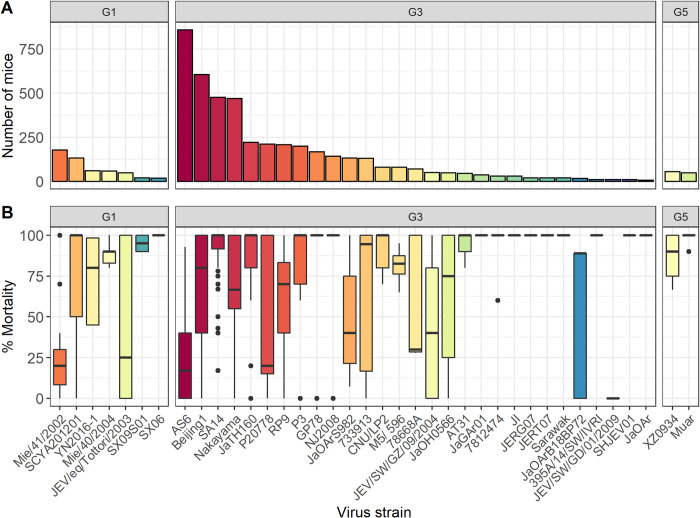
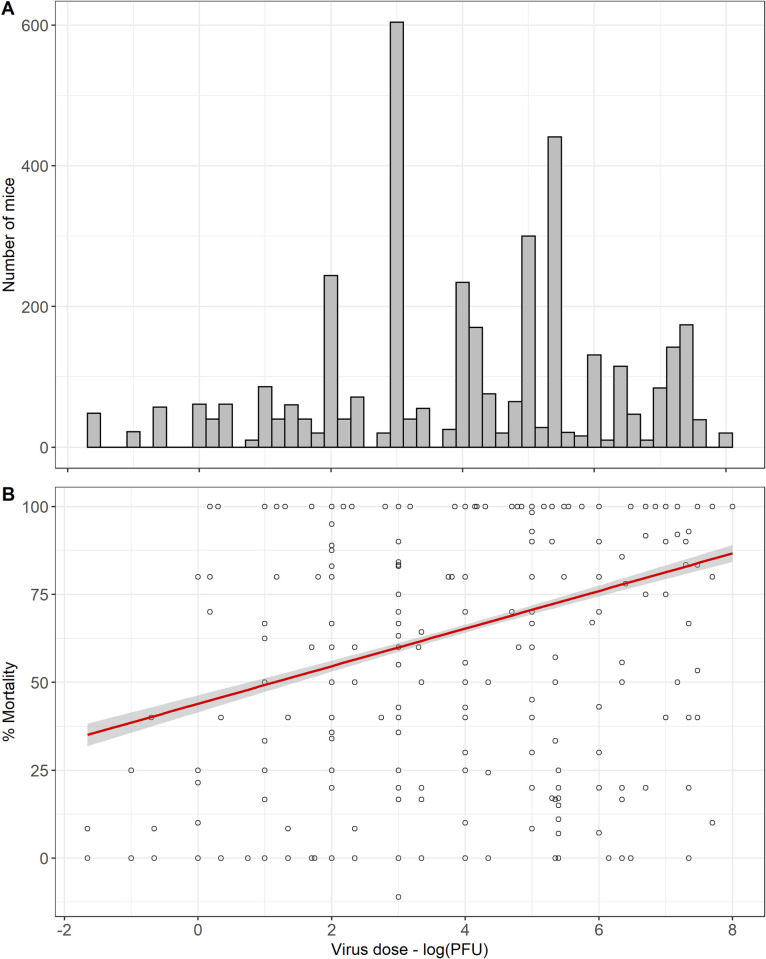
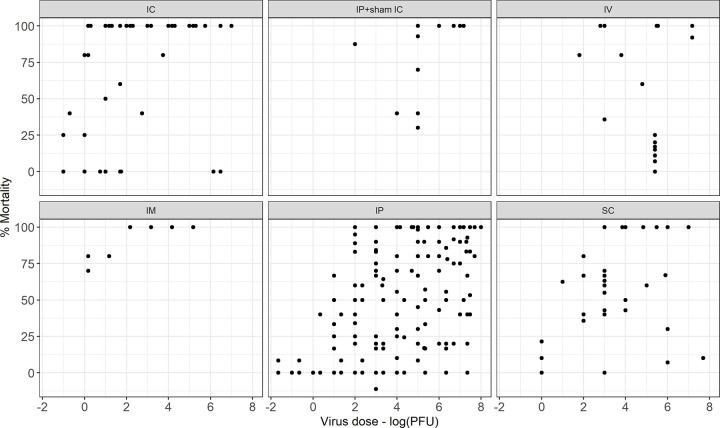
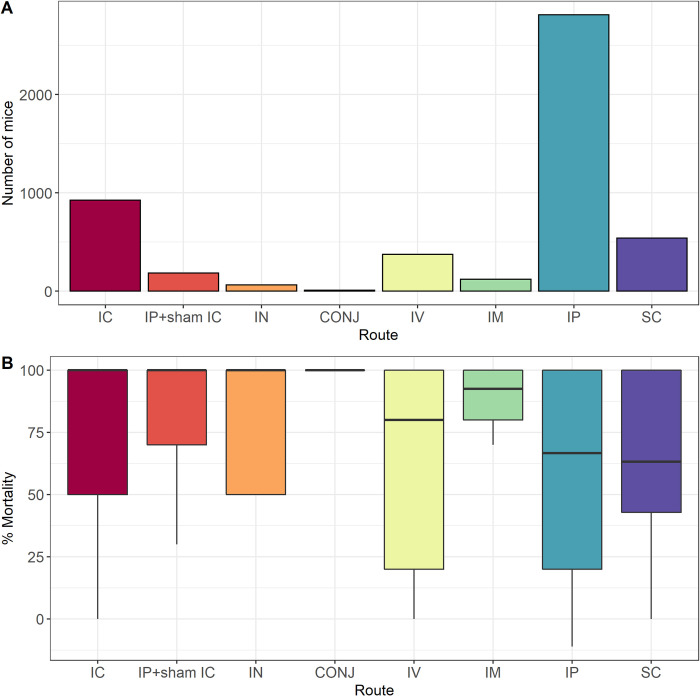
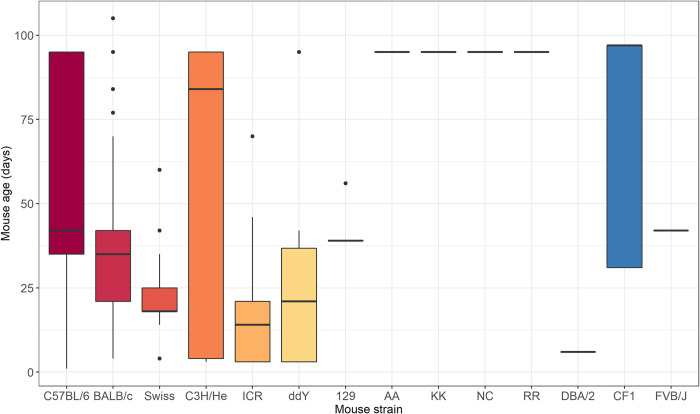
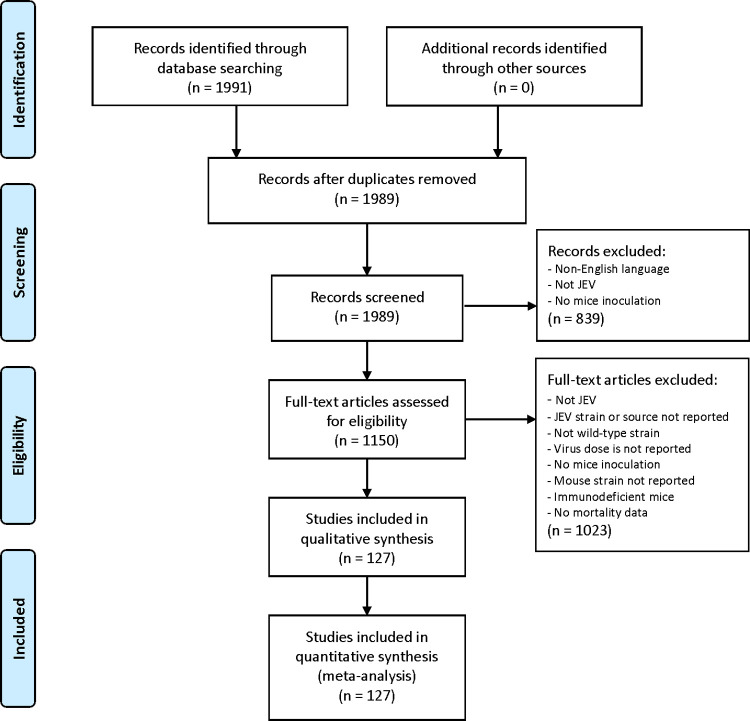
METHODOLOGY/ PRINCIPAL FINDINGS: A PubMed search was performed up to August 2020. 1991 publications were identified, of which 127 met inclusion criteria, with data for 5026 individual mice across 487 experimental groups. Quality assessment was performed using a modified CAMARADES criteria and demonstrated incomplete reporting with a median quality score of 10/17. The pooled estimate of mortality in mice after JEV challenge was 64.7% (95% confidence interval 60.9 to 68.3) with substantial heterogeneity between experimental groups (I^2 70.1%, df 486). Using meta-regression to identify key moderators, a refined dataset was used to model outcome dependent on five variables: mouse age, mouse strain, virus strain, virus dose (in log10PFU) and route of inoculation. The final model reduced the heterogeneity substantially (I^2 38.9, df 265), explaining 54% of the variability.

CONCLUSION/ SIGNIFICANCE: This is the first systematic review of mouse models of JEV infection. Better adherence to CAMARADES guidelines may reduce bias and variability of reporting. In particular, sample size calculations were notably absent. We report that mouse age, mouse strain, virus strain, virus dose and route of inoculation account for much, though not all, of the variation in mortality. This dataset is available for researchers to access and use as a guideline for JEV mouse experiments.

摘要

背景

日本脑炎病毒(JEV)仍然是亚洲各地神经感染的主要原因。疾病的高致死率和缺乏有效的治疗方法意味着标准化的动物模型对于开发疗法至关重要。然而,已发表的小鼠模型存在异质性。我们对已发表的 JEV 小鼠实验进行了系统评价、荟萃分析和荟萃回归,以研究模型参数的变化,评估同质性,并测试关键变量与死亡率的关系。

方法/主要发现:对截至 2020 年 8 月的 PubMed 进行了搜索。确定了 1991 篇出版物,其中 127 篇符合纳入标准,共有 5026 只个体小鼠分布在 487 个实验组中。使用修改后的 CAMARADES 标准进行了质量评估,结果表明报告不完整,中位数质量评分为 10/17。JEV 攻击后小鼠的死亡率汇总估计为 64.7%(95%置信区间 60.9 至 68.3),实验组之间存在很大的异质性(I^2 70.1%,df 486)。使用荟萃回归来确定关键调节变量,使用精炼数据集来模拟依赖于五个变量的结果:小鼠年龄、小鼠品系、病毒株、病毒剂量(以 log10PFU 表示)和接种途径。最终模型大大降低了异质性(I^2 38.9,df 265),解释了 54%的变异性。

结论/意义:这是对 JEV 感染小鼠模型的首次系统评价。更好地遵守 CAMARADES 指南可能会减少报告的偏差和变异性。特别是明显缺乏样本量计算。我们报告说,小鼠年龄、小鼠品系、病毒株、病毒剂量和接种途径解释了死亡率变化的大部分(尽管不是全部)。该数据集可供研究人员访问和用于 JEV 小鼠实验的指南。
https://cdn.ncbi.nlm.nih.gov/pmc/blobs/d986/8865681/524d2ef78de3/pntd.0010116.g009.jpg
https://cdn.ncbi.nlm.nih.gov/pmc/blobs/d986/8865681/12d58fc48794/pntd.0010116.g001.jpg
https://cdn.ncbi.nlm.nih.gov/pmc/blobs/d986/8865681/ef5fe6f1e606/pntd.0010116.g002.jpg
https://cdn.ncbi.nlm.nih.gov/pmc/blobs/d986/8865681/19a8f7f63cf2/pntd.0010116.g003.jpg
https://cdn.ncbi.nlm.nih.gov/pmc/blobs/d986/8865681/b77f024c6bde/pntd.0010116.g004.jpg
https://cdn.ncbi.nlm.nih.gov/pmc/blobs/d986/8865681/810a9de2df70/pntd.0010116.g005.jpg
https://cdn.ncbi.nlm.nih.gov/pmc/blobs/d986/8865681/4ab784011ddf/pntd.0010116.g006.jpg
https://cdn.ncbi.nlm.nih.gov/pmc/blobs/d986/8865681/c3be5220133d/pntd.0010116.g007.jpg
https://cdn.ncbi.nlm.nih.gov/pmc/blobs/d986/8865681/809980013b78/pntd.0010116.g008.jpg
https://cdn.ncbi.nlm.nih.gov/pmc/blobs/d986/8865681/524d2ef78de3/pntd.0010116.g009.jpg
https://cdn.ncbi.nlm.nih.gov/pmc/blobs/d986/8865681/12d58fc48794/pntd.0010116.g001.jpg
https://cdn.ncbi.nlm.nih.gov/pmc/blobs/d986/8865681/ef5fe6f1e606/pntd.0010116.g002.jpg
https://cdn.ncbi.nlm.nih.gov/pmc/blobs/d986/8865681/19a8f7f63cf2/pntd.0010116.g003.jpg
https://cdn.ncbi.nlm.nih.gov/pmc/blobs/d986/8865681/b77f024c6bde/pntd.0010116.g004.jpg
https://cdn.ncbi.nlm.nih.gov/pmc/blobs/d986/8865681/810a9de2df70/pntd.0010116.g005.jpg
https://cdn.ncbi.nlm.nih.gov/pmc/blobs/d986/8865681/4ab784011ddf/pntd.0010116.g006.jpg
https://cdn.ncbi.nlm.nih.gov/pmc/blobs/d986/8865681/c3be5220133d/pntd.0010116.g007.jpg
https://cdn.ncbi.nlm.nih.gov/pmc/blobs/d986/8865681/809980013b78/pntd.0010116.g008.jpg
https://cdn.ncbi.nlm.nih.gov/pmc/blobs/d986/8865681/524d2ef78de3/pntd.0010116.g009.jpg

相似文献

1
Mouse models of Japanese encephalitis virus infection: A systematic review and meta-analysis using a meta-regression approach.日本脑炎病毒感染的小鼠模型:使用荟萃回归分析方法的系统评价和荟萃分析。
PLoS Negl Trop Dis. 2022 Feb 10;16(2):e0010116. doi: 10.1371/journal.pntd.0010116. eCollection 2022 Feb.
2
Meta-analyses of the proportion of Japanese encephalitis virus infection in vectors and vertebrate hosts.媒介和脊椎动物宿主中日本脑炎病毒感染比例的荟萃分析。
Parasit Vectors. 2017 Sep 7;10(1):418. doi: 10.1186/s13071-017-2354-7.
3
Low Protective Efficacy of the Current Japanese Encephalitis Vaccine against the Emerging Genotype 5 Japanese Encephalitis Virus.当前日本脑炎疫苗对新兴的5型日本脑炎病毒的保护效力较低。
PLoS Negl Trop Dis. 2016 May 3;10(5):e0004686. doi: 10.1371/journal.pntd.0004686. eCollection 2016 May.
4
The A66G back mutation in NS2A of JEV SA14-14-2 strain contributes to production of NS1' protein and the secreted NS1' can be used for diagnostic biomarker for virulent virus infection.日本脑炎病毒SA14-14-2株NS2A基因中的A66G回复突变有助于NS1'蛋白的产生,分泌的NS1'可作为强毒病毒感染的诊断生物标志物。
Infect Genet Evol. 2015 Dec;36:116-125. doi: 10.1016/j.meegid.2015.09.013. Epub 2015 Sep 16.
5
Construction and immune efficacy of recombinant pseudorabies virus expressing PrM-E proteins of Japanese encephalitis virus genotype І.表达乙型脑炎病毒Ⅰ型PrM-E蛋白的重组伪狂犬病病毒的构建及免疫效果
Virol J. 2015 Dec 10;12:214. doi: 10.1186/s12985-015-0449-3.
6
Neuroprotective effect of (-)-tetrahydropalmatine in Japanese encephalitis virus strain GP-78 infected mouse model.(-)-延胡索乙素对乙型脑炎病毒 GP-78 株感染小鼠模型的神经保护作用。
Microb Pathog. 2018 Jan;114:197-203. doi: 10.1016/j.micpath.2017.11.047. Epub 2017 Dec 2.
7
Japanese encephalitis virus-induced neuropathology in mouse model infected through the conjunctival route.通过结膜途径感染的小鼠模型中日本脑炎病毒诱导的神经病理学。
Indian J Med Res. 2019 Nov;150(5):498-503. doi: 10.4103/ijmr.IJMR_2078_17.
8
Molecular basis for attenuation of neurovirulence of a yellow fever Virus/Japanese encephalitis virus chimera vaccine (ChimeriVax-JE).黄热病病毒/日本脑炎病毒嵌合疫苗(ChimeriVax-JE)神经毒力减弱的分子基础
J Virol. 2001 Jan;75(2):934-42. doi: 10.1128/JVI.75.2.934-942.2001.
9
MicroRNA-19b-3p Modulates Japanese Encephalitis Virus-Mediated Inflammation via Targeting RNF11.微小RNA-19b-3p通过靶向RNF11调节日本脑炎病毒介导的炎症反应。
J Virol. 2016 Apr 14;90(9):4780-4795. doi: 10.1128/JVI.02586-15. Print 2016 May.
10
Meta-Analyses of Japanese Encephalitis Virus Infection, Dissemination, and Transmission Rates in Vectors.媒介中东脑炎病毒感染、传播和传播率的荟萃分析。
Am J Trop Med Hyg. 2018 Mar;98(3):883-890. doi: 10.4269/ajtmh.17-0622. Epub 2018 Jan 18.

引用本文的文献

1
Characterisation of a Japanese Encephalitis virus genotype 4 isolate from the 2022 Australian outbreak.2022年澳大利亚疫情中一株4型日本脑炎病毒分离株的特征分析。
Npj Viruses. 2024 May 10;2(1):15. doi: 10.1038/s44298-024-00025-5.
2
Animal Models, Therapeutics, and Vaccine Approaches to Emerging and Re-Emerging Flaviviruses.针对新出现和再次出现的黄病毒的动物模型、治疗方法及疫苗策略
Viruses. 2024 Dec 24;17(1):1. doi: 10.3390/v17010001.
3
Host Factor Rab4b Promotes Replication.宿主因子Rab4b促进复制。

本文引用的文献

1
Estimating the health impact of vaccination against ten pathogens in 98 low-income and middle-income countries from 2000 to 2030: a modelling study.估算 2000 至 2030 年期间在 98 个低收入和中等收入国家针对十种病原体接种疫苗对健康的影响:建模研究。
Lancet. 2021 Jan 30;397(10272):398-408. doi: 10.1016/S0140-6736(20)32657-X.
2
Estimates of the global burden of Japanese encephalitis and the impact of vaccination from 2000-2015.全球日本脑炎负担及 2000-2015 年疫苗接种影响的估计。
Elife. 2020 May 26;9:e51027. doi: 10.7554/eLife.51027.
3
A need to raise the bar - A systematic review of temporal trends in diagnostics for Japanese encephalitis virus infection, and perspectives for future research.
Microorganisms. 2024 Aug 31;12(9):1804. doi: 10.3390/microorganisms12091804.
4
Understanding the impact of valproate on male fertility: insights from preclinical and clinical meta-analysis.理解丙戊酸盐对男性生育力的影响:来自临床前和临床荟萃分析的见解。
BMC Pharmacol Toxicol. 2024 Sep 27;25(1):69. doi: 10.1186/s40360-024-00791-1.
5
Circular RNA network plays a potential antiviral role in the early stage of JEV infection in mouse brain.环状RNA网络在日本脑炎病毒感染小鼠脑的早期阶段发挥潜在的抗病毒作用。
Front Microbiol. 2024 Jan 5;14:1165378. doi: 10.3389/fmicb.2023.1165378. eCollection 2023.
6
Antiviral Efficacy of RNase H-Dependent Gapmer Antisense Oligonucleotides against Japanese Encephalitis Virus.依赖 RNase H 的 Gapmer 反义寡核苷酸对日本脑炎病毒的抗病毒功效。
Int J Mol Sci. 2023 Oct 2;24(19):14846. doi: 10.3390/ijms241914846.
7
Mice as an Animal Model for Japanese Encephalitis Virus Research: Mouse Susceptibility, Infection Route, and Viral Pathogenesis.小鼠作为日本脑炎病毒研究的动物模型:小鼠易感性、感染途径及病毒发病机制
Pathogens. 2023 May 14;12(5):715. doi: 10.3390/pathogens12050715.
8
Peripheral Nerve Injury Induced by Japanese Encephalitis Virus in C57BL/6 Mouse.日本脑炎病毒诱导 C57BL/6 小鼠周围神经损伤。
J Virol. 2023 May 31;97(5):e0165822. doi: 10.1128/jvi.01658-22. Epub 2023 Apr 18.
提高标准的必要性——日本脑炎病毒感染诊断的时间趋势系统评价及未来研究展望。
Int J Infect Dis. 2020 Jun;95:444-456. doi: 10.1016/j.ijid.2020.03.039. Epub 2020 Mar 20.
4
Mouse Models as Resources for Studying Infectious Diseases.小鼠模型在传染病研究中的应用。
Clin Ther. 2019 Oct;41(10):1912-1922. doi: 10.1016/j.clinthera.2019.08.010. Epub 2019 Sep 18.
5
Japanese encephalitis: the vectors, ecology and potential for expansion.日本脑炎:媒介、生态及扩展潜力。
J Travel Med. 2018 May 1;25(suppl_1):S16-S26. doi: 10.1093/jtm/tay009.
6
Japanese encephalitis - the prospects for new treatments.日本脑炎——新疗法的前景。
Nat Rev Neurol. 2018 Apr 26;14(5):298-313. doi: 10.1038/nrneurol.2018.30.
7
Japanese Encephalitis Surveillance and Immunization - Asia and Western Pacific Regions, 2016.2016年亚洲及西太平洋地区日本脑炎监测与免疫
MMWR Morb Mortal Wkly Rep. 2017 Jun 9;66(22):579-583. doi: 10.15585/mmwr.mm6622a3.
8
Japanese Encephalitis Vaccines: WHO position paper, February 2015--Recommendations.日本脑炎疫苗:世界卫生组织立场文件,2015年2月——建议
Vaccine. 2016 Jan 12;34(3):302-3. doi: 10.1016/j.vaccine.2015.07.057. Epub 2015 Jul 29.
9
Systematic reviews of preclinical animal studies can make significant contributions to health care and more transparent translational medicine.对临床前动物研究的系统评价可为医疗保健和更具透明度的转化医学做出重大贡献。
Cochrane Database Syst Rev. 2014 Mar 28;2014(3):ED000078. doi: 10.1002/14651858.ED000078.
10
Dynamics of the emergence and establishment of a newly dominant genotype of Japanese encephalitis virus throughout Asia.亚洲地区日本脑炎病毒新优势基因型的出现和确立动态。
J Virol. 2014 Apr;88(8):4522-32. doi: 10.1128/JVI.02686-13. Epub 2014 Feb 5.