Beyable Amare Anley, Bayable Samuel Debas, Ashebir Yitayal Guadie
Department of Anaesthesia, School of Medicine, Debre Markos University, Ethiopia.
Ann Med Surg (Lond). 2022 Jan 31;74:103312. doi: 10.1016/j.amsu.2022.103312. eCollection 2022 Feb.
Despite improvement in pain management programs, labor pain is mostly ignored especially in low and middle-income countries.
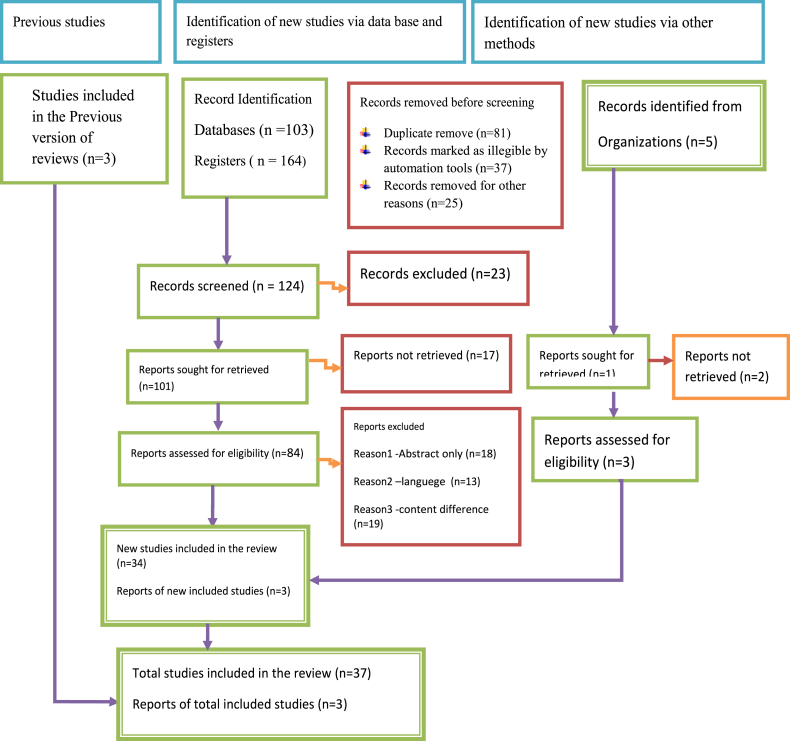
The aim of this study is to establish a clear clinical working guideline for labor pain management in resource limited settings. This systematic review is conducted in line with the Preferred Reporting Items for Systematic Reviews and Meta-Analyses (PRISMA) guideline 2020. After formulating clear criteria for the evidences to be included an appropriate method of searching was conducted by using the Pub Med, Google scholar and Cochrane library using the following MeSH terms: ('Parenteral opioids' AND' Labor pain', 'Labor' AND 'Pain management, 'Non-pharmacologic methods 'AND 'Labor pain', 'Labor pain management AND massage therapy). The study quality of literatures was categorized based on WHO 2011 level of evidence and degree of recommendation. Final conclusions and recommendations are done with the analysis of risk and benefits of alternative management strategies for non-regional techniques of labor pain management. The study is registered with research registry unique identifying number (UIN) of 1267 "https://www.researchregistry.com/browse-the-registry#registryofsystematicreviewsmeta-analyses/." and the study is moderate based on AMSTAR 2 quality assessment criteria/https://amstar.ca/Amstar_Checklist.php.
Combined forms of Non-pharmacologic and selected low dose pharmacologic approaches of labor pain management, provides significant benefits to women and their infants. During provision of labor analgesia complications may happen and the service provider should involve in the management of those complications.
This study has a paramount importance to practice the most reliable, available and cost effective method of labor analgesia.
尽管疼痛管理方案有所改进,但产痛大多被忽视,尤其是在低收入和中等收入国家。
本研究的目的是在资源有限的环境中建立明确的产痛管理临床工作指南。本系统评价按照《系统评价和Meta分析的首选报告项目》(PRISMA)2020指南进行。在制定了纳入证据的明确标准后,通过使用以下医学主题词在PubMed、谷歌学术和Cochrane图书馆进行了适当的检索方法:(“胃肠外阿片类药物”和“产痛”、“分娩”和“疼痛管理”、“非药物方法”和“产痛”、“产痛管理”和“按摩疗法”)。根据世界卫生组织2011年的证据水平和推荐程度对文献的研究质量进行分类。通过分析产痛管理非区域技术替代管理策略的风险和益处得出最终结论和建议。该研究已在研究注册中心注册,唯一识别号(UIN)为1267“https://www.researchregistry.com/browse-the-registry#registryofsystematicreviewsmeta-analyses/.”,并且根据AMSTAR 2质量评估标准/https://amstar.ca/Amstar_Checklist.php,该研究为中等质量。
非药物和选定的低剂量药物联合形式的产痛管理方法,对妇女及其婴儿有显著益处。在提供分娩镇痛时可能会发生并发症,服务提供者应参与这些并发症的管理。
本研究对于实践最可靠、可用且具有成本效益的分娩镇痛方法至关重要。