Department of Ophthalmology, Mary M. and Sash A. Spencer Center for Vision Research, Byers Eye Institute, Stanford University, Stanford, California, USA.
Department of Ophthalmology, Mary M. and Sash A. Spencer Center for Vision Research, Byers Eye Institute, Stanford University, Stanford, California, USA; Department of Neurosurgery, Stanford University, Stanford, California, USA.
J Biol Chem. 2022 Apr;298(4):101674. doi: 10.1016/j.jbc.2022.101674. Epub 2022 Feb 9.
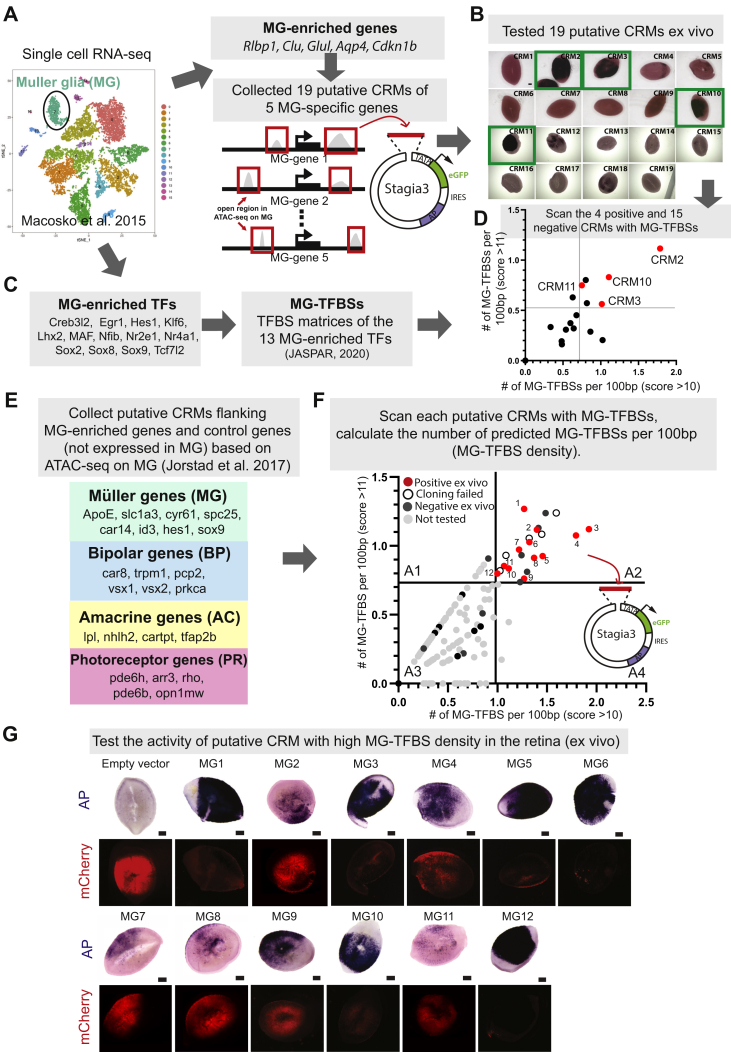
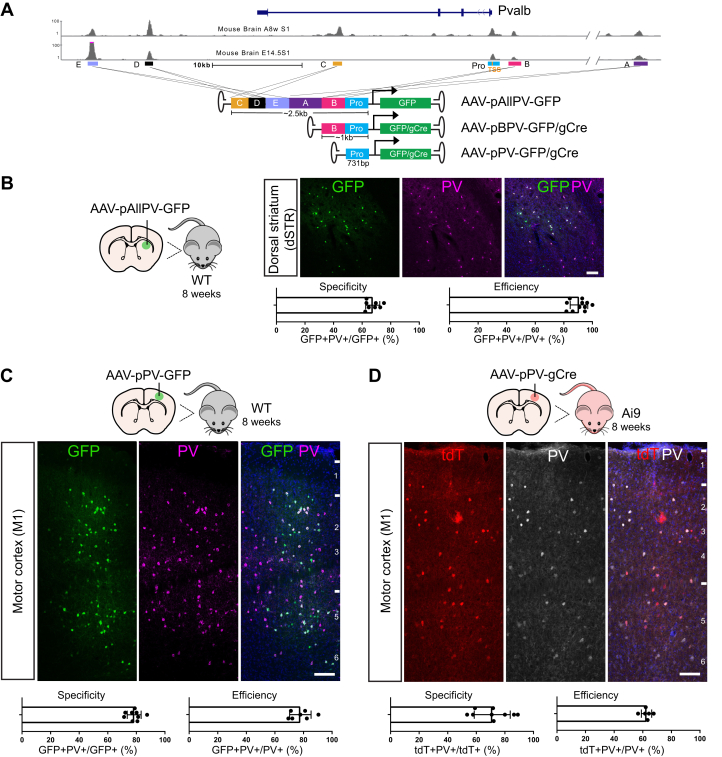
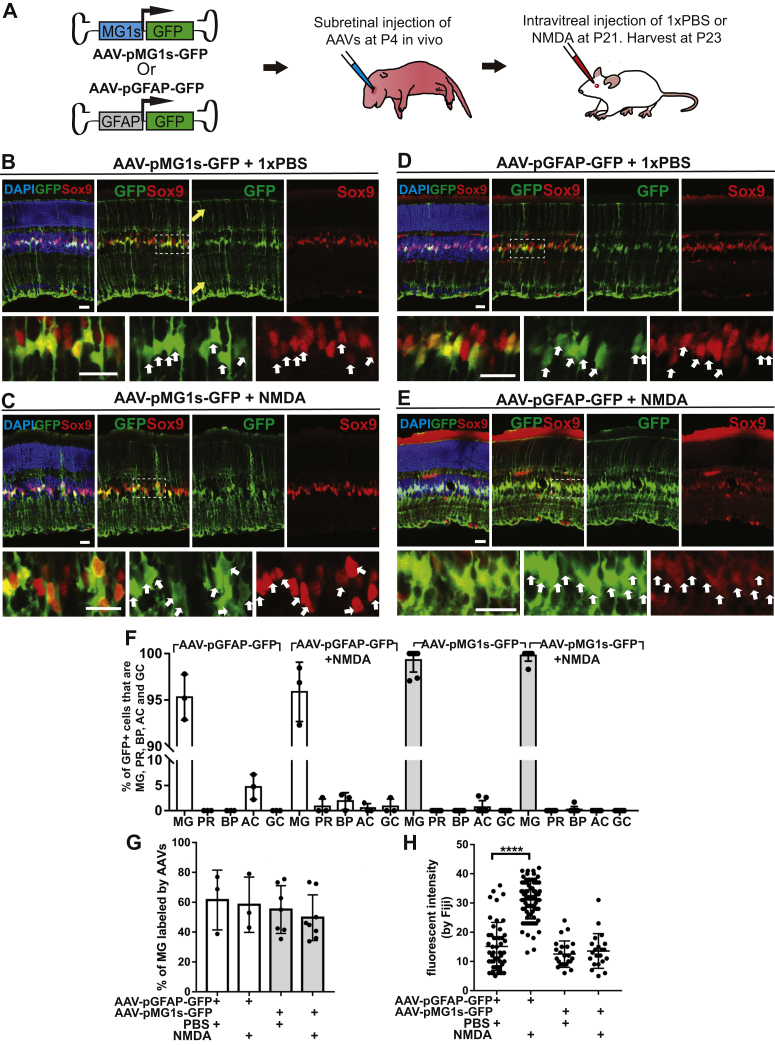
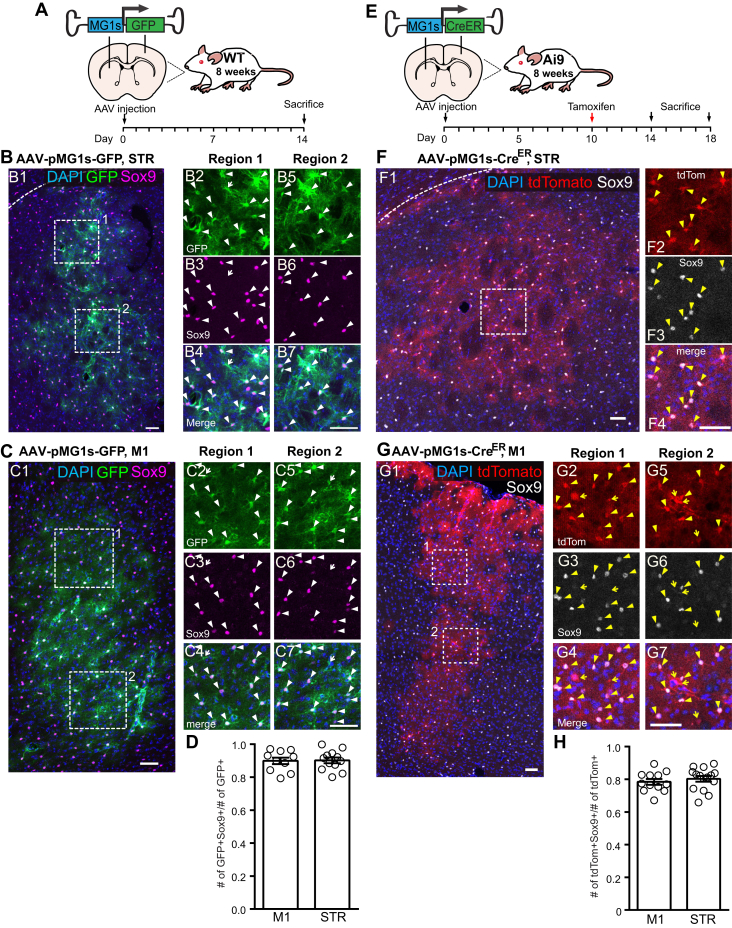
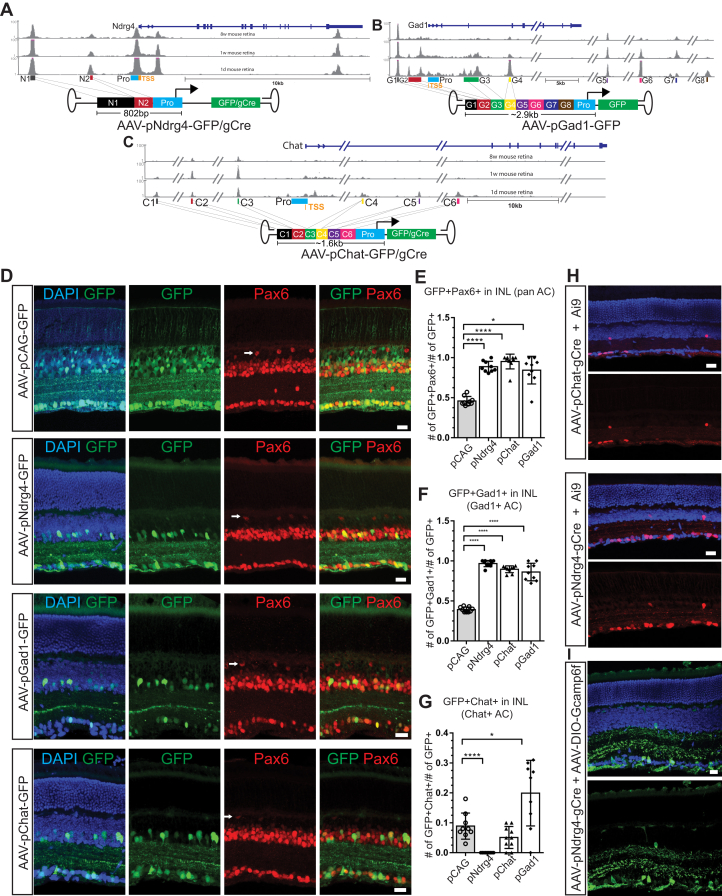
Adeno-associated viruses (AAVs) targeting specific cell types are powerful tools for studying distinct cell types in the central nervous system (CNS). Cis-regulatory modules (CRMs), e.g., enhancers, are highly cell-type-specific and can be integrated into AAVs to render cell type specificity. Chromatin accessibility has been commonly used to nominate CRMs, which have then been incorporated into AAVs and tested for cell type specificity in the CNS. However, chromatin accessibility data alone cannot accurately annotate active CRMs, as many chromatin-accessible CRMs are not active and fail to drive gene expression in vivo. Using available large-scale datasets on chromatin accessibility, such as those published by the ENCODE project, here we explored strategies to increase efficiency in identifying active CRMs for AAV-based cell-type-specific labeling and manipulation. We found that prescreening of chromatin-accessible putative CRMs based on the density of cell-type-specific transcription factor binding sites (TFBSs) can significantly increase efficiency in identifying active CRMs. In addition, generation of synthetic CRMs by stitching chromatin-accessible regions flanking cell-type-specific genes can render cell type specificity in many cases. Using these straightforward strategies, we generated AAVs that can target the extensively studied interneuron and glial cell types in the retina and brain. Both strategies utilize available genomic datasets and can be employed to generate AAVs targeting specific cell types in CNS without conducting comprehensive screening and sequencing experiments, making a step forward in cell-type-specific research.
腺相关病毒(AAV)靶向特定细胞类型是研究中枢神经系统(CNS)中不同细胞类型的有力工具。顺式调控模块(CRMs),例如增强子,具有高度的细胞类型特异性,可以整合到 AAV 中以赋予细胞类型特异性。染色质可及性通常用于提名 CRM,然后将其整合到 AAV 中,并在 CNS 中测试其细胞类型特异性。然而,仅染色质可及性数据不能准确注释活性 CRM,因为许多染色质可及的 CRM 不活跃,并且在体内不能驱动基因表达。在这里,我们利用染色质可及性的可用大规模数据集,例如 ENCODE 项目发布的数据集,探讨了提高基于 AAV 的细胞类型特异性标记和操作中识别活性 CRM 的效率的策略。我们发现,基于细胞类型特异性转录因子结合位点(TFBS)密度对染色质可及性推定 CRM 进行预筛选,可以显著提高识别活性 CRM 的效率。此外,通过拼接侧翼细胞类型特异性基因的染色质可及区域来生成合成 CRM,可以在许多情况下赋予细胞类型特异性。使用这些简单直接的策略,我们生成了可以靶向视网膜和大脑中广泛研究的中间神经元和神经胶质细胞类型的 AAV。这两种策略都利用了现有的基因组数据集,可以在不进行全面筛选和测序实验的情况下,生成针对 CNS 中特定细胞类型的 AAV,为细胞类型特异性研究迈出了一步。