Michigan Medicine, Ann Arbor, MI, USA.
Sci Rep. 2022 Feb 11;12(1):2374. doi: 10.1038/s41598-022-06232-5.
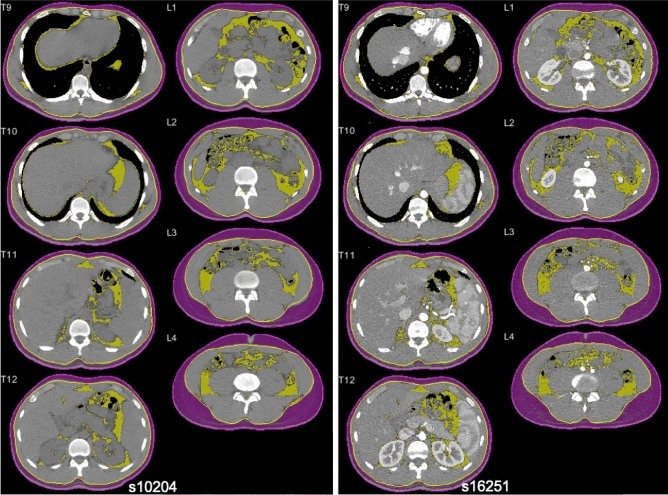
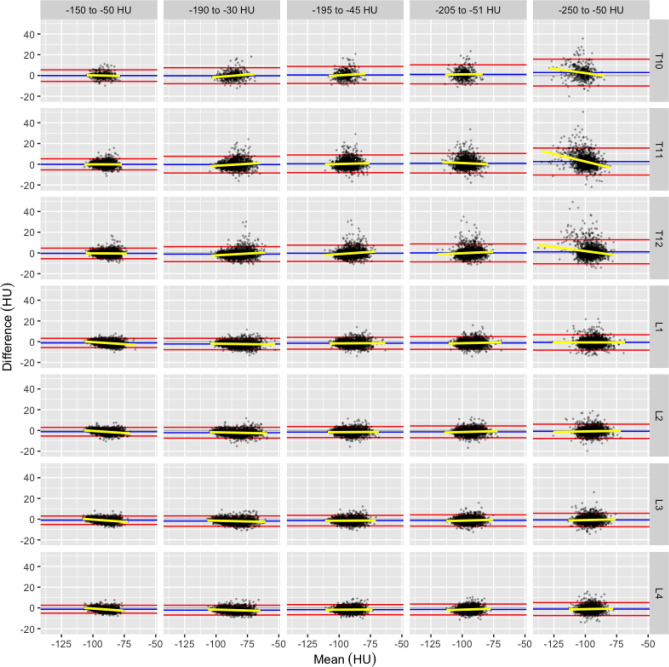
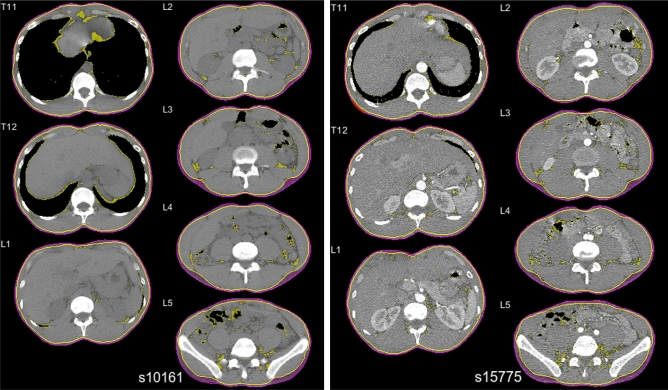
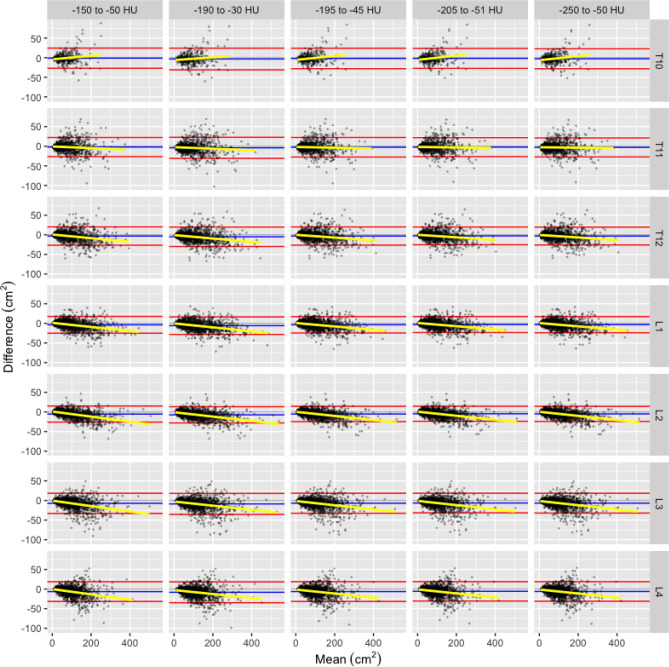
Measurements of visceral adipose tissue cross-sectional area and radiation attenuation from computed tomography (CT) scans provide useful information about risk and mortality. However, scan protocols vary, encompassing differing vertebra levels and utilizing differing phases of contrast enhancement. Furthermore, fat measurements have been extracted from CT using different Hounsfield Unit (HU) ranges. To our knowledge, there have been no large studies of healthy cohorts that reported reference values for visceral fat area and radiation attenuation at multiple vertebra levels, for different contrast phases, and using different fat HU ranges. Two-phase CT scans from 1,677 healthy, adult kidney donors (age 18-65) between 1999 and 2017, previously studied to determine healthy reference values for skeletal muscle measures, were utilized. Visceral adipose tissue cross-sectional area (VFA) and radiation attenuation (VFRA) measures were quantified using axial slices at T10 through L4 vertebra levels. T-tests were used to compare males and females, while paired t-tests were conducted to determine the effect (magnitude and direction) of (a) contrast enhancement and (b) different fat HU ranges on each fat measure at each vertebra level. We report the means, standard deviations, and effect sizes of contrast enhancement and fat HU range. Male and female VFA and VFRA were significantly different at all vertebra levels in both contrast and non-contrast scans. Peak VFA was observed at L4 in females and L2 in males, while peak VFRA was observed at L1 in both females and males. In general, non-contrast scans showed significantly greater VFA and VFRA compared to contrast scans. The average paired difference due to contrast ranged from 1.6 to - 8% (VFA) and 3.2 to - 3.0% (VFRA) of the non-contrast value. HU range showed much greater differences in VFA and VFRA than contrast. The average paired differences due to HU range ranged from - 5.3 to 22.2% (VFA) and - 5.9 to 13.6% (VFRA) in non-contrast scans, and - 4.4 to 20.2% (VFA) and - 4.1 to 12.6% (VFRA) in contrast scans. The - 190 to - 30 HU range showed the largest differences in both VFA (10.8% to 22.2%) and VFRA (7.6% to 13.6%) compared to the reference range (- 205 to - 51 HU). Incidentally, we found that differences in lung inflation result in very large differences in visceral fat measures, particularly in the thoracic region. We assessed the independent effects of contrast presence and fat HU ranges on visceral fat cross-sectional area and mean radiation attenuation, finding significant differences particularly between different fat HU ranges. These results demonstrate that CT measurements of visceral fat area and radiation attenuation are strongly dependent upon contrast presence, fat HU range, sex, breath cycle, and vertebra level of measurement. We quantified contrast and non-contrast reference values separately for males and females, using different fat HU ranges, for lumbar and thoracic CT visceral fat measures at multiple vertebra levels in a healthy adult US population.
从计算机断层扫描(CT)扫描中测量内脏脂肪组织的横截面积和辐射衰减可以提供有关风险和死亡率的有用信息。然而,扫描方案各不相同,包括不同的椎体水平和使用不同的对比增强相位。此外,脂肪测量值是从 CT 中使用不同的 Hounsfield 单位(HU)范围提取的。据我们所知,以前还没有针对健康队列的大型研究报告过在多个椎体水平、不同的对比相和使用不同的脂肪 HU 范围下的内脏脂肪面积和辐射衰减的参考值。我们利用了 1999 年至 2017 年间 1677 名健康成年肾脏供体(年龄 18-65 岁)的两期 CT 扫描,这些扫描先前用于确定骨骼肌测量的健康参考值。使用 T10 至 L4 椎体水平的轴向切片来量化内脏脂肪组织的横截面积(VFA)和辐射衰减(VFRA)。使用 t 检验比较男性和女性,同时进行配对 t 检验以确定(a)对比增强和(b)不同的脂肪 HU 范围对每个脂肪测量值在每个椎体水平上的影响(幅度和方向)。我们报告了对比增强和脂肪 HU 范围的平均值、标准差和效应大小。在男性和女性的两期 CT 扫描中,所有椎体水平的 VFA 和 VFRA 均存在显著差异。女性的 VFA 峰值出现在 L4 椎体,男性的 VFA 峰值出现在 L2 椎体,而女性和男性的 VFRA 峰值均出现在 L1 椎体。通常,非对比扫描显示的 VFA 和 VFRA 明显大于对比扫描。由于对比引起的平均配对差异范围为非对比值的 1.6%至-8%(VFA)和 3.2%至-3.0%(VFRA)。HU 范围在 VFA 和 VFRA 方面显示出比对比更大的差异。由于 HU 范围引起的平均配对差异范围为非对比扫描中的-5.3%至 22.2%(VFA)和-5.9%至 13.6%(VFRA),以及对比扫描中的-4.4%至 20.2%(VFA)和-4.1%至 12.6%(VFRA)。与参考范围(-205 至-51 HU)相比,-190 至-30 HU 范围在 VFA(10.8%至 22.2%)和 VFRA(7.6%至 13.6%)方面显示出最大的差异。顺便说一句,我们发现肺充气的差异会导致内脏脂肪测量值出现非常大的差异,特别是在胸部区域。我们评估了对比剂存在和脂肪 HU 范围对内脏脂肪横截面积和平均辐射衰减的独立影响,发现了特别是在不同脂肪 HU 范围之间的显著差异。这些结果表明,CT 测量的内脏脂肪面积和辐射衰减强烈依赖于对比剂的存在、脂肪 HU 范围、性别、呼吸周期和测量的椎体水平。我们分别使用不同的脂肪 HU 范围,针对男性和女性,在健康的美国成年人中,在多个椎体水平对腰椎和胸部 CT 内脏脂肪测量值进行了非对比和对比参考值的量化。