Klarman Cell Observatory, Broad Institute of MIT and Harvard, Cambridge, MA, USA.
Department of Biology, Massachusetts Institute of Technology, Cambridge, MA, USA.
Commun Biol. 2022 Feb 11;5(1):129. doi: 10.1038/s42003-022-03050-3.
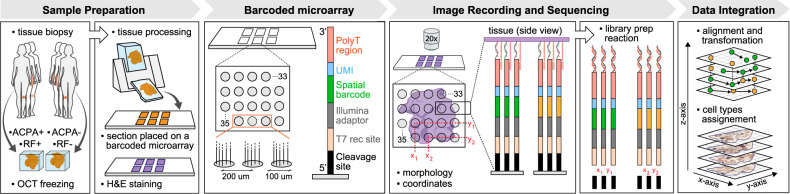
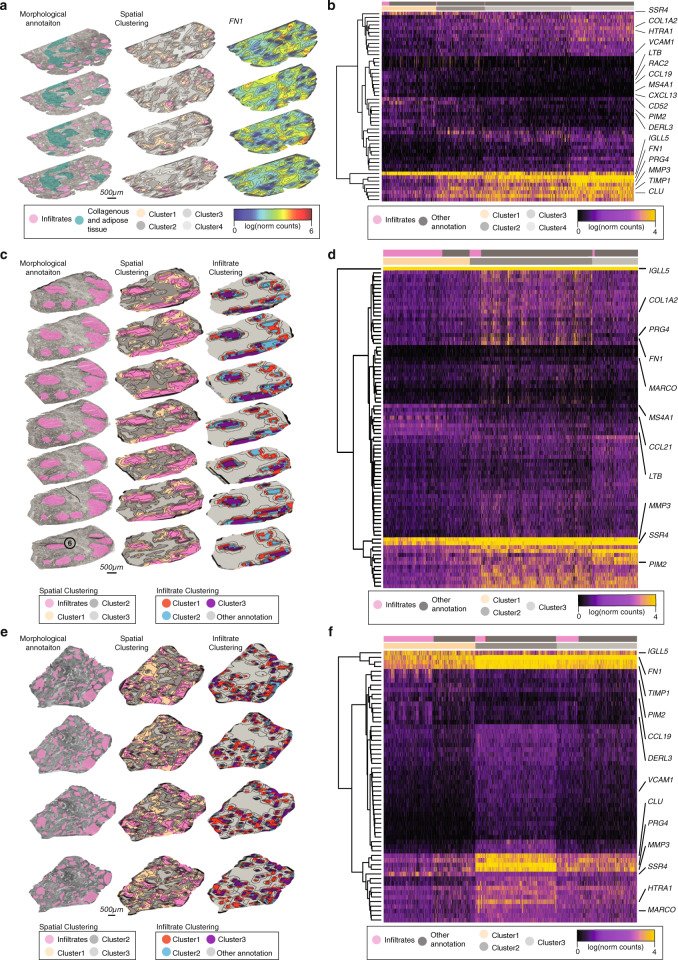
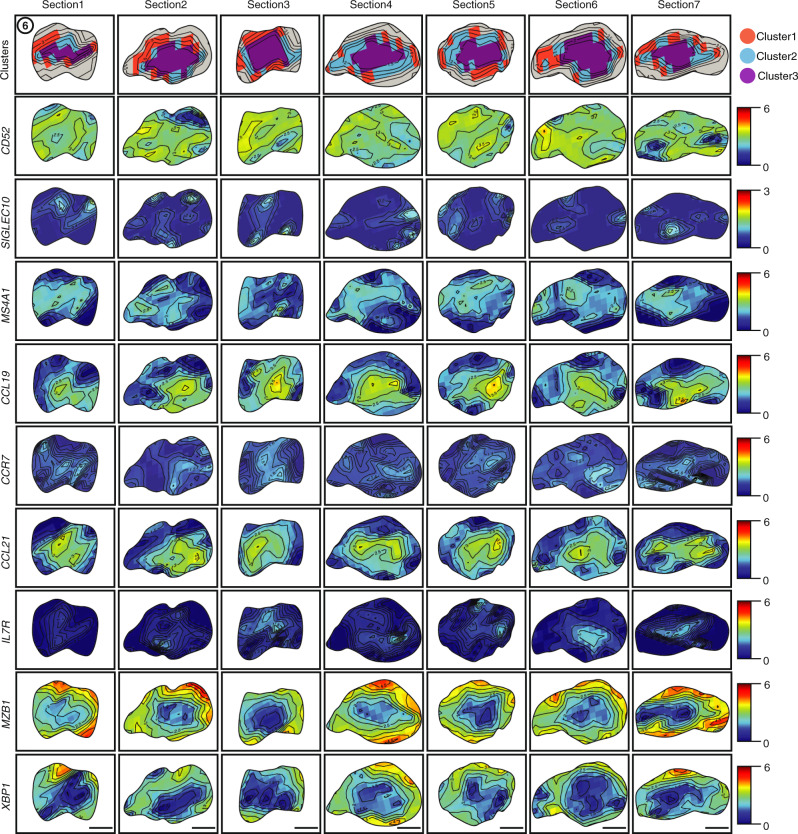
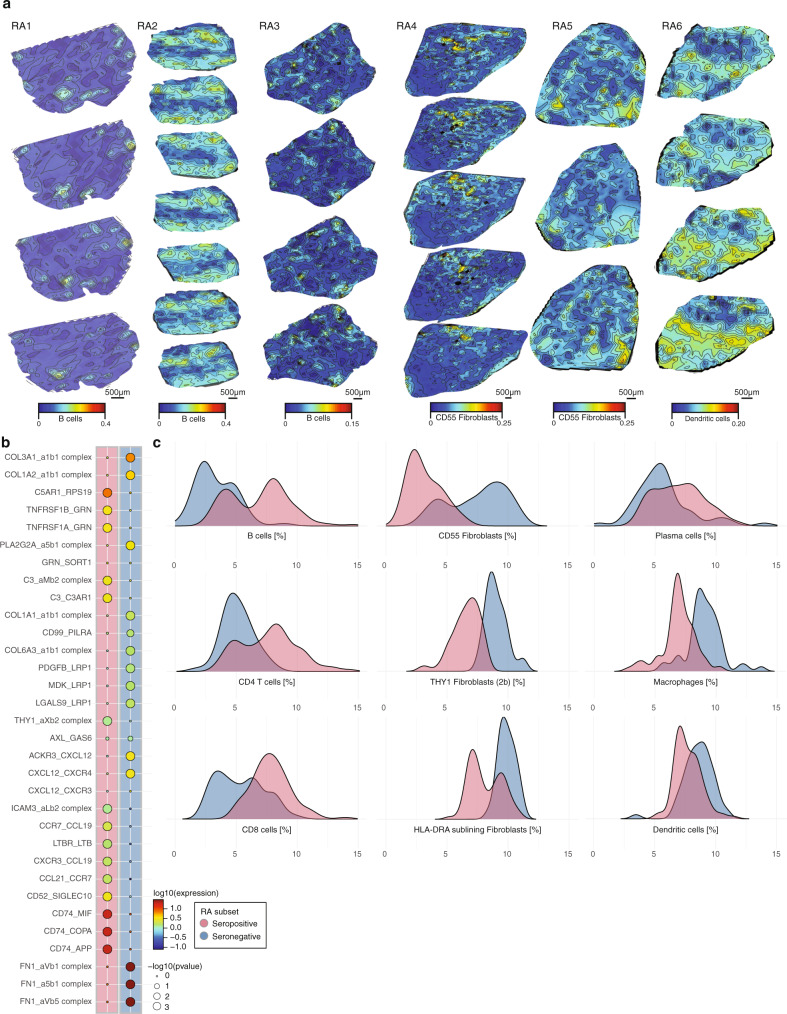
The inflamed rheumatic joint is a highly heterogeneous and complex tissue with dynamic recruitment and expansion of multiple cell types that interact in multifaceted ways within a localized area. Rheumatoid arthritis synovium has primarily been studied either by immunostaining or by molecular profiling after tissue homogenization. Here, we use Spatial Transcriptomics, where tissue-resident RNA is spatially labeled in situ with barcodes in a transcriptome-wide fashion, to study local tissue interactions at the site of chronic synovial inflammation. We report comprehensive spatial RNA-Seq data coupled to cell type-specific localization patterns at and around organized structures of infiltrating leukocyte cells in the synovium. Combining morphological features and high-throughput spatially resolved transcriptomics may be able to provide higher statistical power and more insights into monitoring disease severity and treatment-specific responses in seropositive and seronegative rheumatoid arthritis.
炎症性风湿关节是一种高度异质和复杂的组织,具有多种细胞类型的动态募集和扩张,这些细胞类型在局部区域以多种方式相互作用。类风湿关节炎滑膜主要通过免疫染色或组织匀浆后的分子谱分析进行研究。在这里,我们使用空间转录组学,通过在组织原位以全转录组的方式用条形码对组织内 RNA 进行空间标记,来研究慢性滑膜炎症部位的局部组织相互作用。我们报告了全面的空间 RNA-Seq 数据,并结合了浸润白细胞细胞组织中结构周围和周围的细胞类型特异性定位模式。结合形态特征和高通量空间分辨转录组学,可能能够提供更高的统计能力,并深入了解监测血清阳性和血清阴性类风湿关节炎的疾病严重程度和治疗特异性反应。