Gottfried Schatz Research Center, Molecular Biology and Biochemistry, Medical University of Graz, Graz, Austria.
Institute of Molecular Biosciences, University of Graz, Graz, Austria; BioTechMed-Graz, Graz, Austria.
Biochim Biophys Acta Mol Cell Biol Lipids. 2022 Apr;1867(4):159121. doi: 10.1016/j.bbalip.2022.159121. Epub 2022 Feb 9.
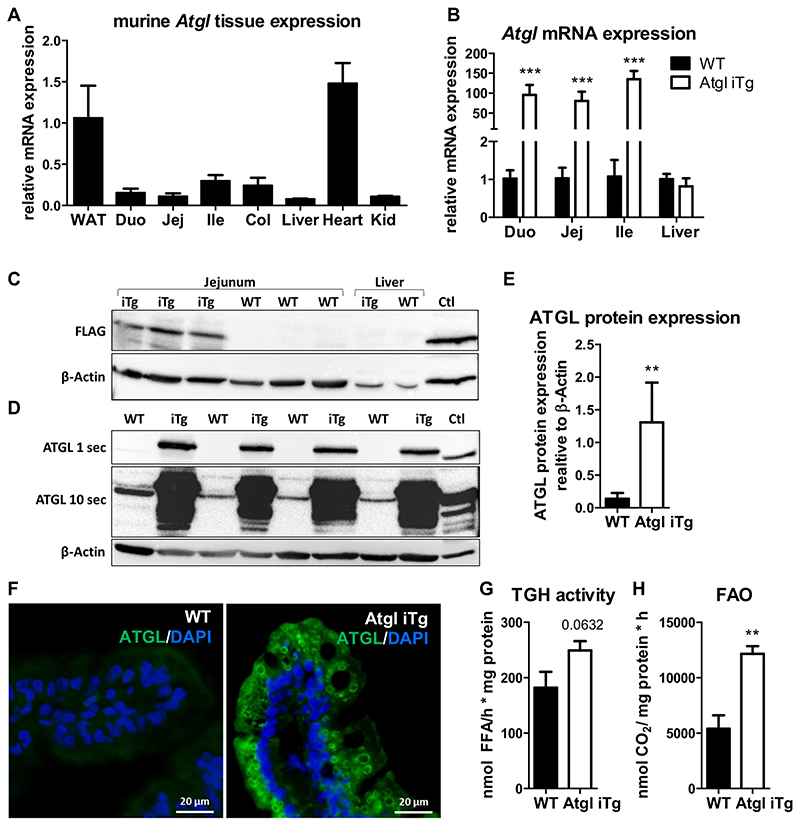
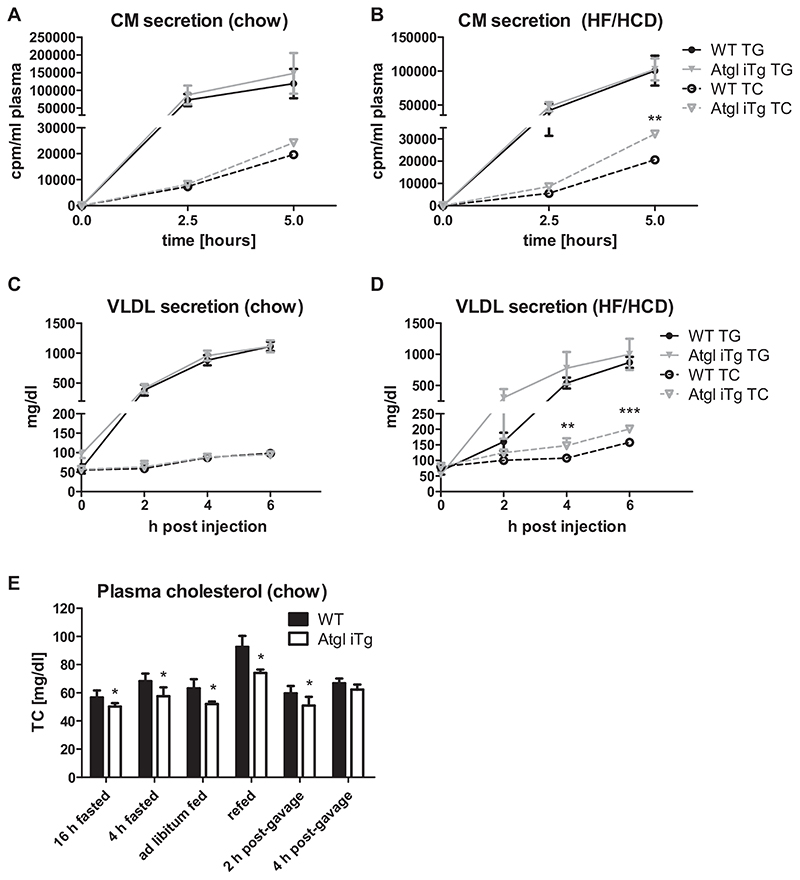
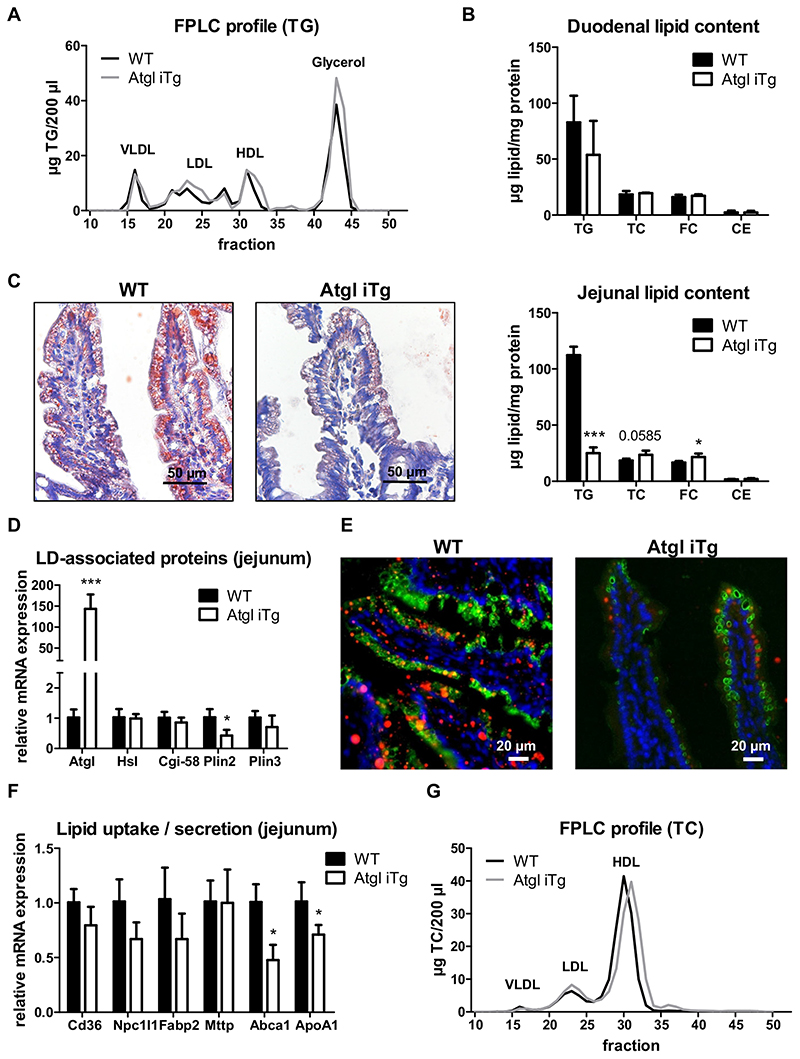
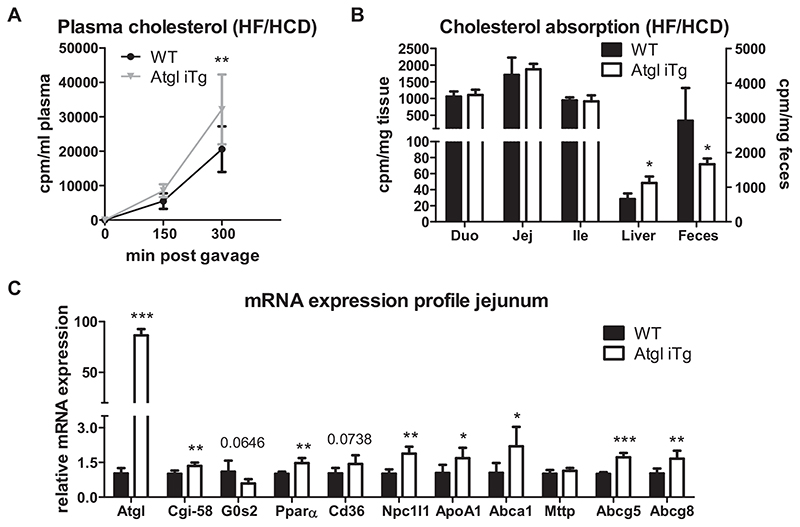
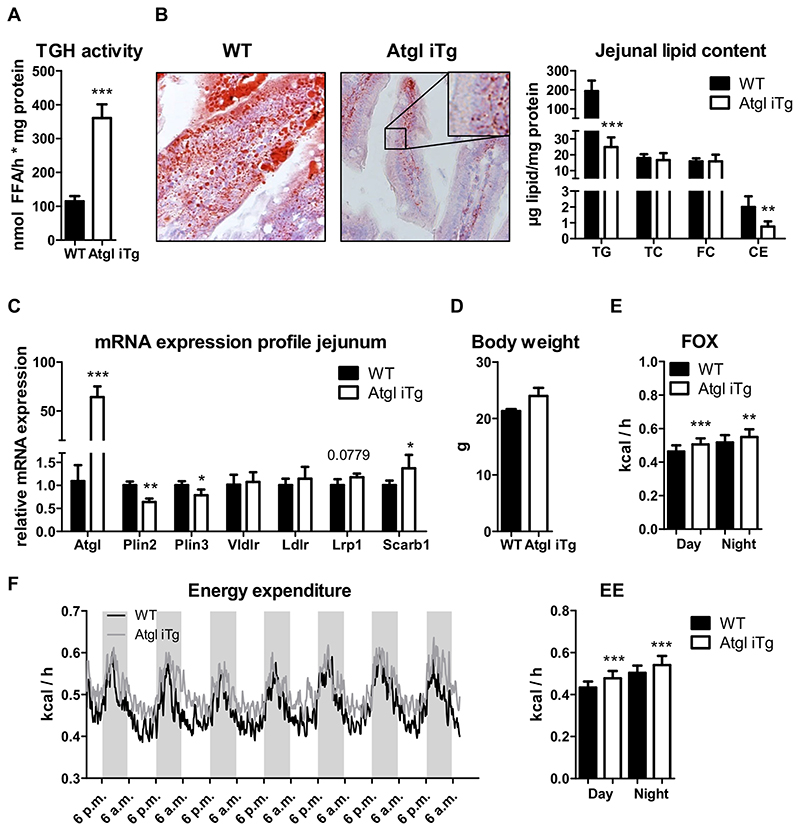
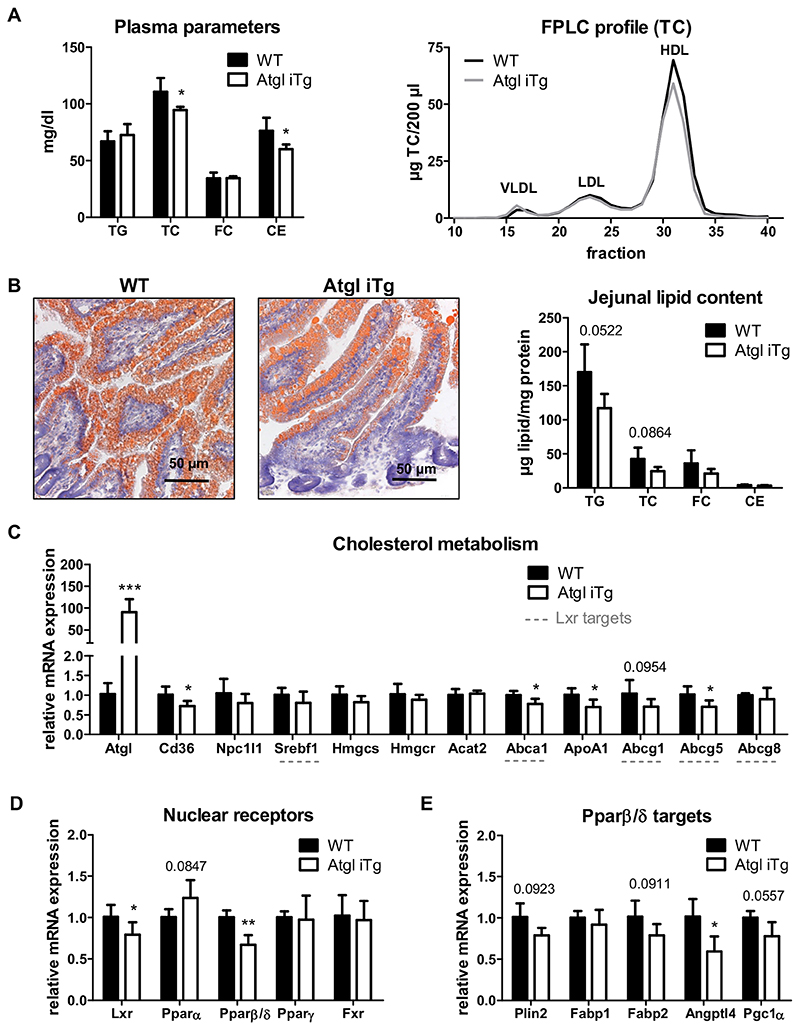
Enterocytes of the small intestine (SI) play an important role in maintaining systemic lipid levels by regulating dietary lipid absorption and postprandial lipoprotein secretion. An excessive amount of dietary-derived triglycerides (TGs) taken up by the apical side of enterocytes or basolaterally internalized lipoprotein remnants can be transiently stored in cytosolic lipid droplets (cLDs). As mice lacking adipose TG lipase (ATGL) in the SI display massive accumulation of cLDs but also delayed cholesterol absorption, we hypothesized that SI-specific overexpression of ATGL (Atgl iTg) might have beneficial effects on lipid homeostasis in the gut and possibly throughout the body. Here, we demonstrate that Atgl iTg mice had only modestly increased enzymatic activity despite drastically elevated Atgl mRNA levels (up to 120-fold) on chow diet, and was highly induced upon high-fat/high-cholesterol diet (HF/HCD) feeding. Atgl iTg mice showed markedly reduced intestinal TG concentrations after acute and chronic lipid challenge without affecting chylomicron TG secretion. Circulating plasma cholesterol levels were significantly lower in Atgl iTg mice under different feeding conditions, contrasting the accelerated uptake of dietary cholesterol into the circulation after HF/HCD feeding. In the fasted state, gene expression analysis revealed modulation of PPARα and liver X receptor (LXR) target genes by an increased fatty acid release, whereas the decreased plasma cholesterol concentrations in refed mice were more likely due to changes in HDL synthesis and secretion. We conclude that ATGL, in addition to its role in TG catabolism, plays a critical role in whole-body cholesterol homeostasis by modulating PPARα and LXR signaling in intestinal enterocytes.
小肠(SI)的肠细胞通过调节膳食脂质吸收和餐后脂蛋白分泌,在维持全身脂质水平方面发挥着重要作用。肠细胞顶侧吸收或基底外侧内化的脂蛋白残基中过量的膳食衍生三酰甘油(TGs)可以暂时储存在细胞质脂滴(cLDs)中。由于缺乏 SI 脂肪甘油三酯脂肪酶(ATGL)的小鼠显示出大量 cLDs 的积累,但也延迟了胆固醇吸收,我们假设 SI 特异性过表达 ATGL(Atgl iTg)可能对肠道和可能全身的脂质稳态产生有益影响。在这里,我们证明尽管在 chow 饮食中 ATGL mRNA 水平(高达 120 倍)急剧升高,但 Atgl iTg 小鼠的酶活性仅有适度增加,并且在高脂肪/高胆固醇饮食(HF/HCD)喂养时高度诱导。Atgl iTg 小鼠在急性和慢性脂质挑战后表现出明显降低的肠道 TG 浓度,而不影响乳糜微粒 TG 分泌。在不同的喂养条件下,Atgl iTg 小鼠的循环血浆胆固醇水平显著降低,与 HF/HCD 喂养后膳食胆固醇加速进入循环形成对比。在禁食状态下,基因表达分析显示,通过增加脂肪酸释放来调节过氧化物酶体增殖物激活受体α(PPARα)和肝 X 受体(LXR)靶基因,而再喂养小鼠中血浆胆固醇浓度降低则更可能是由于 HDL 合成和分泌的变化所致。我们得出结论,除了在 TG 分解代谢中的作用外,ATGL 通过调节肠细胞中的 PPARα 和 LXR 信号通路,在全身胆固醇稳态中发挥关键作用。