Zhu Yuxin, Sun Fenghua, Li Chunxiao, Huang Junhao, Hu Min, Wang Kangle, He Shan, Wu Jiarui
Department of Health and Physical Education, The Education University of Hong Kong, Hong Kong SAR, China.
School of Physical Education and Sports Science, South China Normal University, Guangzhou, China.
J Exerc Sci Fit. 2022 Apr;20(2):90-99. doi: 10.1016/j.jesf.2022.01.003. Epub 2022 Jan 22.
Mindfulness-based intervention (MBI) as a psychological treatment is adopted in the sports field, but its effect during competition has not been explored. This study investigated the acute effect of a brief MBI on athletes' cognitive function after a 45-min, lab-based soccer protocol.
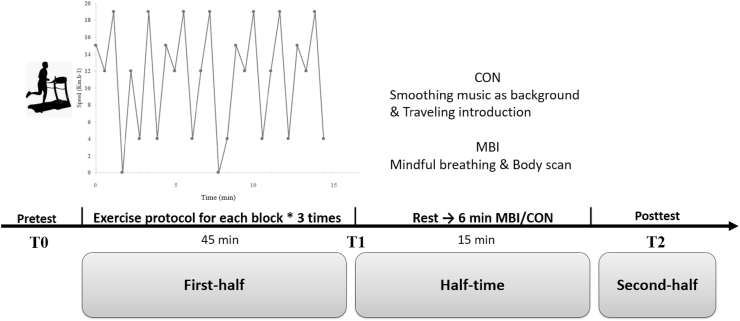
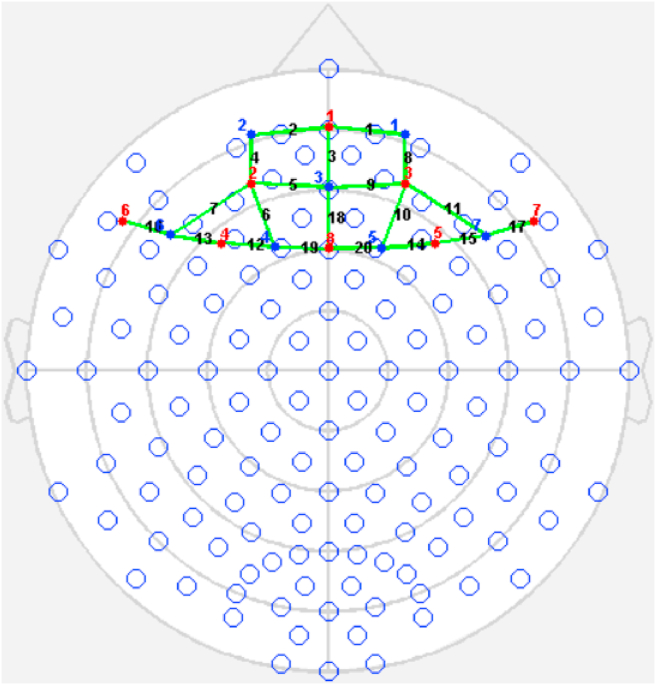
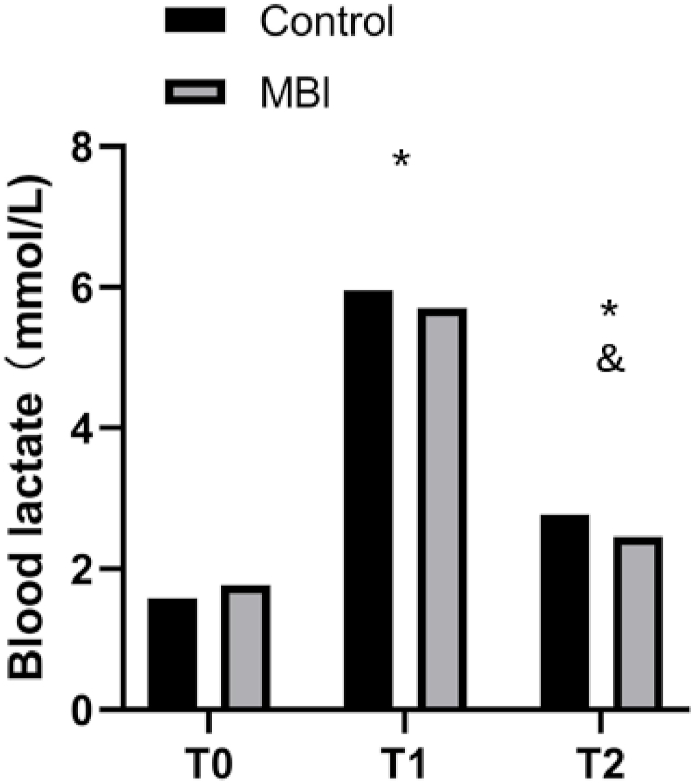
In a single-blind randomized counter-balanced crossover design, 17 male soccer players completed two main trials-an MBI trial and a control trial. The MBI trial was provided with a brief MBI after 45-min exercise; the control trial was instead assigned a travel-related audio to listen to at that time. In each main trial, cognitive function (i.e., Stroop task for inhibition; Corsi-block tapping task for working memory), salivary cortisol, blood lactate and mental fatigue were measured at baseline (pretest) and after the intervention (posttest). The cerebral oxygenation status was recorded using functional near-infrared spectroscopy during the cognitive function test.
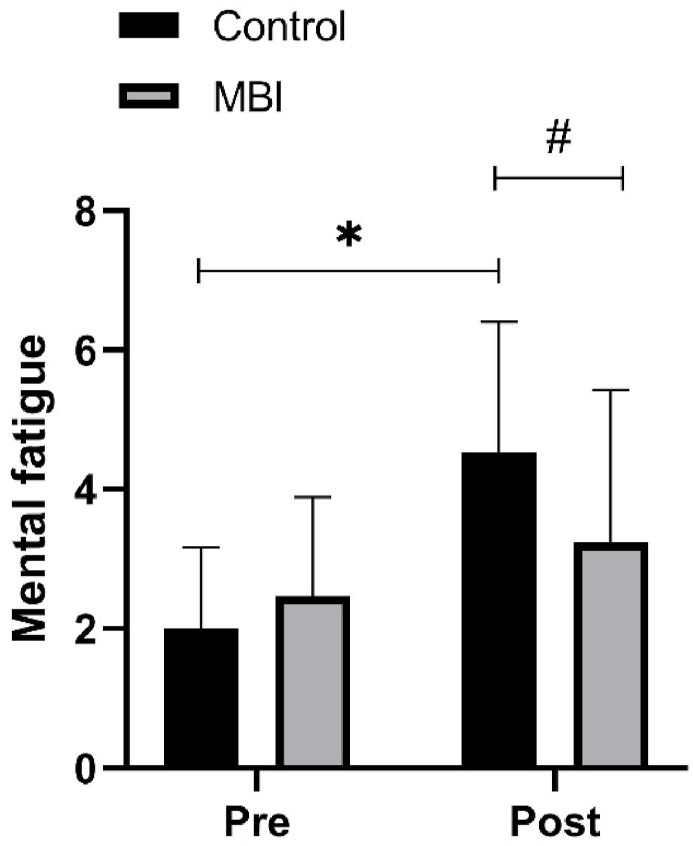
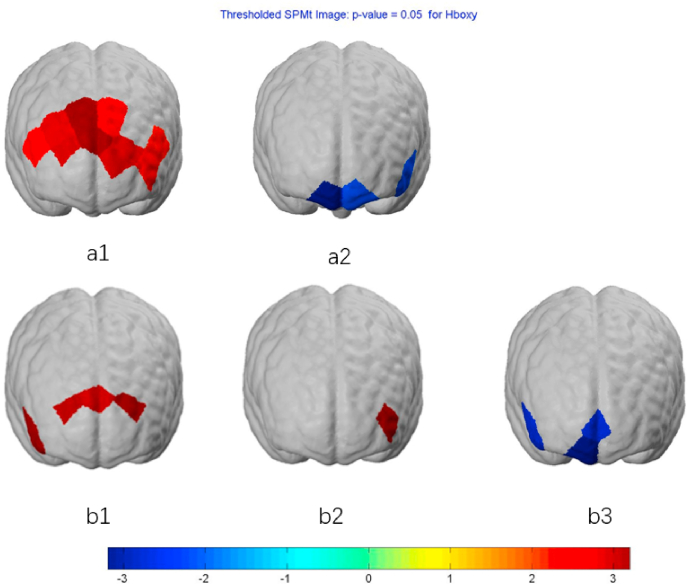
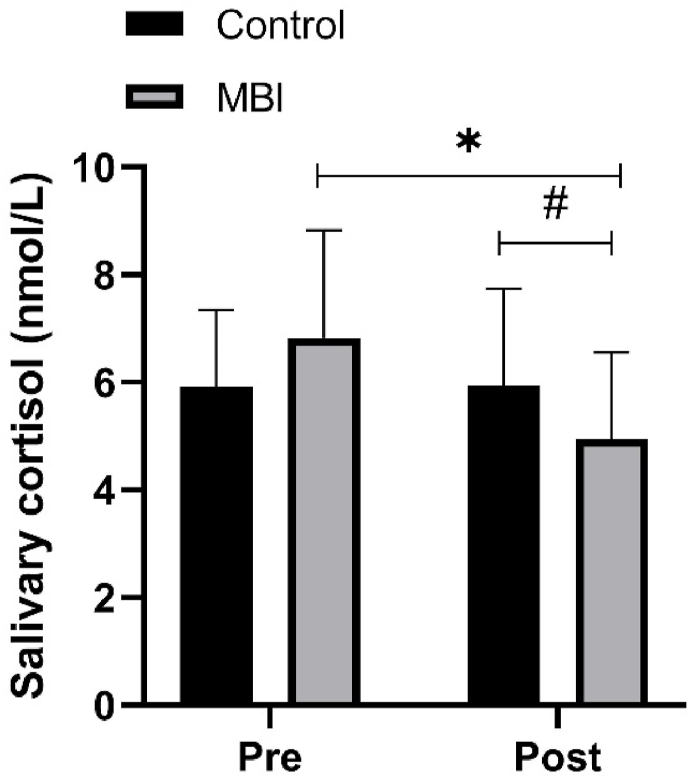
The brief MBI improved working memory performance in terms of both reaction time (pre vs. post, P = 0.02, d = 0.71) and accuracy (pre vs. post, P = 0.009, d = 0.58), supported by eliciting increased oxyhemoglobin concentration in the prefrontal cortex of the brain. Whereas a slightly better cognitive performance for MBI trial than control trial at posttest (P = 0.37, d = 0.32) accompanied by a lower oxyhemoglobin concentration. A lower mental fatigue level (P = 0.05, d = 0.6) and lower cortisol concentration (P = 0.04, d = 0.65) were observed in the MBI trial than in the control trial after the intervention at posttest. The decreased cortisol concentration correlated with increased inhibition performance in the MBI trial.
The acute effect of MBI on athletes' mental fatigue and cortisol concentration was detected, and the beneficial effect on working memory was preliminarily supported. In general, MBI is recommended to be adopted at half-time of a soccer game.
基于正念的干预(MBI)作为一种心理治疗方法已在体育领域采用,但其在比赛期间的效果尚未得到研究。本研究调查了在基于实验室的45分钟足球模拟比赛后,简短的MBI对运动员认知功能的急性影响。
采用单盲随机交叉设计,17名男性足球运动员完成了两项主要试验——MBI试验和对照试验。MBI试验在45分钟运动后进行简短的MBI干预;对照试验则在此时安排听一段与旅行相关的音频。在每个主要试验中,于基线(预测试)和干预后(后测试)测量认知功能(即用于抑制的斯特鲁普任务;用于工作记忆的科西方块敲击任务)、唾液皮质醇、血乳酸和精神疲劳。在认知功能测试期间,使用功能近红外光谱记录大脑氧合状态。
简短的MBI在反应时间(预测试与后测试,P = 0.02,d = 0.71)和准确性(预测试与后测试,P = 0.009,d = 0.58)方面改善了工作记忆表现,大脑前额叶皮质氧合血红蛋白浓度升高为此提供了支持。而后测试时MBI试验的认知表现略优于对照试验(P = 0.37,d = 0.32),但氧合血红蛋白浓度较低。干预后后测试时,与对照试验相比,MBI试验中精神疲劳水平较低(P = 0.05,d = 0.6),皮质醇浓度较低(P = 0.04,d = 0.65)。在MBI试验中,皮质醇浓度降低与抑制表现增强相关。
检测到MBI对运动员精神疲劳和皮质醇浓度的急性影响,并初步支持其对工作记忆的有益作用。总体而言,建议在足球比赛中场休息时采用MBI。