Chaze Ferzana, Hayden Leigh, Azevedo Andrea, Kamath Ashwin, Bucko Destanee, Kashlan Yara, Dube Mireille, De Paula Jacqueline, Jackson Alexandra, Reyna Christianne, Dupuis Kate, Tsotsos Lia
Faculty of Applied Health and Community Studies, Sheridan College, Oakville, ON, Canada.
Centre for Elder Research, Sheridan College, Oakville, ON, Canada.
J Rehabil Assist Technol Eng. 2022 Feb 9;9:20556683211072384. doi: 10.1177/20556683211072384. eCollection 2022 Jan-Dec.
This paper describes the findings of a pilot implementation project that explored the potential of virtual reality (VR) technology in recreational programming to support the well-being of older adults in long-term care (LTC) homes.
32 Adults in four LTC homes participated in a pilot implementation project where they viewed VR experiences of popular locations in Canada created especially for this project. Data in this paper are based on multiple viewing experiences ( = 102) over a two-week period.
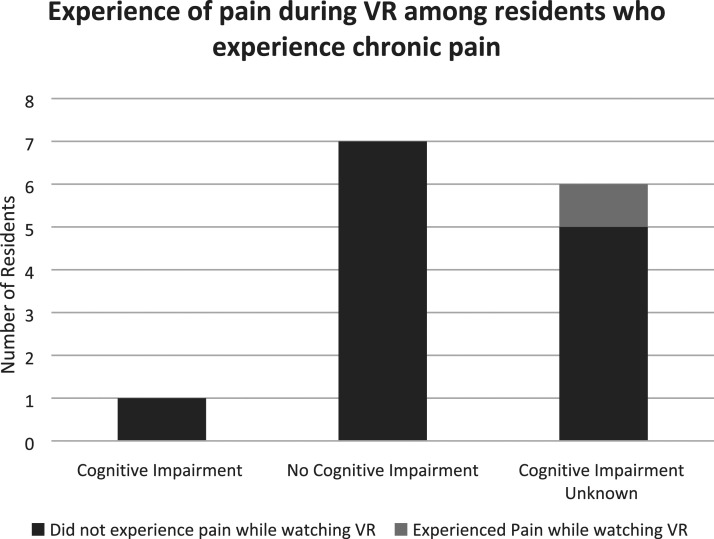
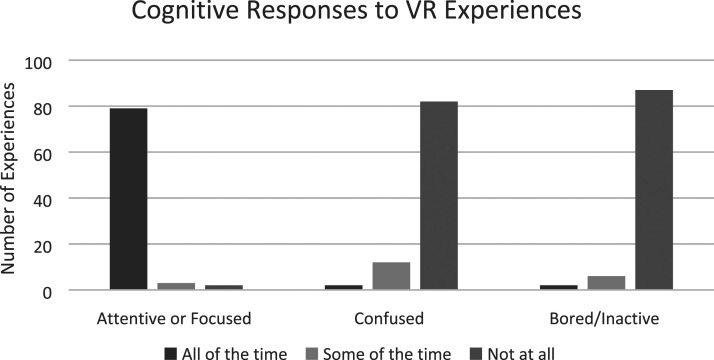
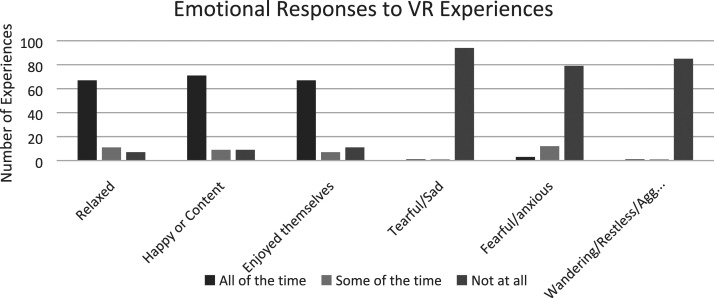
VR appeared to be an effective distraction from pain for the participants. Participants of this study found the VR experiences to be enjoyable and were relaxed and happy while viewing them. Most participants were attentive or focused while viewing the VR experiences, and the experiences were found to be a source of reminiscence for some of the participants. Participants related well to others around them during a majority of the experiences and the VR experiences were a point of conversation between the staff and the participants.
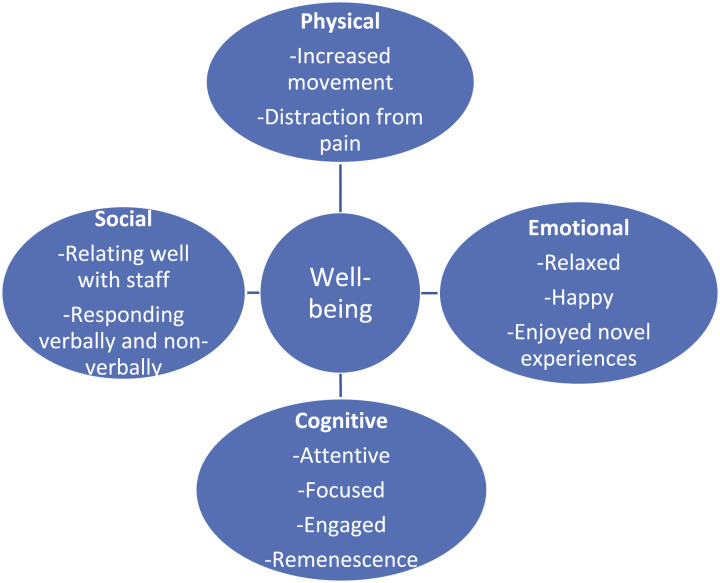
The findings from this pilot implementation reveal that VR shows potential to enhance the physical, emotional, cognitive, and social well-being of older adults living in LTC, including those living with cognitive impairment.
本文描述了一个试点实施项目的研究结果,该项目探索了虚拟现实(VR)技术在娱乐活动规划中的潜力,以支持长期护理(LTC)机构中老年人的福祉。
四个LTC机构中的32名成年人参与了一个试点实施项目,他们观看了专门为该项目创建的加拿大热门地点的VR体验。本文的数据基于两周内的多次观看体验(n = 102)。
VR似乎能有效分散参与者对疼痛的注意力。本研究的参与者发现VR体验令人愉悦,观看时感到放松和快乐。大多数参与者在观看VR体验时专注或全神贯注,并且这些体验被发现是一些参与者回忆的来源。在大多数体验中,参与者与周围的其他人关系良好,并且VR体验是工作人员和参与者之间的一个话题。
这个试点实施项目的研究结果表明,VR显示出增强生活在LTC机构中的老年人,包括那些患有认知障碍的老年人的身体、情感、认知和社会福祉的潜力。