
患有认知和/或身体障碍的老年人可从沉浸式虚拟现实体验中获益:一项可行性研究。
Older Adults With Cognitive and/or Physical Impairments Can Benefit From Immersive Virtual Reality Experiences: A Feasibility Study.
作者信息
Appel Lora, Appel Eva, Bogler Orly, Wiseman Micaela, Cohen Leedan, Ein Natalie, Abrams Howard B, Campos Jennifer L
机构信息
Faculty of Health, School of Health Policy and Management, York University, Toronto, ON, Canada.
OpenLab, University Health Network, Toronto, ON, Canada.
出版信息
Front Med (Lausanne). 2020 Jan 15;6:329. doi: 10.3389/fmed.2019.00329. eCollection 2019.
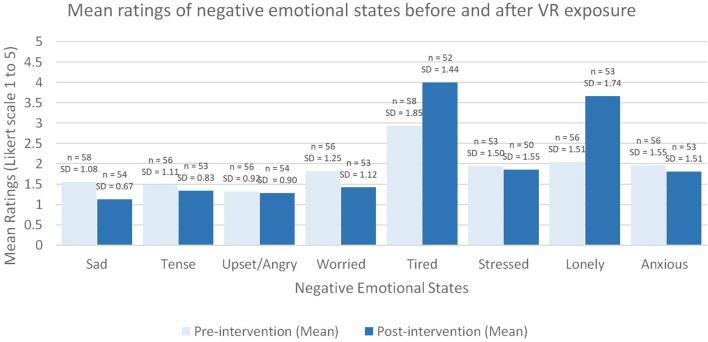
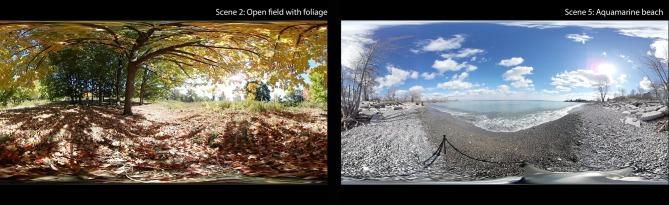
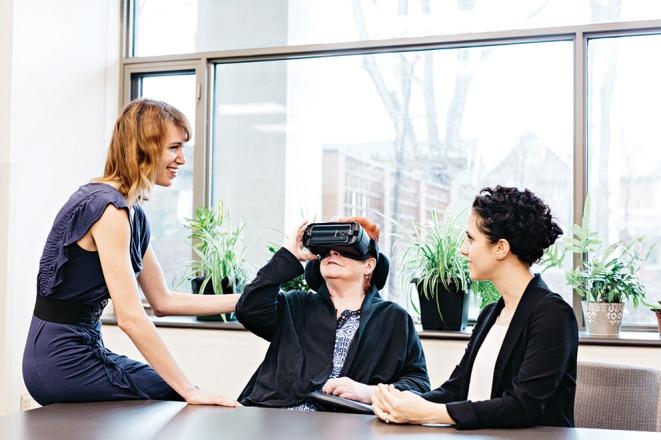
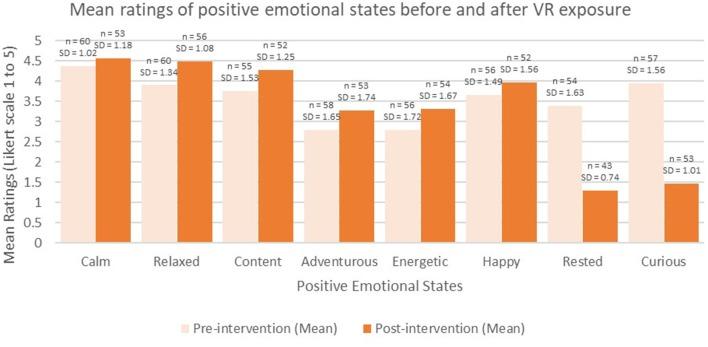
Older adults living in long term care, rehabilitation hospitals, and seniors' residences often experience reduced mobility, sometimes resulting in confinement indoors and isolation, which can introduce or aggravate symptoms of depression, anxiety, loneliness, and apathy. As Virtual Reality (VR) technologies become increasingly accessible and affordable, there is a unique opportunity to enable older adults to escape their restricted physical realities and be transported to both stimulating and calming places which may improve their general well-being. To date no robust evaluations of the use of immersive VR therapy [experienced through a head-mounted-display (HMD)] for older adults within these settings have been reported. VR-therapy may prove to be a safe, inexpensive, non-pharmacological means of managing depressive symptoms and providing engagement and enjoyment to this rapidly growing demographic. Establish whether it is feasible to use immersive VR technology as therapy for older adults who have reduced sensory, mobility and/or impaired cognition. This includes evaluation of tolerability, comfort, and ease of use of the HMD, and of the potential for immersive VR to provide enjoyment/relaxation and reduce anxiety and depressive symptoms. Sixty-six older adults (mean age 80.5, SD = 10.5) with varying cognitive abilities (normal = 28, mild impairment = 17, moderate impairment = 12, severe impairment = 3, unknown cognitive score = 6), and/or physical impairments, entered a multi-site non-randomized interventional study in Toronto, Canada. Participants experienced 3 to 20 min of 360°-video footage of nature scenes displayed on Samsung GearVR HMD. Data was collected through pre/post-intervention surveys, standardized observations during intervention, and post-intervention semi-structured interviews addressing the VR experience. All participants completed the study with no negative side-effects reported (e.g., No dizziness, disorientation, interference with hearing aids); the average time spent in VR was 8 min and 76% of participants viewed the entire experience at least once. Participants tolerated the HMD very well; most had positive feedback, feeling more relaxed and adventurous; 76% wanted to try VR again. Better image quality and increased narrative video content were suggested to improve the experience. It is feasible and safe to expose older adults with various levels of cognitive and physical impairments to immersive VR within these settings. Further research should evaluate the potential benefits of VR in different settings (e.g., home/community based) and explore better customization/optimization of the VR content and equipment for the targeted populations.
居住在长期护理机构、康复医院和老年住宅中的老年人常常行动不便,有时会导致他们被限制在室内并与世隔绝,进而引发或加重抑郁、焦虑、孤独和冷漠等症状。随着虚拟现实(VR)技术越来越容易获得且价格亲民,这为老年人提供了一个独特的机会,使他们能够逃离受限的现实环境,置身于既刺激又能让人平静的地方,这可能会改善他们的总体幸福感。迄今为止,尚未有关于在这些环境中对老年人使用沉浸式VR疗法(通过头戴式显示器(HMD)体验)进行的有力评估报告。VR疗法可能被证明是一种安全、廉价的非药物手段,可用于管理抑郁症状,并为这一快速增长的人群带来参与感和愉悦感。确定对感官、行动能力下降和/或认知受损的老年人使用沉浸式VR技术作为治疗方法是否可行。这包括评估HMD的耐受性、舒适度和易用性,以及沉浸式VR提供愉悦/放松以及减轻焦虑和抑郁症状的潜力。66名认知能力各异(正常 = 28人,轻度受损 = 17人,中度受损 = 12人,重度受损 = 3人,认知评分未知 = 6人)和/或有身体损伤的老年人,参与了在加拿大多伦多进行的一项多地点非随机干预研究。参与者体验了在三星GearVR HMD上播放的3至20分钟的自然场景360°视频片段。通过干预前/后的调查、干预期间的标准化观察以及干预后针对VR体验的半结构化访谈收集数据。所有参与者均完成了研究,且未报告负面副作用(例如,无头晕、迷失方向、对助听器的干扰);在VR中花费的平均时间为8分钟,76%的参与者至少完整观看了一次体验。参与者对HMD的耐受性非常好;大多数人给予了积极反馈,感觉更加放松和有冒险精神;76%的人想再次尝试VR。建议提高图像质量并增加叙事视频内容以改善体验。在这些环境中,让不同认知和身体损伤程度的老年人接触沉浸式VR是可行且安全的。进一步的研究应评估VR在不同环境(例如家庭/社区环境)中的潜在益处,并探索针对目标人群更好地定制/优化VR内容和设备。
 Zotero 插件