Guy Sylvain, Ferreira Alexandre, Carrozzo Alessandro, Delaloye Jean-Romain, Cavaignac Etienne, Vieira Thais Dutra, Sonnery-Cottet Bertrand
Centre Orthopedique Santy, FIFA Medical Center of Excellence, Hôpital Privé Jean Mermoz, Groupe GDS-Ramsay, Lyon, France.
Clinic of Orthopedics and Traumatology, Department of Surgery, Kantonsspital, Winterthur, Switzerland.
Arthrosc Tech. 2022 Jan 13;11(2):e133-e138. doi: 10.1016/j.eats.2021.09.013. eCollection 2022 Feb.
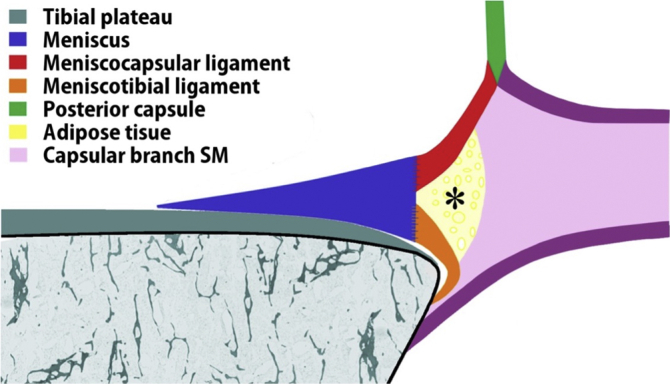
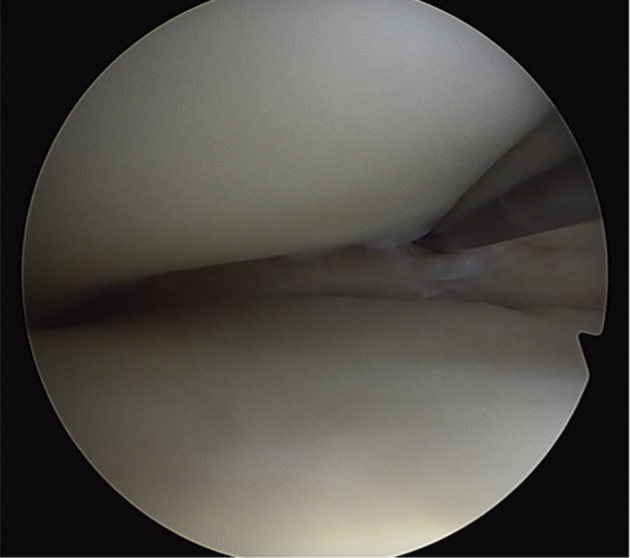
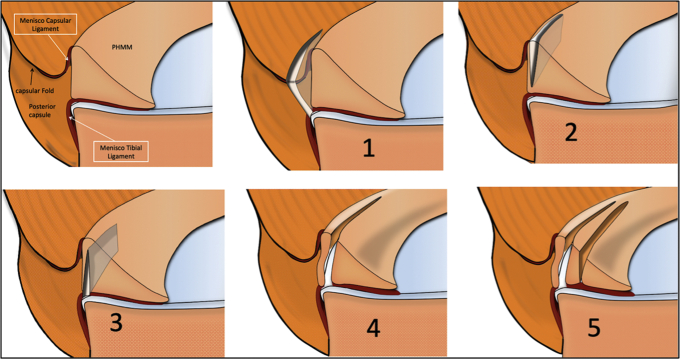
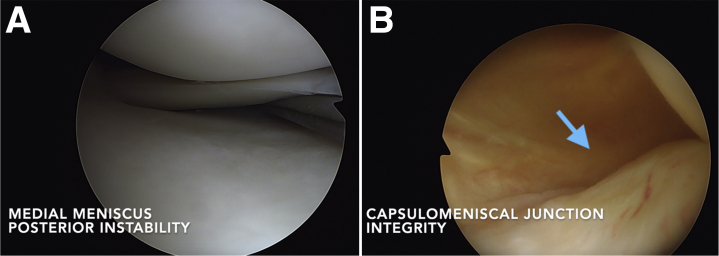
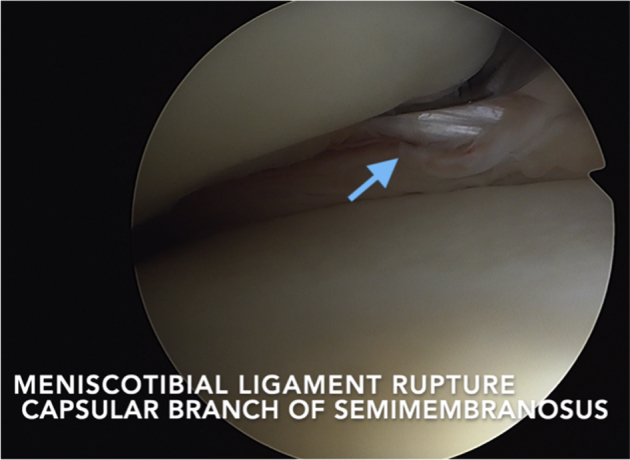
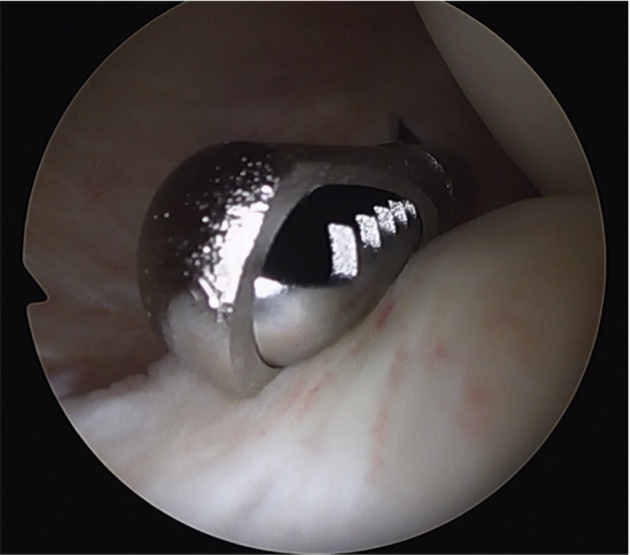
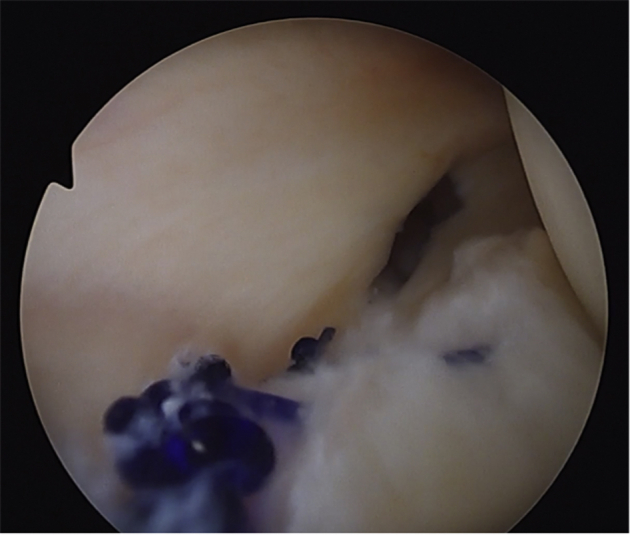
Ramp lesions play a major role in both anteroposterior and rotational instability following anterior cruciate ligament rupture. The meniscotibial ligament (MTL) is the most important structure to repair and is the primary stabilizer of the posterior horn of the medial meniscus. The posteroinferior insertion of the MTL on the posterior horn of the medial has been described, forming a posterior "belt." Isolated MTL lesion diagnosis can be challenging, as the absence of a meniscocapsular ligament lesion prevents its correct visualization through transnotch vision. This article details a technique to diagnose and repair the "belt lesion" of the medial meniscus.
斜坡损伤在前交叉韧带断裂后的前后向和旋转不稳定中起主要作用。半月板胫骨韧带(MTL)是最重要的修复结构,是内侧半月板后角的主要稳定器。MTL在内侧半月板后角的后下插入点已被描述,形成一个后“带”。孤立的MTL损伤诊断可能具有挑战性,因为半月板囊韧带损伤的缺失阻碍了通过经髁间窝视野对其进行正确观察。本文详细介绍了一种诊断和修复内侧半月板“带损伤”的技术。