Mazidi Mohamad Hadi, Eshghi Mohammad, Raoufy Mohammad Reza
PhD, Department of Electric Engineering, Qeshm branch, Islamic Azad University, Qeshm, Iran.
PhD, Department of Electronics, Faculty of Electrical Engineering, Shahid Beheshti University, Tehran, Iran.
J Biomed Phys Eng. 2022 Feb 1;12(1):61-74. doi: 10.31661/jbpe.v0i0.1235. eCollection 2022 Feb.
The Electrocardiogram (ECG) is an important measure for diagnosing the presence or absence of heart arrhythmias. Premature ventricular contractions (PVC) is a relatively large arrhythmia occurring outside the normal tract and being triggered outside the Sino atrial (SA) node of heart.
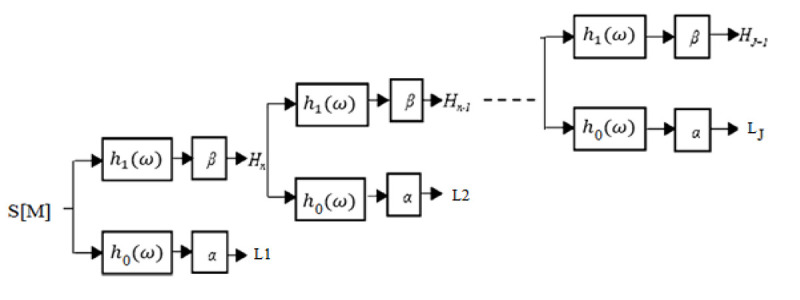
This study has focused on tunable Q-factor wavelet transform (TQWT) algorithm and statistical methods to detect PVC.
In this analytical and statistical study, 22 ECGs records were selected from the MIT/BIH arrhythmia database. In the first stage the noise of signal remove and then five sub-bands create by TQWT. In the second stage nine features (minimum, maximum, root mean square, mean, interquartile range, standard deviation (SD), skewness, and variance) extracted of ECG and then the best features selected by using analysis of variance (ANOVA) test. Finally, the system is evaluated by using the learning machines of support vector machine (SVM), the K-Nearest Neighbor (KNN), and artificial neural network (ANN).
The best results were verified with KNN learning machine the sensitivity Se= 98.23% and accuracy Ac= 97.81%.
A comparative analysis with the related existing methods shows the method proposed in this study is higher than the other method for classification PVC and can help physicians to classify normal and PVC heart signals in the screening of the patients with coronary artery diseases (CADs).
心电图(ECG)是诊断心律失常是否存在的一项重要指标。室性早搏(PVC)是一种相对较为常见的心律失常,发生在正常传导路径之外,由心脏窦房(SA)结以外的部位触发。
本研究聚焦于可调Q因子小波变换(TQWT)算法和统计方法来检测室性早搏。
在这项分析性和统计性研究中,从麻省理工学院/波士顿儿童医院心律失常数据库中选取了22份心电图记录。第一阶段去除信号噪声,然后通过TQWT创建五个子带。第二阶段提取心电图的九个特征(最小值、最大值、均方根、均值、四分位间距、标准差(SD)、偏度和方差),然后使用方差分析(ANOVA)测试选择最佳特征。最后,使用支持向量机(SVM)、K近邻(KNN)和人工神经网络(ANN)学习机器对系统进行评估。
KNN学习机器验证的最佳结果为灵敏度Se = 98.23%,准确率Ac = 97.81%。
与相关现有方法的比较分析表明,本研究提出的方法在室性早搏分类方面高于其他方法,可帮助医生在冠状动脉疾病(CAD)患者筛查中对正常和室性早搏心脏信号进行分类。