Hench Juergen, Vlajnic Tatjana, Soysal Savas Deniz, Obermann Ellen C, Frank Stephan, Muenst Simone
Institute of Medical Genetics and Pathology, University Hospital Basel, 4031 Basel, Switzerland.
Visceral Surgery Research Laboratory, Clarunis, Department of Biomedicine, University of Basel, 4031 Basel, Switzerland.
Cancers (Basel). 2022 Jan 28;14(3):667. doi: 10.3390/cancers14030667.
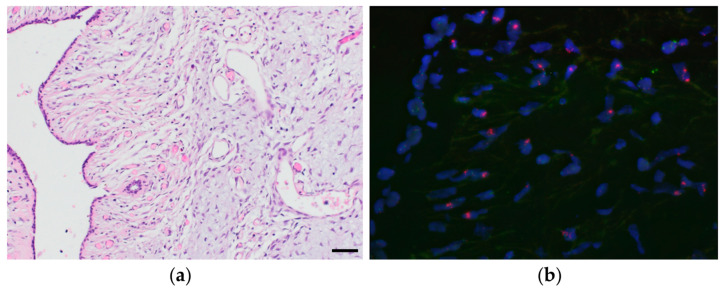
Fibroepithelial lesions (FL) of the breast, in particular, phyllodes tumors (PT) and fibroadenomas, pose a significant diagnostic challenge. There are no generally accepted criteria that distinguish benign, borderline, malignant PT and fibroadenomas. Combined genome-wide DNA methylation and copy number variant (CNV) profiling is an emerging strategy to classify tumors. We compiled a series of patient-derived archival biopsy specimens reflecting the FL spectrum and histological mimickers including clinical follow-up data. DNA methylation and CNVs were determined by well-established microarrays. Comparison of the patterns with a pan-cancer dataset assembled from public resources including "The Cancer Genome Atlas" (TCGA) and "Gene Expression Omnibus" (GEO) suggests that FLs form a methylation class distinct from both control breast tissue as well as common breast cancers. Complex CNVs were enriched in clinically aggressive FLs. Subsequent fluorescence in situ hybridization (FISH) analysis detected respective aberrations in the neoplastic mesenchymal component of FLs only, confirming that the epithelial component is non-neoplastic. Of note, our approach could lead to the elimination of the diagnostically problematic category of borderline PT and allow for optimized prognostic patient stratification. Furthermore, the identified recurrent genomic aberrations such as 1q gains (including MDM4), CDKN2a/b deletions, and EGFR amplifications may inform therapeutic decision-making.
乳腺纤维上皮性病变(FL),尤其是叶状肿瘤(PT)和纤维腺瘤,构成了重大的诊断挑战。目前尚无普遍接受的标准来区分良性、交界性、恶性PT和纤维腺瘤。全基因组DNA甲基化和拷贝数变异(CNV)分析相结合是一种新兴的肿瘤分类策略。我们收集了一系列来自患者的存档活检标本,涵盖了FL谱系及组织学模拟物,并包括临床随访数据。通过成熟的微阵列技术测定DNA甲基化和CNV。将这些模式与从包括“癌症基因组图谱”(TCGA)和“基因表达综合数据库”(GEO)等公共资源中组装的泛癌数据集进行比较,结果表明FL形成了一个与对照乳腺组织以及常见乳腺癌均不同的甲基化类别。复杂的CNV在具有临床侵袭性的FL中富集。随后的荧光原位杂交(FISH)分析仅在FL的肿瘤间充质成分中检测到各自的畸变,证实上皮成分是非肿瘤性的。值得注意的是,我们的方法可能会消除诊断上有问题的交界性PT类别,并实现优化的患者预后分层。此外,所鉴定出的复发性基因组畸变,如1q增益(包括MDM4)、CDKN2a/b缺失和EGFR扩增,可能为治疗决策提供参考。