Department of Health Promotion, Mother and Child Care, Internal Medicine and Medical Specialties, Rheumatology Section, University of Palermo, Piazza delle Cliniche 2, 90110 Palermo, Italy.
Cells. 2022 Feb 4;11(3):549. doi: 10.3390/cells11030549.
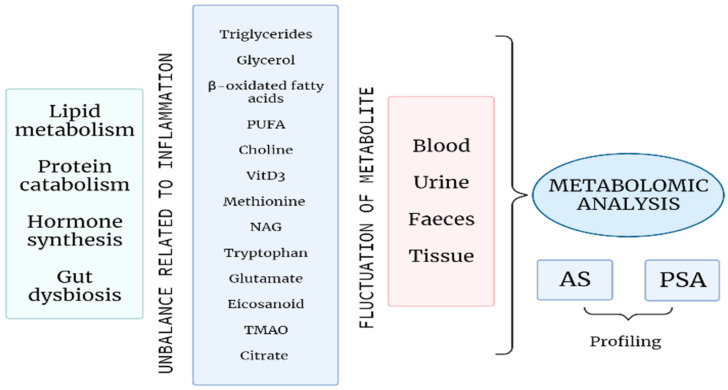
Spondyloarthritis (SpA) is a group of rheumatic diseases whose pathogenesis relies on a complex interplay between genetic and environmental factors. Over the last several years, the importance of the alteration of the gut microbiota, known as dysbiosis, and the interaction of bacterial products with host immunity have been highlighted as intriguing key players in SpA development. The recent advent of the so called "-omics" sciences, that include metabolomics, opened the way to a new approach to SpA through a deeper characterisation of the pathogenetic mechanisms behind the disease. In addition, metabolomics can reveal potential new biomarkers to diagnose and monitor SpA patients. The aim of this review is to highlight the most recent advances concerning the application of metabolomics to SpA, in particular focusing attention on Ankylosing Spondylitis and Psoriatic Arthritis.
脊柱关节炎(SpA)是一组风湿性疾病,其发病机制依赖于遗传和环境因素之间的复杂相互作用。在过去的几年中,肠道微生物组的改变(称为生态失调)以及细菌产物与宿主免疫之间的相互作用已被强调为 SpA 发展的有趣关键因素。最近出现的所谓“组学”科学,包括代谢组学,通过更深入地描述疾病背后的发病机制,为 SpA 开辟了一种新的研究方法。此外,代谢组学可以揭示潜在的新生物标志物来诊断和监测 SpA 患者。本文的目的是强调代谢组学在 SpA 中的最新应用进展,特别是关注强直性脊柱炎和银屑病关节炎。