Department of Cell Biology, University of Texas Southwestern Medical Center, Dallas, TX 75390, USA.
Hamon Center for Regenerative Science and Medicine, University of Texas Southwestern Medical Center, Dallas, TX 75390, USA.
Cells. 2022 Feb 7;11(3):574. doi: 10.3390/cells11030574.
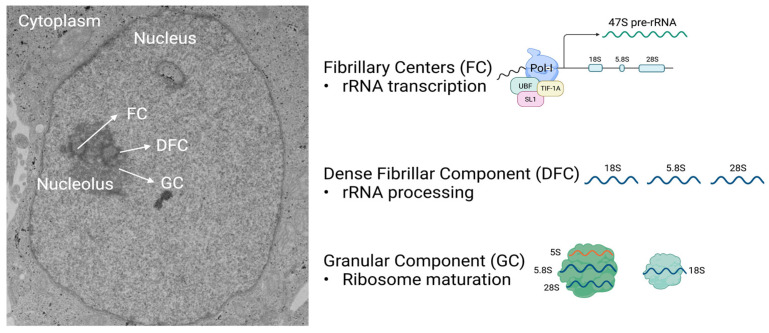
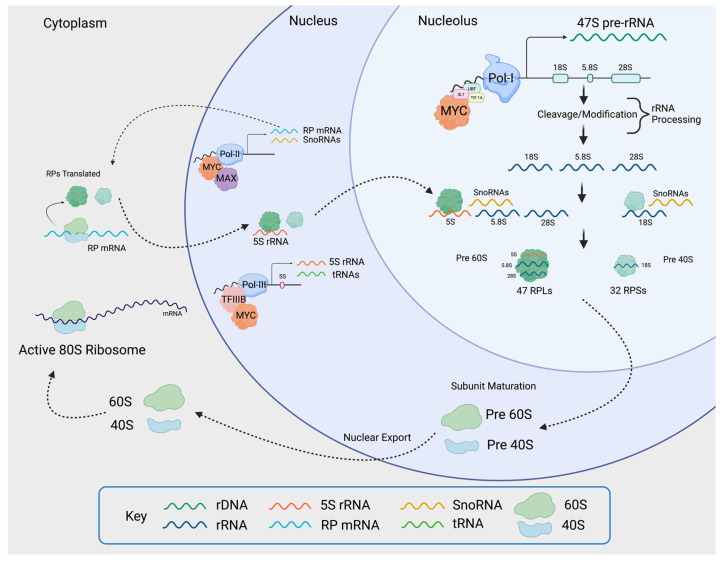
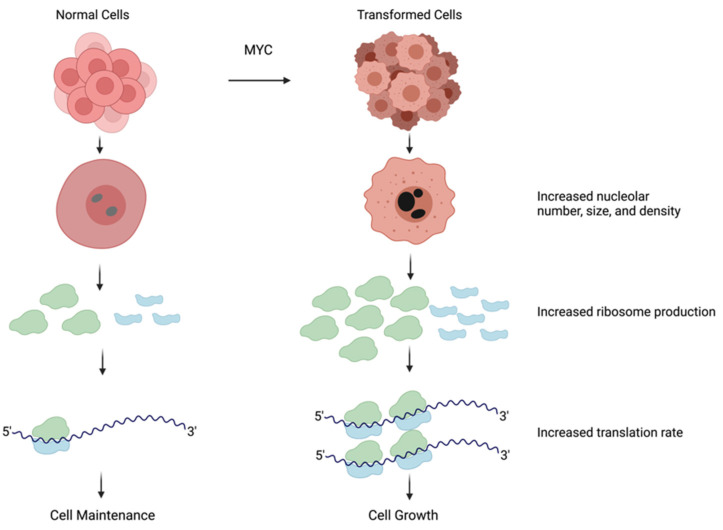
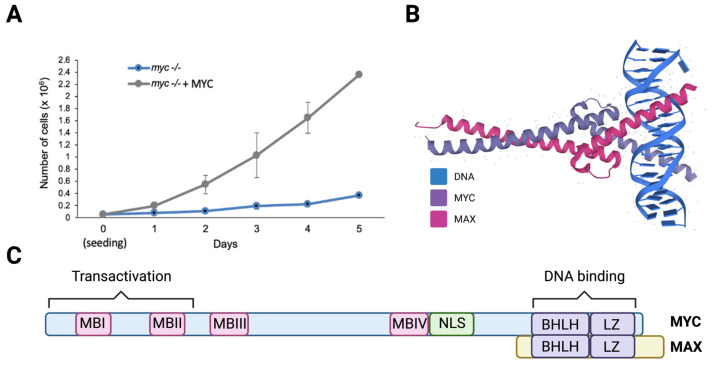
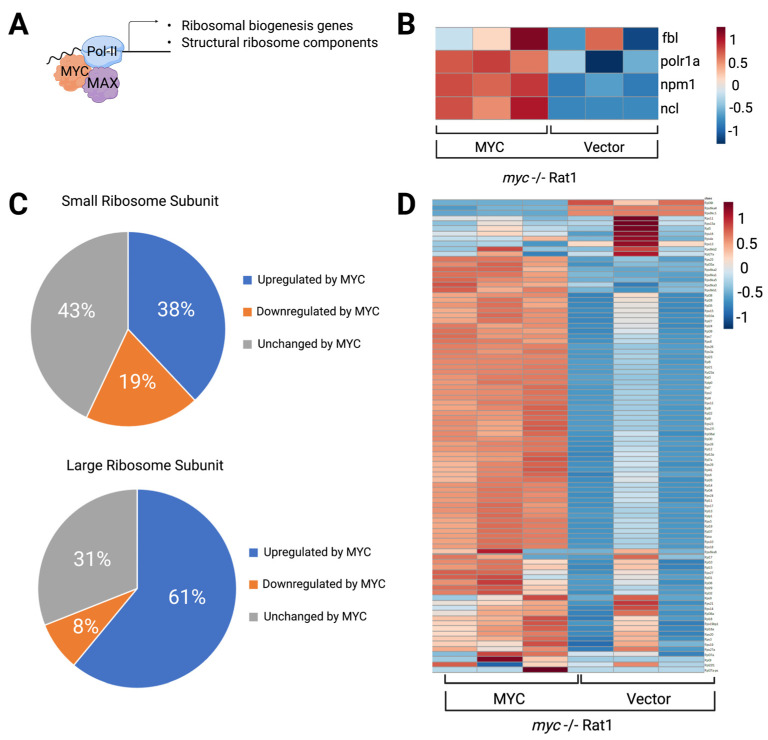
The nucleolus harbors the machinery necessary to produce new ribosomes which are critical for protein synthesis. Nucleolar size, shape, and density are highly dynamic and can be adjusted to accommodate ribosome biogenesis according to the needs for protein synthesis. In cancer, cells undergo continuous proliferation; therefore, nucleolar activity is elevated due to their high demand for protein synthesis. The transcription factor and universal oncogene MYC promotes nucleolar activity by enhancing the transcription of ribosomal DNA (rDNA) and ribosomal proteins. This review summarizes the importance of nucleolar activity in mammalian cells, MYC's role in nucleolar regulation in cancer, and discusses how a better understanding (and the potential inhibition) of aberrant nucleolar activity in cancer cells could lead to novel therapeutics.
核仁是核糖体生成的场所,核糖体对于蛋白质的合成至关重要。核仁的大小、形状和密度具有高度的动态性,可以根据蛋白质合成的需要进行调整,以适应核糖体的生物发生。在癌症中,细胞不断增殖;因此,由于对蛋白质合成的高需求,核仁活性升高。转录因子和普遍的致癌基因 MYC 通过增强核糖体 DNA(rDNA) 和核糖体蛋白的转录来促进核仁活性。这篇综述总结了核仁活性在哺乳动物细胞中的重要性、MYC 在癌症中对核仁调控的作用,并讨论了更好地理解(和潜在抑制)癌细胞中异常核仁活性如何导致新的治疗方法。