Zhang Boying, Sun Wenhua, Ran Lingling, Wang Chenru, Wang Jing, An Ran, Liang Xingguo
College of Food Science and Engineering, Ocean University of China, Qingdao 266003, China.
Laboratory for Marine Drugs and Bioproducts, Qingdao National Laboratory for Marine Science and Technology, Qingdao 266235, China.
Foods. 2022 Jan 26;11(3):352. doi: 10.3390/foods11030352.
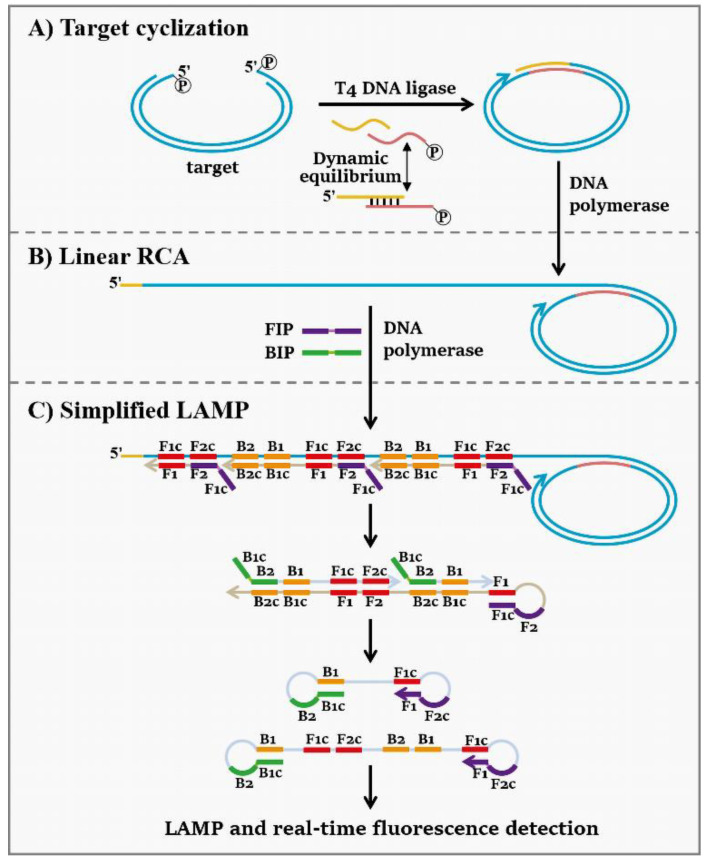
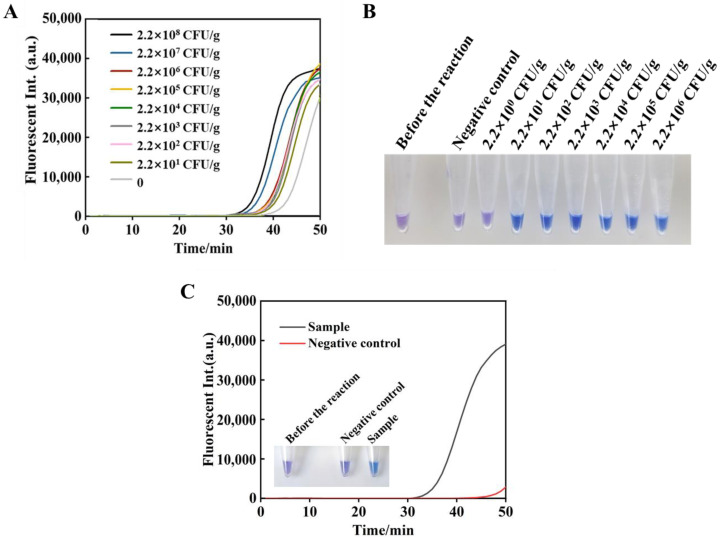
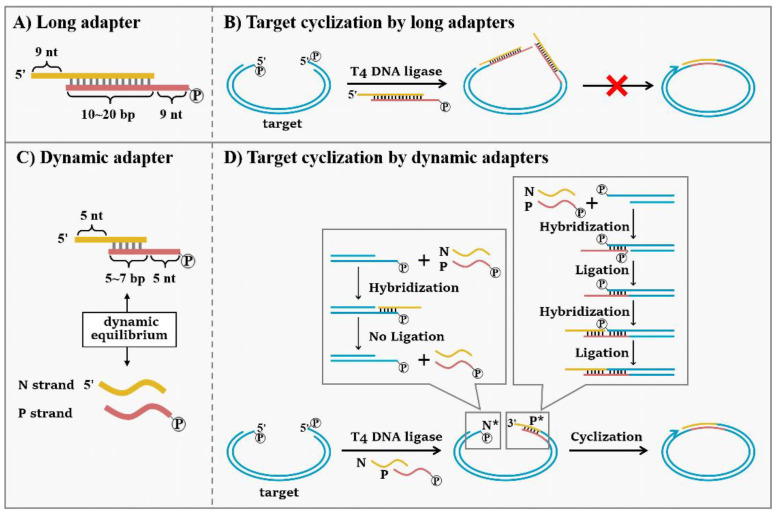
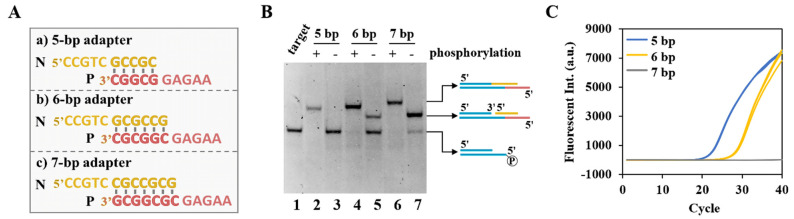
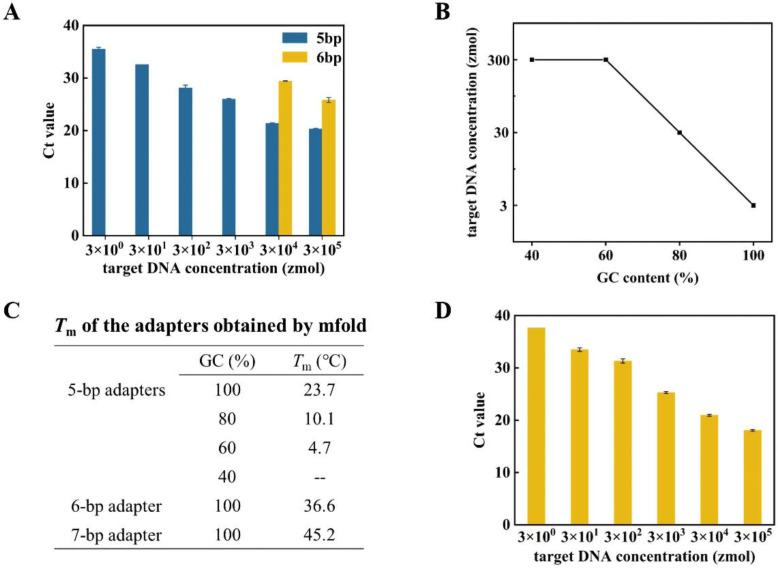
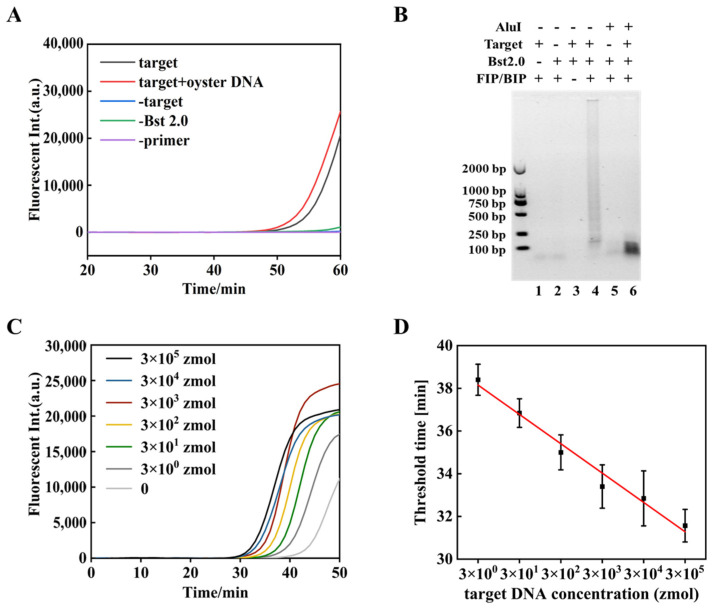
() is considered the most concerning pathogen for seafood. Like other pathogens in food samples, its gene detection suffers from a problem of background interference when isothermal detection methods are used. The sensitivity and specificity greatly decrease due to large amounts of background genome. Here we describe a novel isothermal detection technology based on target-cyclized rolling circle amplification combined with loop-mediated isothermal amplification (tRCA-lamp). By avoiding unexpected ligation, a short dynamic adapter is employed to increase the sensitivity of target cyclization in the presence of the background genome. At the amplification step, highly specific detection is obtained by linear RCA and simplified LAMP (only two primers are used). Furthermore, visual detection is easily realized with hydroxynaphthol blue (HNB). In the oyster samples, the tRCA-lamp approach can detect with a detection limit of 22 cfu/g with none necessary to enrich the bacteria and remove the host DNA. This method gets rid of the complicated primer design process and can be extended to the detection of other pathogens in food samples.
()被认为是海鲜中最令人担忧的病原体。与食品样本中的其他病原体一样,使用等温检测方法时,其基因检测存在背景干扰问题。由于大量背景基因组的存在,灵敏度和特异性大大降低。在此,我们描述了一种基于靶标环化滚环扩增结合环介导等温扩增(tRCA-LAMP)的新型等温检测技术。通过避免意外连接,采用短动态衔接子在背景基因组存在的情况下提高靶标环化的灵敏度。在扩增步骤中,通过线性滚环扩增和简化的环介导等温扩增(仅使用两个引物)实现高特异性检测。此外,使用羟基萘酚蓝(HNB)很容易实现可视化检测。在牡蛎样本中,tRCA-LAMP方法可以检测到,检测限为22 cfu/g,无需富集细菌和去除宿主DNA。该方法摆脱了复杂的引物设计过程,可扩展到食品样本中其他病原体的检测。