Department of Educational Sciences, University of La Rioja, 26004 Logrono, Spain.
Department of Psychology, University of Oviedo, 33003 Oviedo, Spain.
Int J Environ Res Public Health. 2022 Feb 4;19(3):1784. doi: 10.3390/ijerph19031784.
Given that death by suicide continues to rank among the top three causes of death during adolescence, new psychological models may contribute critical insight towards understanding the complex interactions between risk and protective factors in suicidal behaviour. The main objective of this study was to analyse the psychological network structure of suicidal behaviour and putative risk and protective factors in school-aged adolescents.
Stratified random cluster sampling was performed. The final sample comprised 1790 students (53.7% female, = 15.7 years, = 1.26). Instruments were administered to assess suicidal behaviour, emotional and behavioural difficulties, prosocial behaviour, subjective well-being, self-esteem, depressive symptomatology, academic performance, socio-economic status, school engagement, bullying, and cyberbullying.
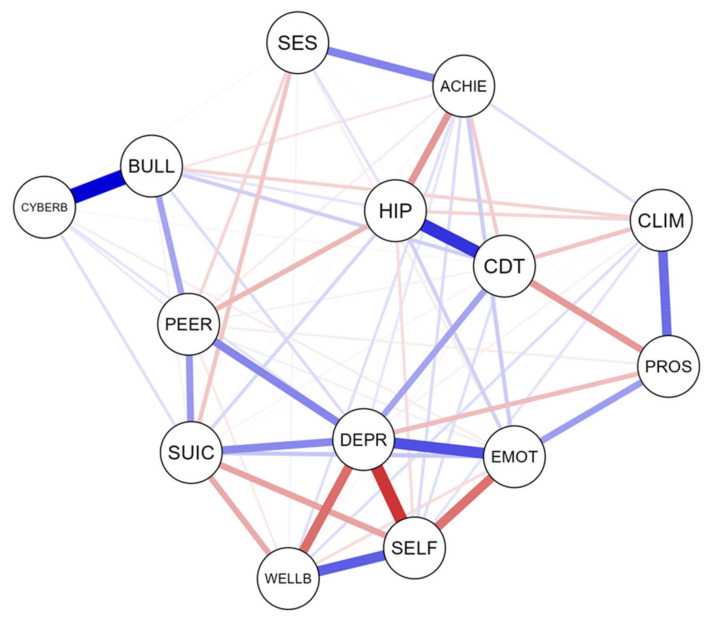
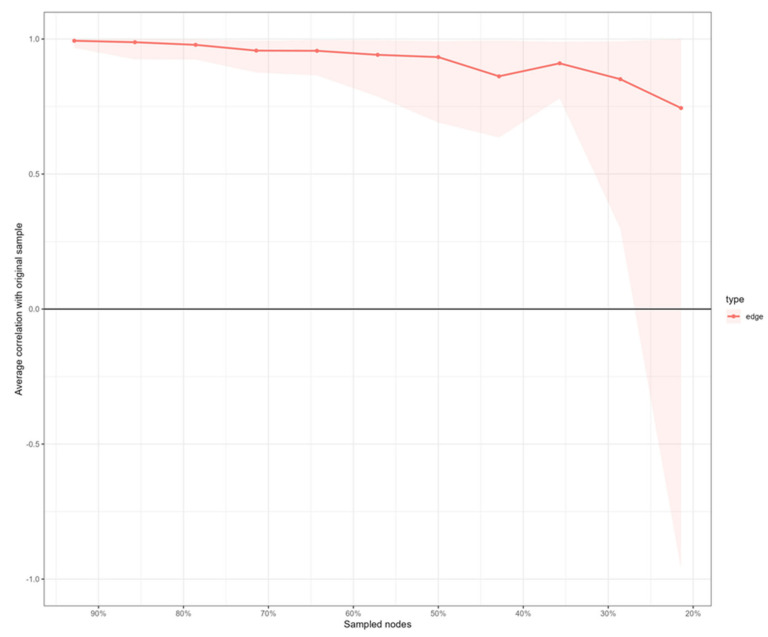
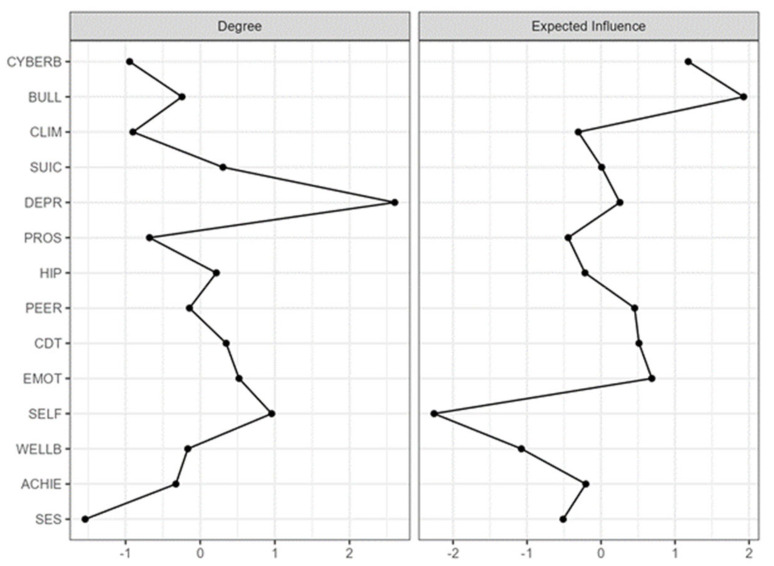
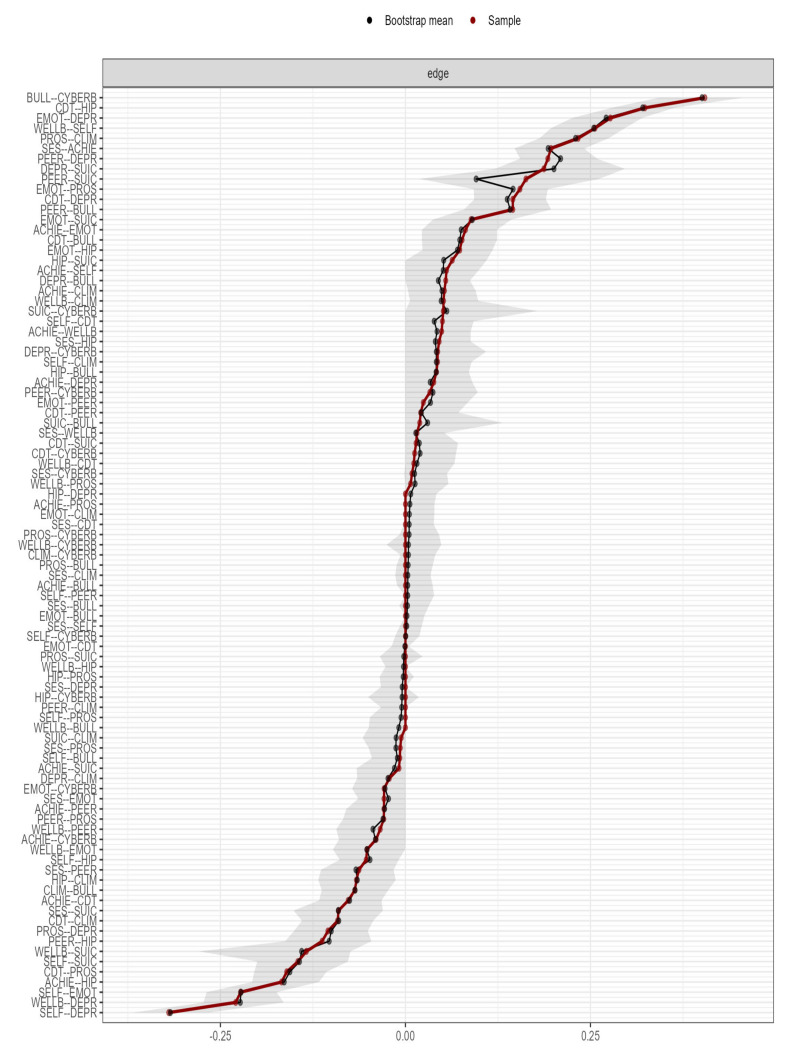
In the estimated psychological network, the node with the highest strength was depressive symptomatology, and that with the highest expected influence value was bullying. Suicidal behaviour was positively connected to symptoms of depression and behavioural problems. In addition, suicidal behaviour was negatively connected to self-esteem and personal well-being. The results of the stability analysis indicated that the network was accurately estimated.
Suicidal behaviour can be conceptualised as a dynamic, complex system of cognitive, emotional, and affective characteristics. New psychological models allow us to analyse and understand human behaviour from a new perspective, suggesting new forms of conceptualisation, evaluation, intervention, and prevention.
鉴于自杀死亡仍然是青少年期前三大死因之一,新的心理模型可能有助于深入了解自杀行为中风险和保护因素之间的复杂相互作用。本研究的主要目的是分析自杀行为和学龄青少年中假定的风险和保护因素的心理网络结构。
采用分层随机聚类抽样。最终样本包括 1790 名学生(53.7%为女性, = 15.7 岁, = 1.26)。采用量表评估自杀行为、情绪和行为困难、亲社会行为、主观幸福感、自尊、抑郁症状、学业成绩、社会经济地位、学校参与度、欺凌和网络欺凌。
在估计的心理网络中,节点强度最高的是抑郁症状,预期影响值最高的是欺凌。自杀行为与抑郁症状和行为问题呈正相关。此外,自杀行为与自尊和个人幸福感呈负相关。稳定性分析的结果表明网络得到了准确的估计。
自杀行为可以被概念化为认知、情感和情感特征的动态、复杂系统。新的心理模型允许我们从新的角度分析和理解人类行为,提出了新的概念化、评估、干预和预防形式。