Biological Science Program, Department of Biological and Environmental Sciences, College of Arts and Sciences, Qatar University, Doha P.O. Box 2713, Qatar.
Department of Cardiothoracic Pharmacology, National Heart and Lung Institute, Imperial College, London SW7 2AZ, UK.
Int J Mol Sci. 2022 Jan 26;23(3):1404. doi: 10.3390/ijms23031404.
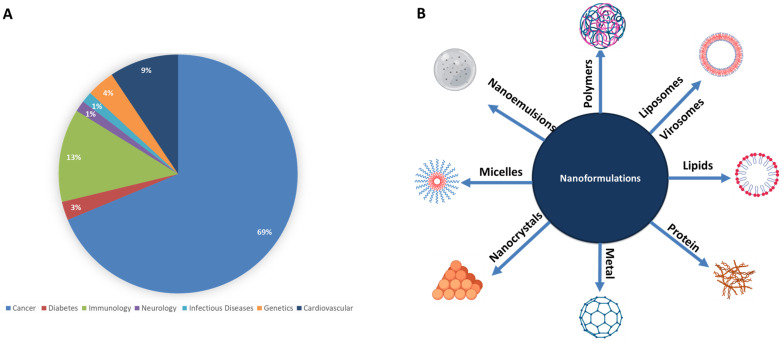
Cardiovascular diseases (CVDs) are the leading causes of morbidity and mortality worldwide. However, despite the recent developments in the management of CVDs, the early and long outcomes vary considerably in patients, especially with the current challenges facing the detection and treatment of CVDs. This disparity is due to a lack of advanced diagnostic tools and targeted therapies, requiring innovative and alternative methods. Nanotechnology offers the opportunity to use nanomaterials in improving health and controlling diseases. Notably, nanotechnologies have recognized potential applicability in managing chronic diseases in the past few years, especially cancer and CVDs. Of particular interest is the use of nanoparticles as drug carriers to increase the pharmaco-efficacy and safety of conventional therapies. Different strategies have been proposed to use nanoparticles as drug carriers in CVDs; however, controversies regarding the selection of nanomaterials and nanoformulation are slowing their clinical translation. Therefore, this review focuses on nanotechnology for drug delivery and the application of nanomedicine in CVDs.
心血管疾病(CVDs)是全球发病率和死亡率的主要原因。然而,尽管 CVDs 的治疗最近取得了进展,但患者的早期和长期结局差异很大,尤其是在当前 CVDs 的检测和治疗面临挑战的情况下。这种差异是由于缺乏先进的诊断工具和靶向治疗方法,需要创新和替代方法。纳米技术为利用纳米材料改善健康和控制疾病提供了机会。值得注意的是,纳米技术在过去几年中已被认为在管理慢性病方面具有潜在的适用性,尤其是癌症和 CVDs。特别有趣的是使用纳米颗粒作为药物载体来提高传统疗法的药效和安全性。已经提出了不同的策略来使用纳米颗粒作为药物载体在 CVDs 中;然而,关于纳米材料和纳米制剂选择的争议正在减缓它们的临床转化。因此,本综述重点介绍了药物递送的纳米技术和纳米医学在 CVDs 中的应用。