Department of Pathology, University of Maryland School of Medicine, Baltimore, Maryland, USA.
Research & Development Service, VA Maryland Health Care System, Baltimore, Maryland, USA.
mBio. 2021 Feb 22;13(1):e0016922. doi: 10.1128/mbio.00169-22. Epub 2022 Feb 15.
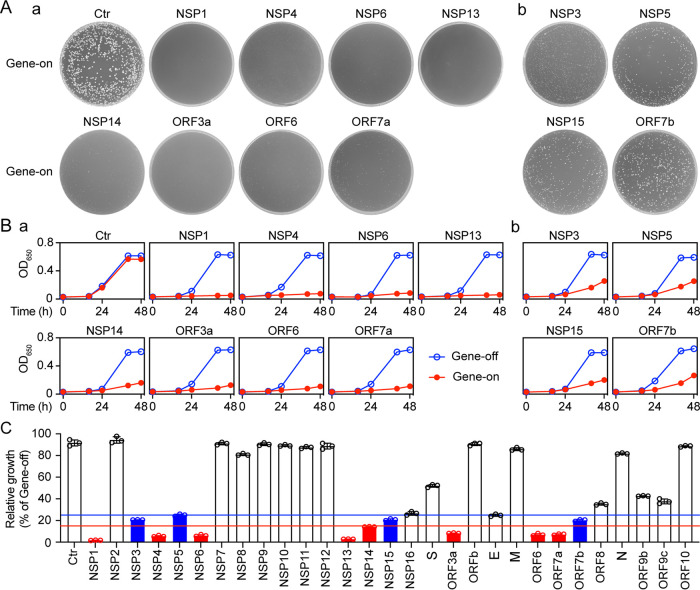
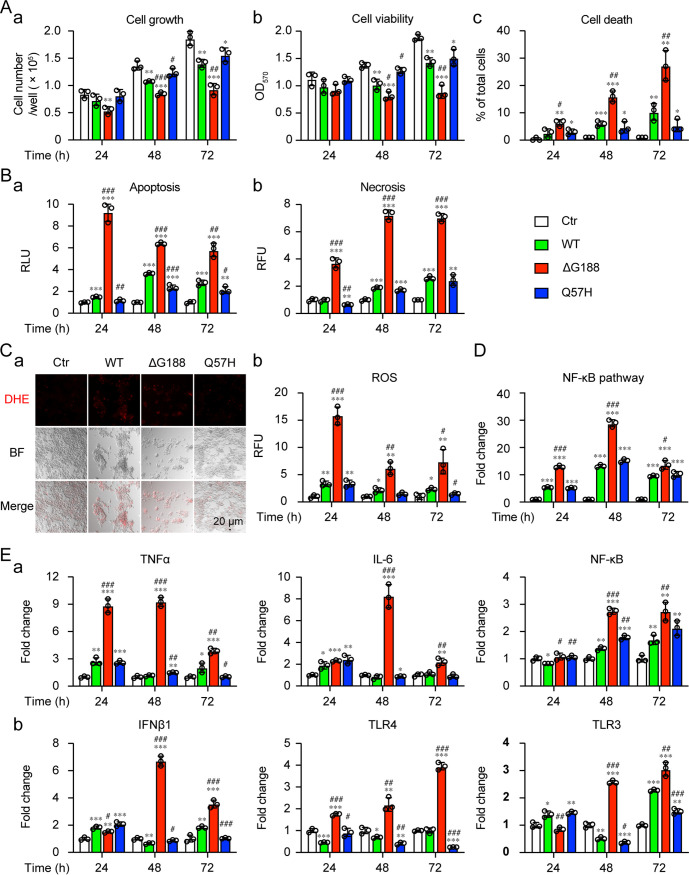
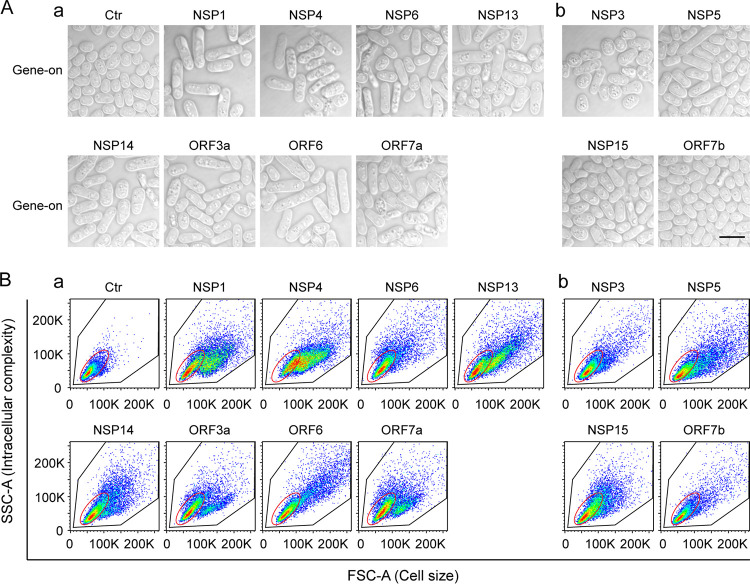
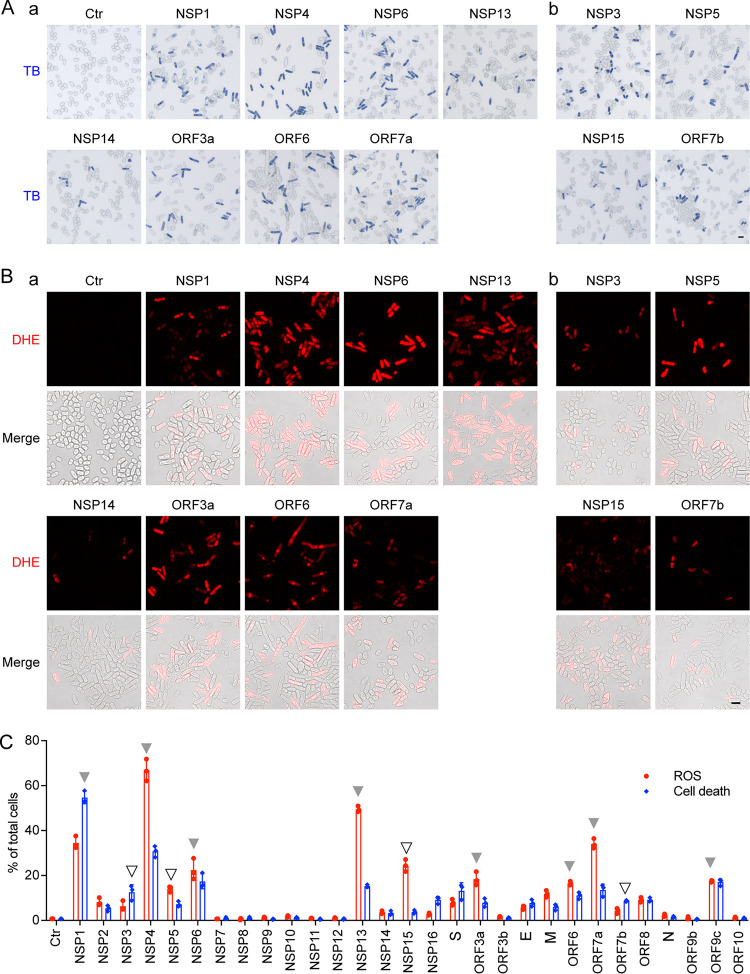
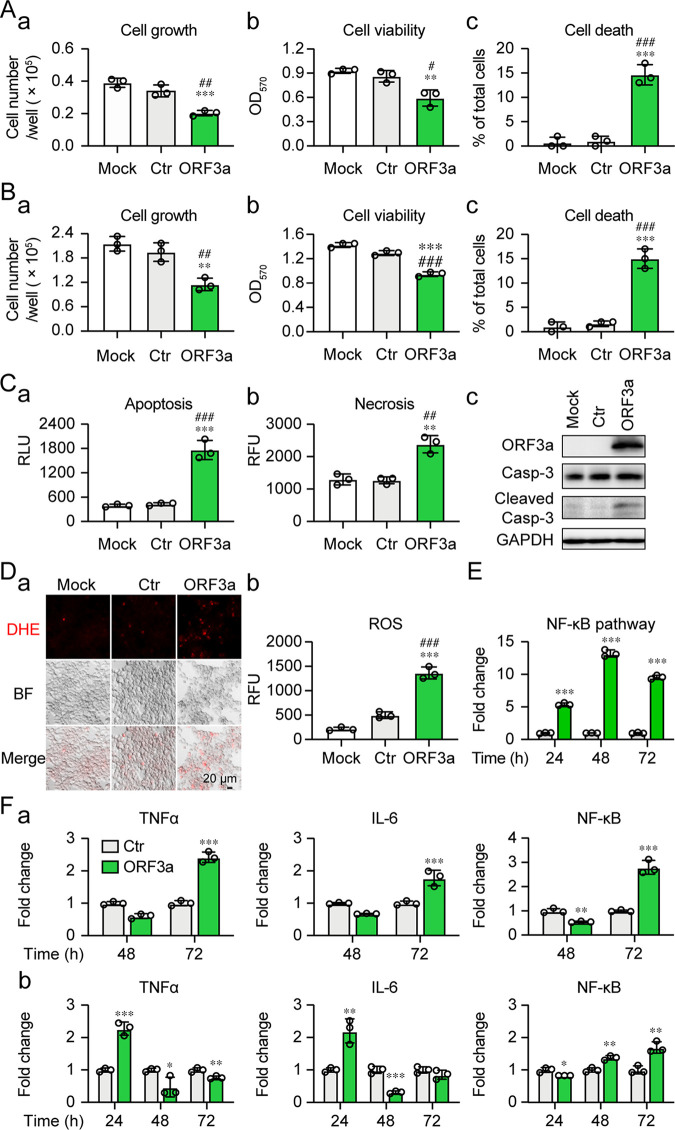
Therapeutic inhibition of critical viral functions is important for curtailing coronavirus disease 2019 (COVID-19). We sought to identify antiviral targets through the genome-wide characterization of severe acute respiratory syndrome coronavirus 2 (SARS-CoV-2) proteins that are crucial for viral pathogenesis and that cause harmful cytopathogenic effects. All 29 viral proteins were tested in a fission yeast cell-based system using inducible gene expression. Twelve proteins, including eight nonstructural proteins (NSP1, NSP3, NSP4, NSP5, NSP6, NSP13, NSP14, and NSP15) and four accessory proteins (ORF3a, ORF6, ORF7a, and ORF7b), were identified that altered cellular proliferation and integrity and induced cell death. Cell death correlated with the activation of cellular oxidative stress. Of the 12 proteins, ORF3a was chosen for further study in mammalian cells because it plays an important role in viral pathogenesis and its activities are linked to lung tissue damage and a cytokine storm. In human pulmonary and kidney epithelial cells, ORF3a induced cellular oxidative stress associated with apoptosis and necrosis and caused activation of proinflammatory response with production of the cytokines tumor necrosis factor alpha (TNF-α), interleukin-6 (IL-6), and IFN-β1, possibly through the activation of nuclear factor kappa B (NF-κB). To further characterize the mechanism, we tested a natural ORF3a Beta variant, Q57H, and a mutant with deletion of the highly conserved residue, ΔG188. Compared with wild-type ORF3a, the ΔG188 variant yielded more robust activation of cellular oxidative stress, cell death, and innate immune response. Since cellular oxidative stress and inflammation contribute to cell death and tissue damage linked to the severity of COVID-19, our findings suggest that ORF3a is a promising, novel therapeutic target against COVID-19. The ongoing COVID-19 pandemic caused by SARS-CoV-2 has claimed over 5.5 million lives with more than 300 million people infected worldwide. While vaccines are effective, the emergence of new viral variants could jeopardize vaccine protection. Treatment of COVID-19 by antiviral drugs provides an alternative to battle against the disease. The goal of this study was to identify viral therapeutic targets that can be used in antiviral drug discovery. Utilizing a genome-wide functional analysis in a fission yeast cell-based system, we identified 12 viral candidates, including ORF3a, which cause cellular oxidative stress, inflammation, apoptosis, and necrosis that contribute to cytopathogenicity and COVID-19. Our findings indicate that antiviral agents targeting ORF3a could have a great impact on COVID-19.
治疗性抑制关键病毒功能对于遏制 2019 年冠状病毒病(COVID-19)至关重要。我们试图通过对严重急性呼吸综合征冠状病毒 2(SARS-CoV-2)的基因组进行全面鉴定,找到对病毒发病机制至关重要且导致有害细胞病变作用的抗病毒靶点。使用诱导基因表达的酵母细胞系检测了所有 29 种病毒蛋白。有 12 种蛋白,包括 8 种非结构蛋白(NSP1、NSP3、NSP4、NSP5、NSP6、NSP13、NSP14 和 NSP15)和 4 种辅助蛋白(ORF3a、ORF6、ORF7a 和 ORF7b),改变了细胞增殖和完整性,并诱导细胞死亡。细胞死亡与细胞氧化应激的激活有关。在这 12 种蛋白中,选择 ORF3a 进一步在哺乳动物细胞中进行研究,因为它在病毒发病机制中发挥重要作用,其活性与肺组织损伤和细胞因子风暴有关。在人肺和肾上皮细胞中,ORF3a 诱导与细胞凋亡和坏死相关的细胞氧化应激,并通过核因子 kappa B(NF-κB)的激活引起促炎反应,导致肿瘤坏死因子 alpha(TNF-α)、白细胞介素 6(IL-6)和 IFN-β1 等细胞因子的产生。为了进一步研究机制,我们测试了天然的 ORF3a Beta 变体 Q57H 和高度保守残基缺失的突变体 ΔG188。与野生型 ORF3a 相比,ΔG188 变体产生更强烈的细胞氧化应激、细胞死亡和固有免疫反应激活。由于细胞氧化应激和炎症会导致与 COVID-19 严重程度相关的细胞死亡和组织损伤,我们的研究结果表明 ORF3a 是一种有前途的新型 COVID-19 治疗靶点。由 SARS-CoV-2 引起的 COVID-19 大流行已导致全球超过 550 万人死亡,超过 3 亿人感染。虽然疫苗有效,但新病毒变种的出现可能危及疫苗保护。抗病毒药物治疗 COVID-19 为对抗该疾病提供了另一种选择。本研究的目的是确定可用于抗病毒药物发现的病毒治疗靶点。利用酵母细胞系的全基因组功能分析,我们鉴定了 12 种病毒候选物,包括 ORF3a,它会导致细胞氧化应激、炎症、凋亡和坏死,从而导致细胞病变和 COVID-19。我们的研究结果表明,针对 ORF3a 的抗病毒药物可能对 COVID-19 产生重大影响。