Prusiński Tomasz
Department of Personality Psychology, Institute of Psychology, The Maria Grzegorzewska University, Warsaw, Poland.
Front Psychiatry. 2022 Jan 31;13:827321. doi: 10.3389/fpsyt.2022.827321. eCollection 2022.
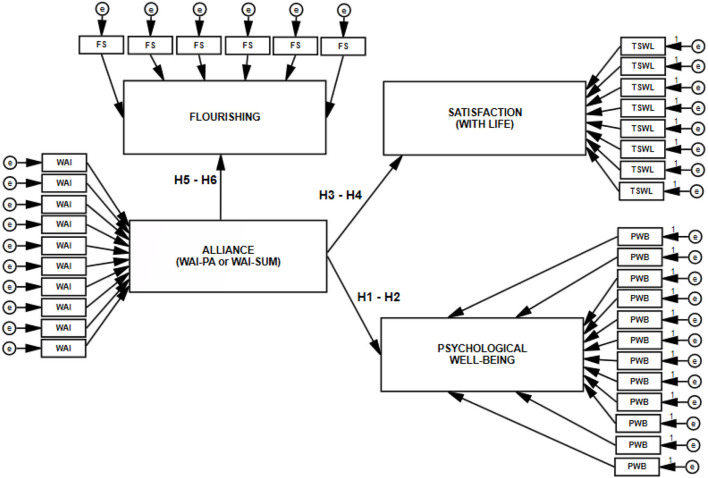
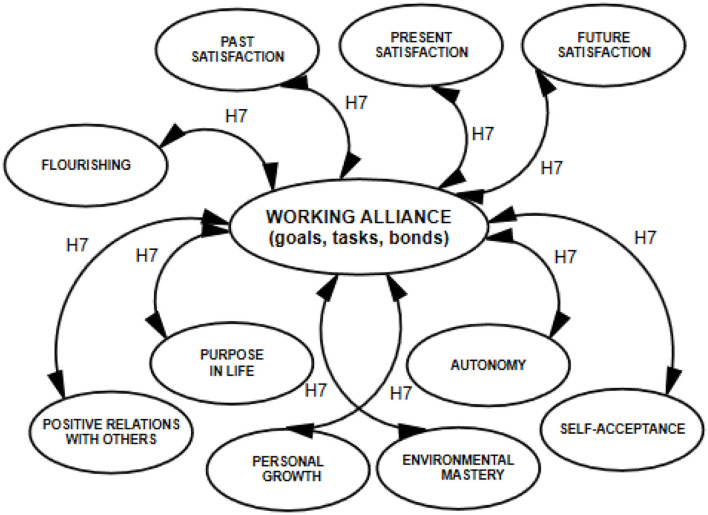
The central aim of the research was to verify and determine the strength of the relationships of therapeutic alliance to wellbeing, life satisfaction, and flourishing in patients attending individual psychotherapy. The relationships were assessed based on different sources of information about the quality of the working alliance: patient's evaluation and patient's and psychotherapist's joint evaluations.
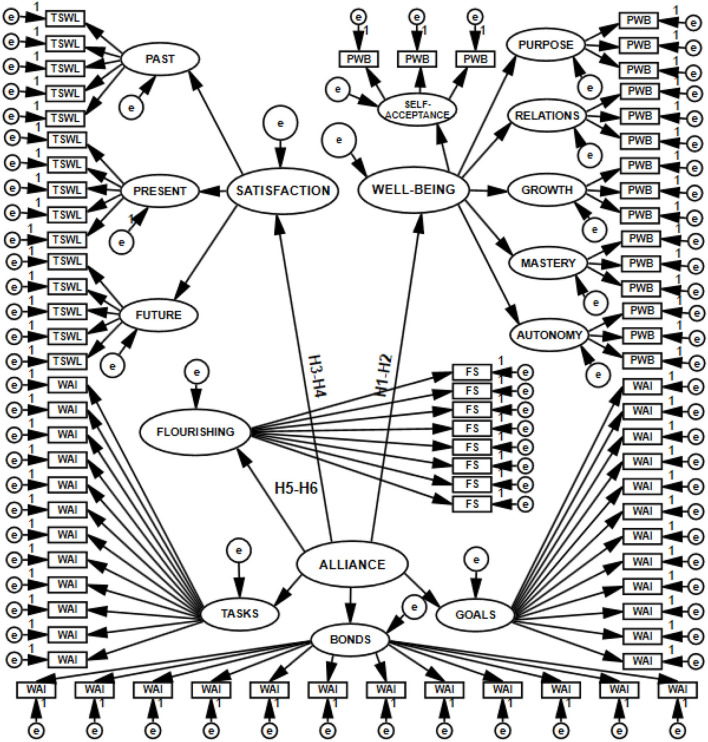
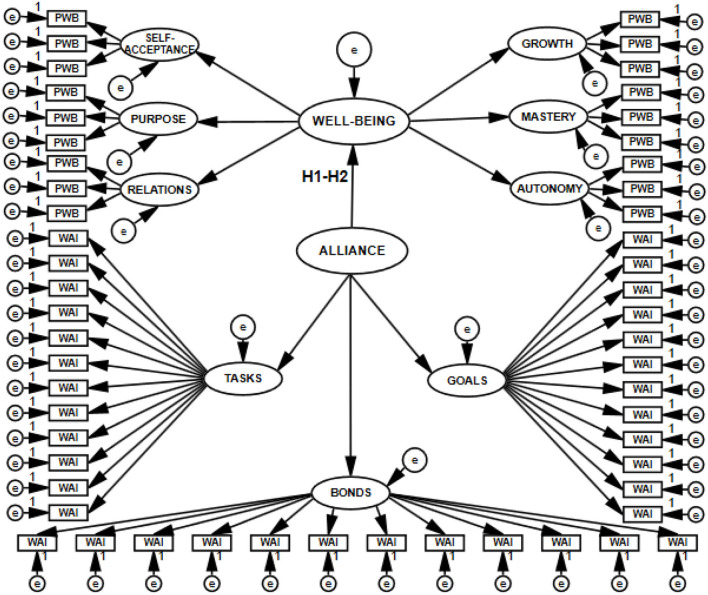
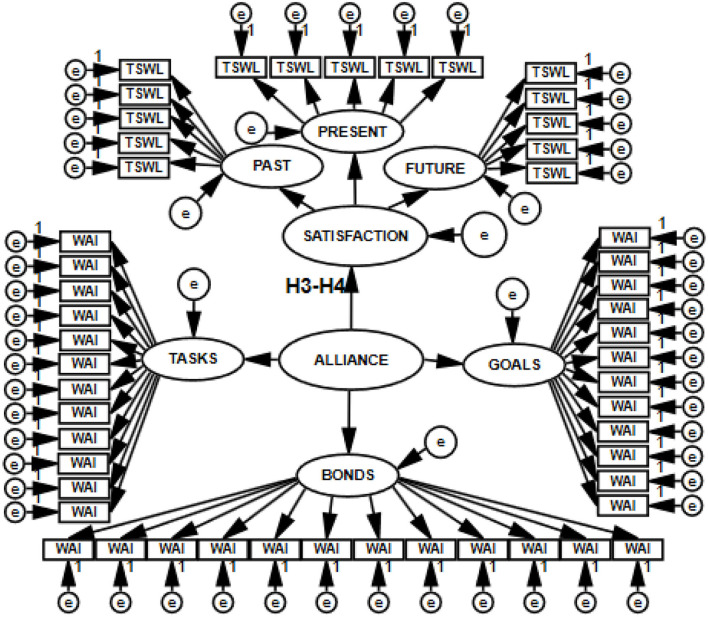
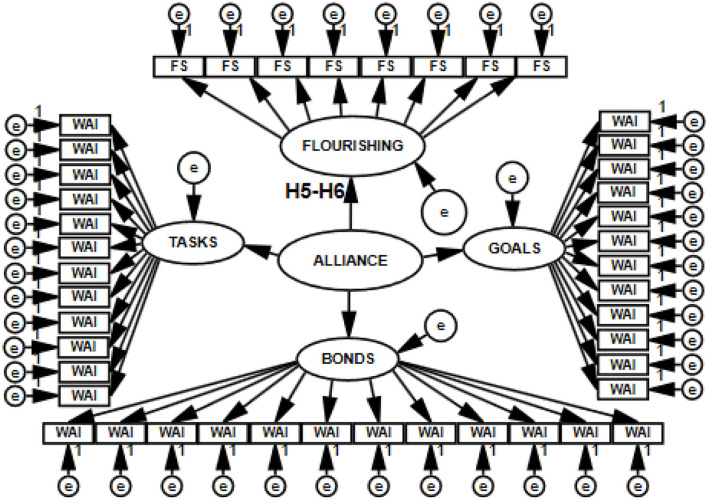
The author applied Bordin's pantheoretical model of alliance and two different conceptions of wellbeing, operationalized as hedonistic and eudaimonic.
The 411 participants included 252 patients and 159 psychotherapists. To test the hypotheses, 16 joint and separate models of structural relations were built and analyzed empirically using SEM. Correlations were analyzed between alliance factors and those of wellbeing, satisfaction, and flourishing.
The actual impact of working alliance quality on psychological wellbeing proved to be stronger compared to the relations between alliance and satisfaction or flourishing. The results of analyses revealed low, though usually positive and significant, correlations between the dimensions of alliance and those of wellbeing, life satisfaction, and flourishing.
The empirical data and the strategy of analyses brought the expected results, confirming that patient's and psychotherapist's perception of a strong therapeutic alliance is crucial for the optimization of patient's functioning and wellbeing. It turns out that the therapeutic alliance is, above all, a factor of wellbeing understood more deeply than merely as current pleasure. The study also showed that no factor isolated from other components of alliance increased the quality of patient's mental functioning more than others.
该研究的核心目标是验证并确定在接受个体心理治疗的患者中,治疗联盟与幸福感、生活满意度和蓬勃发展之间关系的强度。这些关系是基于有关工作联盟质量的不同信息来源进行评估的:患者的评估以及患者与心理治疗师的联合评估。
作者应用了博丁的联盟泛理论模型以及两种不同的幸福感概念,将其操作化为享乐主义和幸福主义。
411名参与者包括252名患者和159名心理治疗师。为了检验假设,构建了16个结构关系的联合模型和单独模型,并使用结构方程模型进行实证分析。分析了联盟因素与幸福感、满意度和蓬勃发展因素之间的相关性。
与联盟和满意度或蓬勃发展之间的关系相比,工作联盟质量对心理健康的实际影响更强。分析结果显示,联盟维度与幸福感、生活满意度和蓬勃发展维度之间的相关性较低,尽管通常为正且显著。
实证数据和分析策略带来了预期结果,证实患者和心理治疗师对强大治疗联盟的感知对于优化患者的功能和幸福感至关重要。事实证明,治疗联盟首先是一个比仅仅作为当前愉悦更深刻理解的幸福感因素。该研究还表明,与联盟其他组成部分分离的任何因素都不会比其他因素更能提高患者心理功能的质量。