Bristol BioEnergy Centre, Bristol Robotics Laboratory, University of the West of England, BS16 1QY, UK; Biological, Biomedical and Analytical Sciences, University of the West of England, BS16 1QY, UK.
Bristol BioEnergy Centre, Bristol Robotics Laboratory, University of the West of England, BS16 1QY, UK.
Chemosphere. 2022 Jun;296:133967. doi: 10.1016/j.chemosphere.2022.133967. Epub 2022 Feb 14.
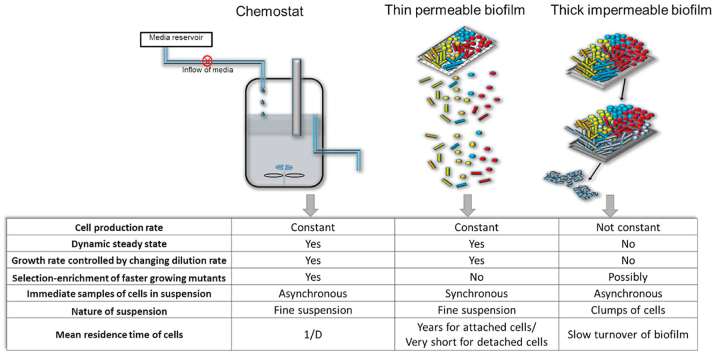
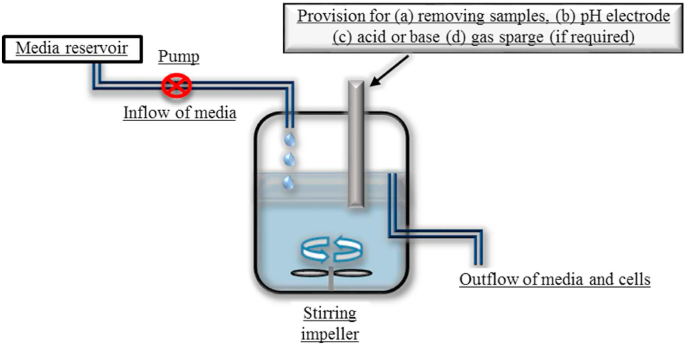
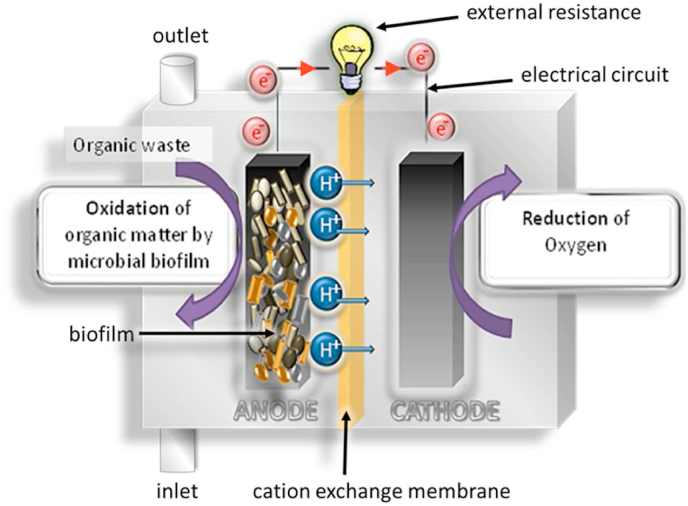
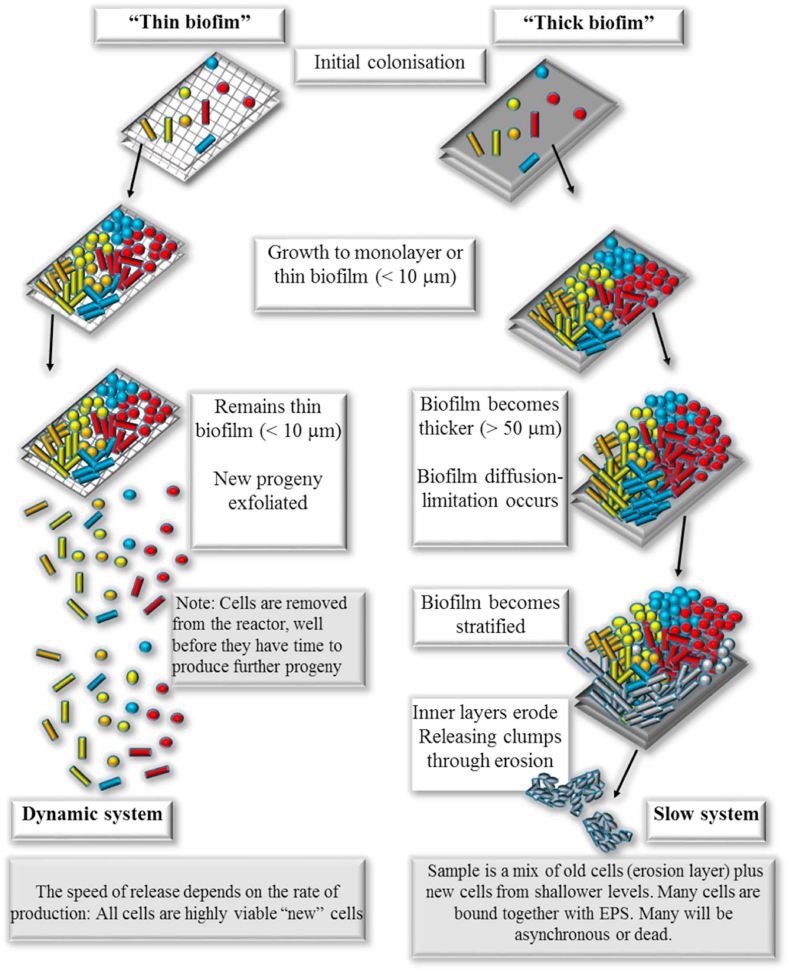
Microbial Fuel Cells (MFCs) represent a green and sustainable energy conversion system that integrate bacterial biofilms within an electrochemical two-electrode set-up to produce electricity from organic waste. In this review, we focus on a novel exploratory model, regarding "thin" biofilms forming on highly perfusable (non-diffusible) anodes in small-scale, continuous flow MFCs due to the unique properties of the electroactive biofilm. We discuss how this type of MFC can behave as a chemostat in fulfilling common properties including steady state growth and multiple steady states within the limit of biological physicochemical conditions imposed by the external environment. With continuous steady state growth, there is also continuous metabolic rate and continuous electrical power production, which like the chemostat can be controlled. The model suggests that in addition to controlling growth rate and power output by changing the external resistive load, it will be possible instead to change the flow rate/dilution rate.
微生物燃料电池(MFC)代表了一种绿色可持续的能源转换系统,它将细菌生物膜整合到电化学双电极装置中,从有机废物中产生电能。在这篇综述中,我们关注一种新颖的探索模型,即在小型连续流动 MFC 中,由于电活性生物膜的独特性质,在高可渗透(不可扩散)阳极上形成“薄”生物膜。我们讨论了这种类型的 MFC 如何作为恒化器发挥作用,以满足常见特性,包括在外部环境施加的生物物理化学条件限制内的稳态生长和多个稳态。随着连续稳态生长,也会有连续的代谢率和连续的电力生产,这与恒化器一样可以控制。该模型表明,除了通过改变外部电阻负载来控制生长速率和功率输出外,还可以通过改变流速/稀释率来实现。