Rerkyusuke Sarinya, Lerk-U-Suke Sawarin, Sirimalaisuwan Anucha
Division of Livestock Medicine, Faculty of Veterinary Medicine, Khon Kaen University, Khon Kaen 40002, Thailand.
Research Group of Animal Health Technology, Faculty of Veterinary Medicine, Khon Kaen University, Khon Kaen 40002, Thailand.
Vet Med Int. 2022 Feb 8;2022:1877317. doi: 10.1155/2022/1877317. eCollection 2022.
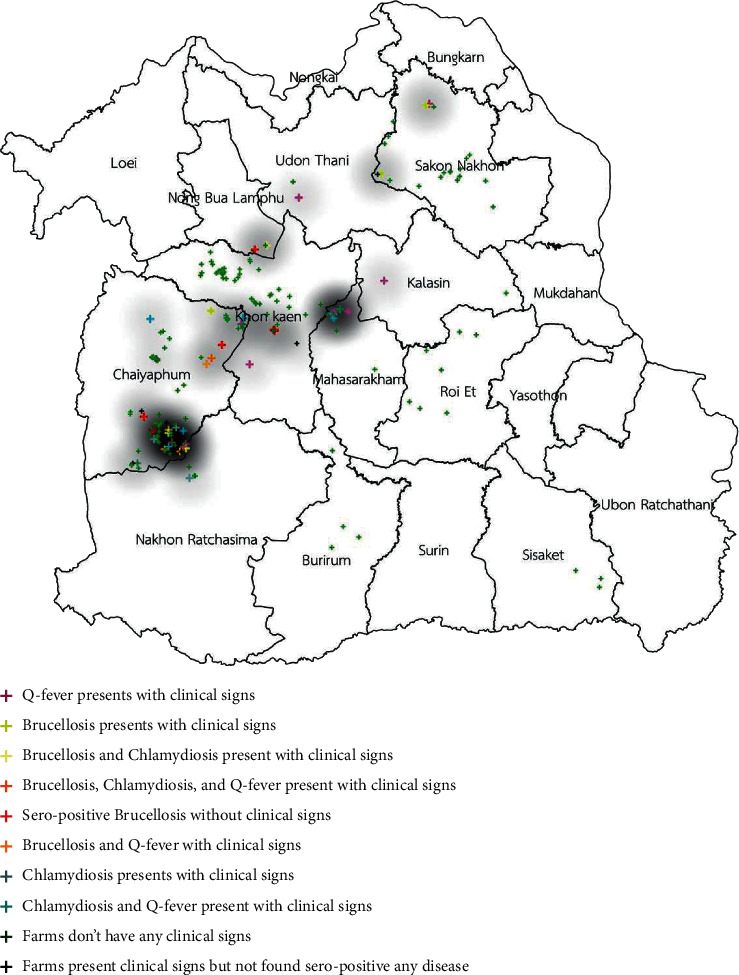
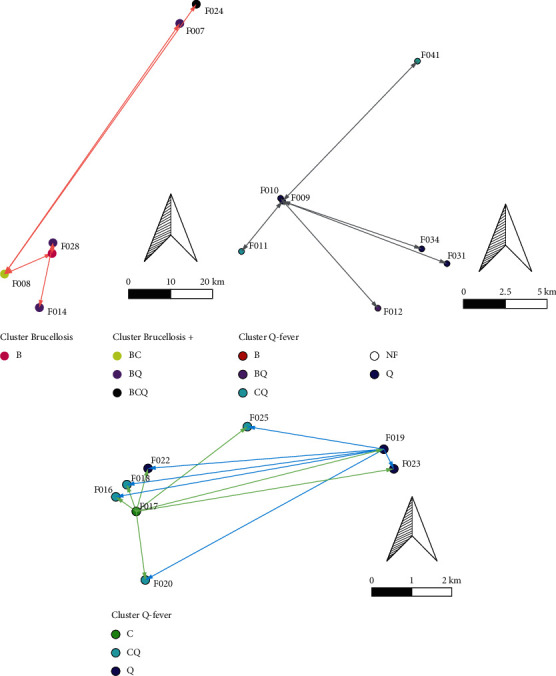
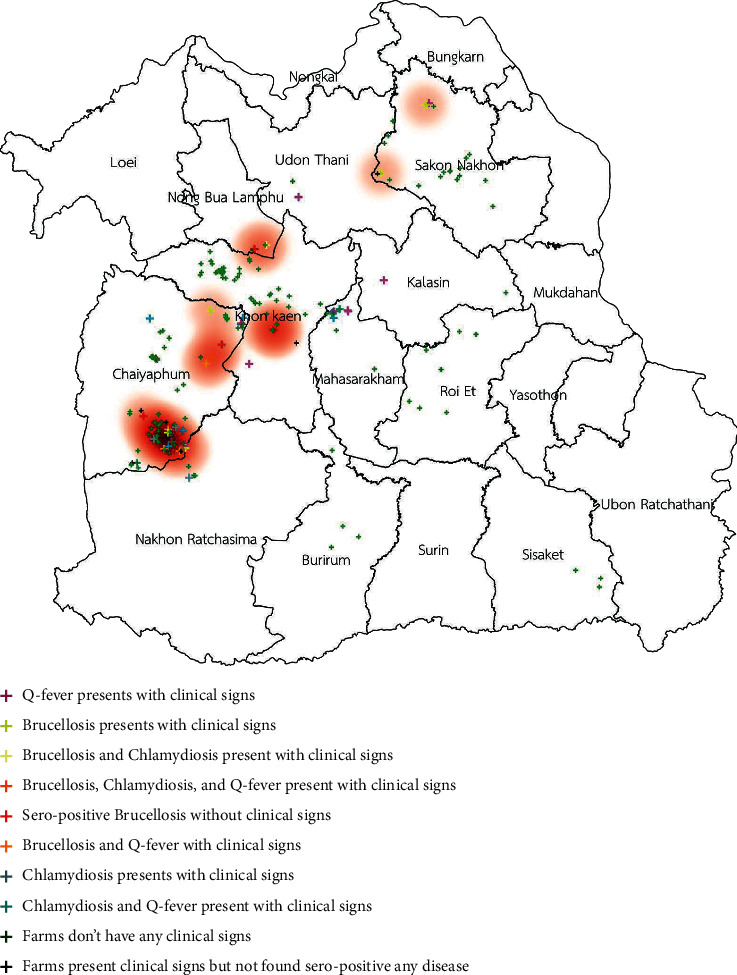
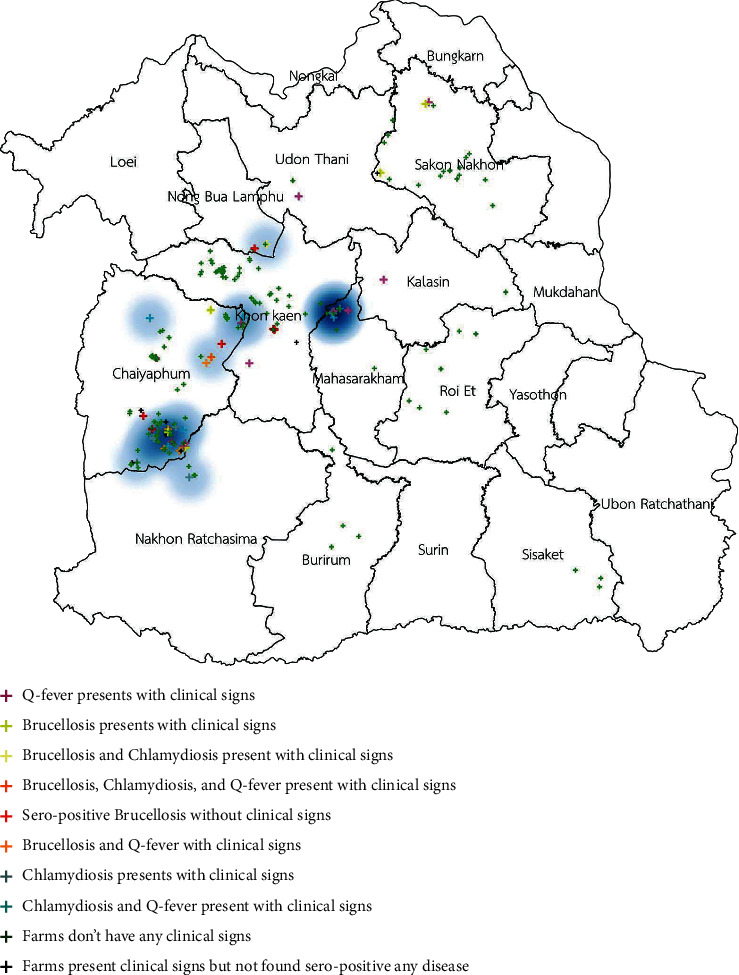
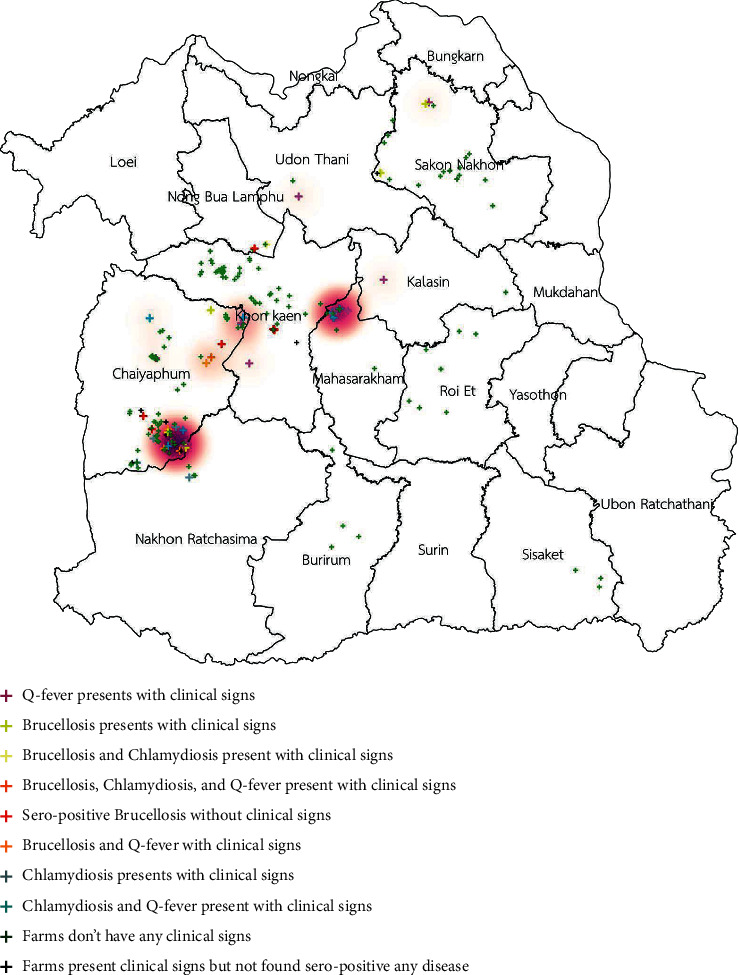
The objective of this study was to identify risk factors related to reproductive disorders caused by bacterial infections in goats in northeastern Thailand. Two hundred twenty farms were investigated, and 49 herds were found to have clinical reproductive disorders. Moreover, 96% (47/49) of herds showing clinical reproductive failure preferred to circulate bucks between herds. A total of 118 sera, including 85 clinical reproductive disorder cases such as abortion ( = 70), abortion with arthritis ( = 1), orchitis ( = 3), repeat breeder ( = 6), sterile ( = 1), and weak kids ( = 4), and 33 bucks' circulations were serologically tested for bacterial infections caused by , , and spp. Results showed 69% (81/118 cases) were seropositive for Q fever ( = 55; 46.61%), brucellosis ( = 8; 6.78), and chlamydiosis ( = 18; 15.25%), respectively; 82% of herds (40/49 herds) were infected with at least one of those diseases. Moreover, 40% of infected herds (16/40) had coinfection among the three of those diseases. Approximately 60% (20/33) of buck circulation showed seropositivity to at least one of the diseases, and 85% of infected bucks were seropositive for Q fever (17/20). Buck circulation between herds is a risk factor for diseases on farms (=0.001); odds ratio (OR = 109.29; 95% confidence interval (CI) = 6.61-1,807.38). Moreover, the annual brucellosis test is a protective factor against reproductive failure cases on farms (=0.022; OR = 0.45; 95% CI = 0.23-0.89). Reproductive disorder cases can be caused by sexual transmission, so buck circulation can yield Q fever, brucellosis, and chlamydiosis in communities. This investigation is the first report of chlamydiosis infection in our area. Concerning Q fever, chlamydiosis, and brucellosis are zoonotic diseases that impact animal health and production losses. Control and prevention measures related to risk factors together with active surveillance programs should be incorporated into client education.
本研究的目的是确定泰国东北部山羊由细菌感染引起的生殖障碍相关风险因素。调查了220个农场,发现49个畜群存在临床生殖障碍。此外,出现临床生殖失败的畜群中有96%(47/49)更倾向于在畜群间交换种公羊。总共采集了118份血清样本,其中包括85例临床生殖障碍病例,如流产(n = 70)、流产伴关节炎(n = 1)、睾丸炎(n = 3)、屡配不孕(n = 6)、不育(n = 1)和弱仔(n = 4),以及33次种公羊交换样本,对其进行血清学检测,以检测由 、 和 spp. 引起的细菌感染。结果显示,69%(81/118例)分别对Q热(n = 55;46.61%)、布鲁氏菌病(n = 8;6.78%)和衣原体病(n = 18;15.25%)呈血清阳性;82%的畜群(40/49个畜群)感染了这些疾病中的至少一种。此外,40%的感染畜群(16/40)在这三种疾病中存在混合感染。大约60%(20/33)的种公羊交换样本对这些疾病中的至少一种呈血清阳性,85%的感染种公羊对Q热呈血清阳性(17/20)。畜群间种公羊交换是农场疾病的一个风险因素(P = 0.001);优势比(OR =
109.29;95%置信区间(CI)= 6.61 -
1,807.38)。此外,年度布鲁氏菌病检测是预防农场生殖失败病例的一个保护因素(P = 0.022;OR = 0.45;95% CI = 0.23 - 0.89)。生殖障碍病例可通过性传播引起,因此种公羊交换可在畜群中引发Q热、布鲁氏菌病和衣原体病。本调查是我们地区衣原体病感染的首次报告。关于Q热,衣原体病和布鲁氏菌病是人畜共患病,会影响动物健康和造成生产损失。与风险因素相关的控制和预防措施以及积极的监测计划应纳入客户教育中。