Department of Biomedical Science and Technology, School of Biological Sciences, Ramakrishna Mission Vivekananda Educational Research Institute (RKMVERI), Kolkata, India.
Cancer Research Program, Rajiv Gandhi Center for Biotechnology (RGCB), Thiruvananthapuram, 695014, Kerala, India.
Cell Commun Signal. 2024 Mar 27;22(1):196. doi: 10.1186/s12964-024-01526-9.
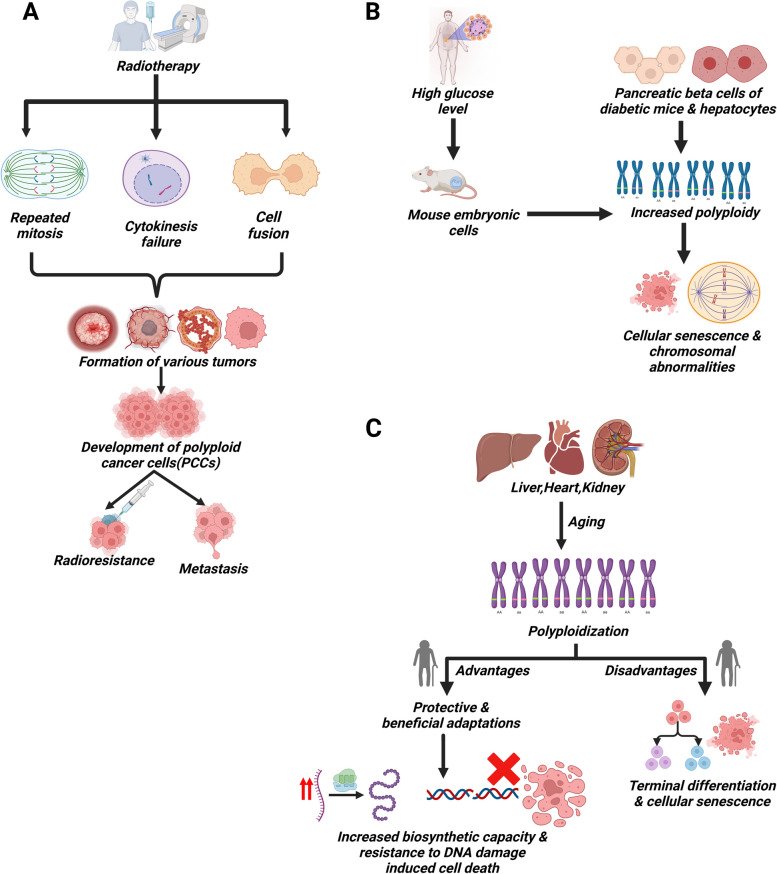
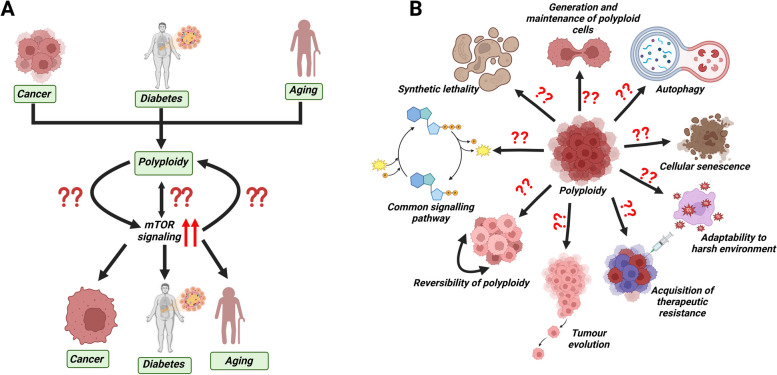
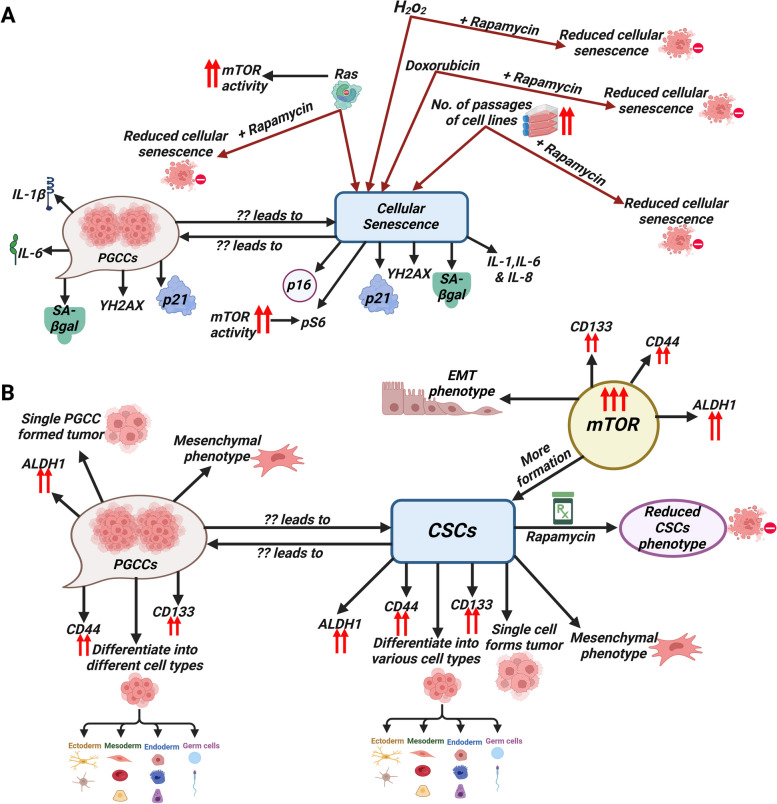
Polyploidy is typically described as the condition wherein a cell or organism has more than two complete sets of chromosomes. Occurrence of polyploidy is a naturally occurring phenomenon in the body's development and differentiation processes under normal physiological conditions. However, in pathological conditions, the occurrence of polyploidy is documented in numerous disorders, including cancer, aging and diabetes. Due to the frequent association that the polyploidy has with these pathologies and physiological process, understanding the cause and consequences of polyploidy would be beneficial to develop potential therapeutic applications. Many of the genetic and epigenetic alterations leading to cancer, diabetes and aging are linked to signaling pathways. Nonetheless, the specific signaling pathway associated with the cause and consequences of polyploidy still remains largely unknown. Mammalian/mechanistic target of rapamycin (mTOR) plays a key role in the coordination between eukaryotic cell growth and metabolism, thereby simultaneously respond to various environmental inputs including nutrients and growth factors. Extensive research over the past two decades has established a central role for mTOR in the regulation of many fundamental cellular processes that range from protein synthesis to autophagy. Dysregulated mTOR signaling has been found to be implicated in various disease progressions. Importantly, there is a strong correlation between the hallmarks of polyploidy and dysregulated mTOR signaling. In this review, we explore and discuss the molecular connection between mTOR signaling and polyploidy along with its association with cancer, diabetes and aging. Additionally, we address some unanswered questions and provide recommendations to further advance our understanding of the intricate relationship between mTOR signaling and polyploidy.
多倍体通常被描述为细胞或生物体具有两套以上完整染色体的状态。多倍体的发生是身体在正常生理条件下发育和分化过程中的自然现象。然而,在病理条件下,多倍体的发生在许多疾病中都有记录,包括癌症、衰老和糖尿病。由于多倍体与这些病理和生理过程的频繁关联,了解多倍体的原因和后果将有助于开发潜在的治疗应用。导致癌症、糖尿病和衰老的许多遗传和表观遗传改变都与信号通路有关。然而,与多倍体的原因和后果相关的特定信号通路仍然很大程度上未知。哺乳动物/雷帕霉素靶蛋白 (mTOR) 在真核细胞生长和代谢的协调中发挥着关键作用,从而同时对各种环境输入(包括营养物质和生长因子)做出反应。在过去的二十年中,广泛的研究已经确立了 mTOR 在调节从蛋白质合成到自噬等许多基本细胞过程中的核心作用。失调的 mTOR 信号已被发现与各种疾病的进展有关。重要的是,多倍体的特征与失调的 mTOR 信号之间存在很强的相关性。在这篇综述中,我们探讨和讨论了 mTOR 信号与多倍体之间的分子联系,以及它与癌症、糖尿病和衰老的关系。此外,我们还解决了一些未回答的问题,并提出了建议,以进一步深入了解 mTOR 信号与多倍体之间的复杂关系。