Université Paris-Saclay, Faculté de Médecine, Le Kremlin Bicêtre, France.
Gustave Roussy, Villejuif, France.
Cancer Discov. 2022 Apr 1;12(4):958-983. doi: 10.1158/2159-8290.CD-21-1441.
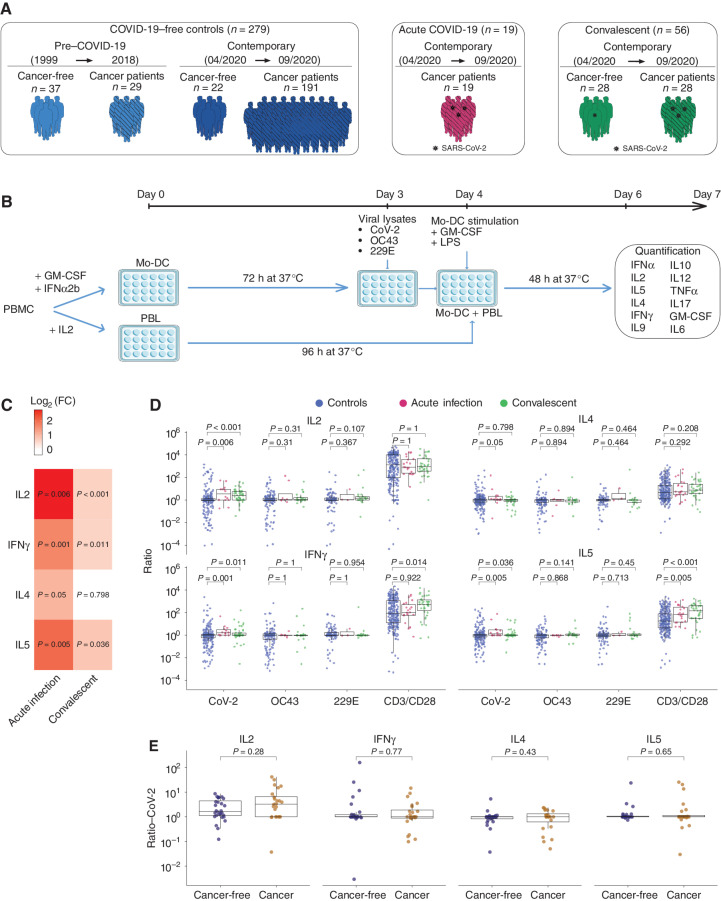
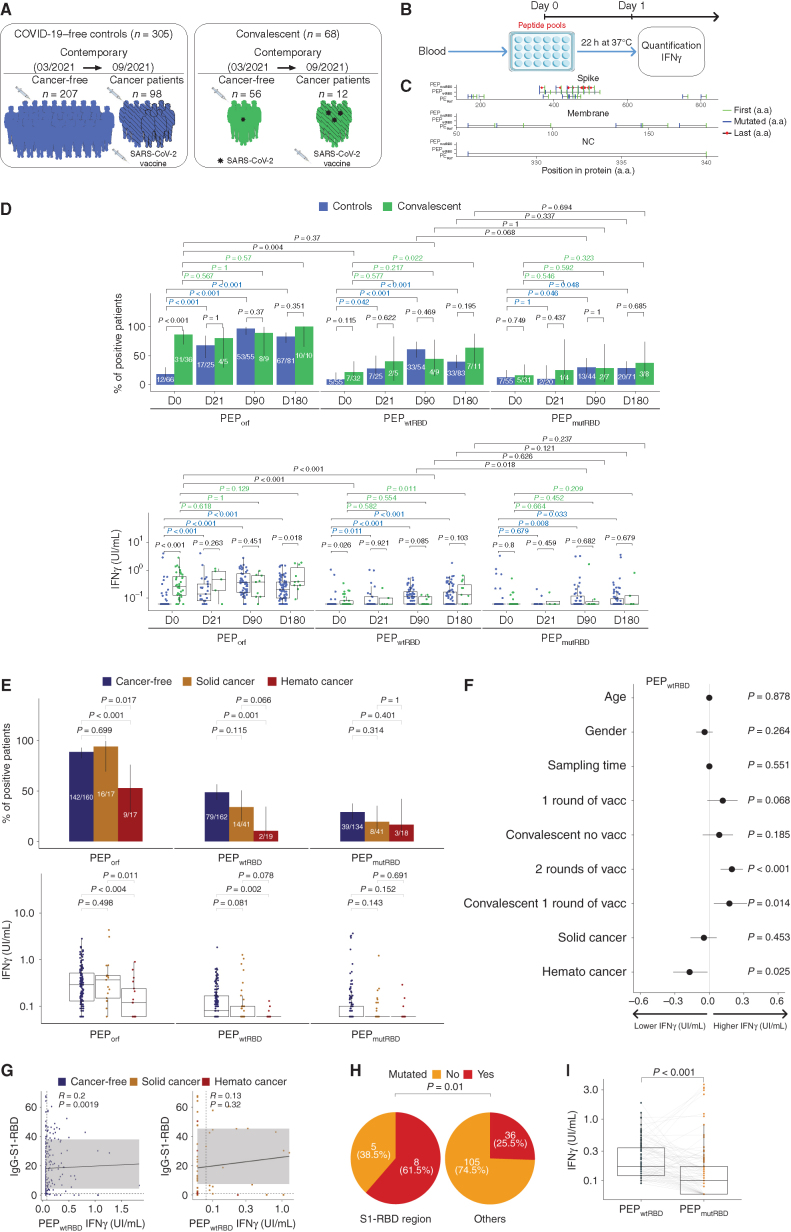
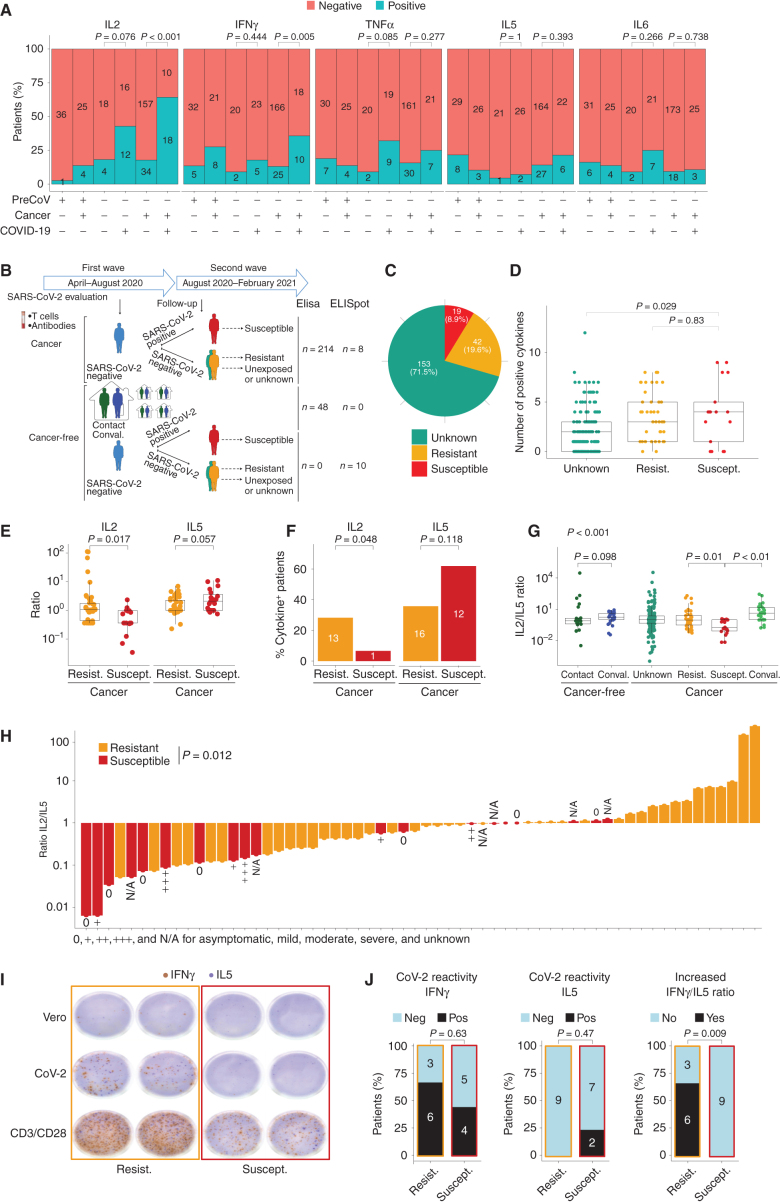
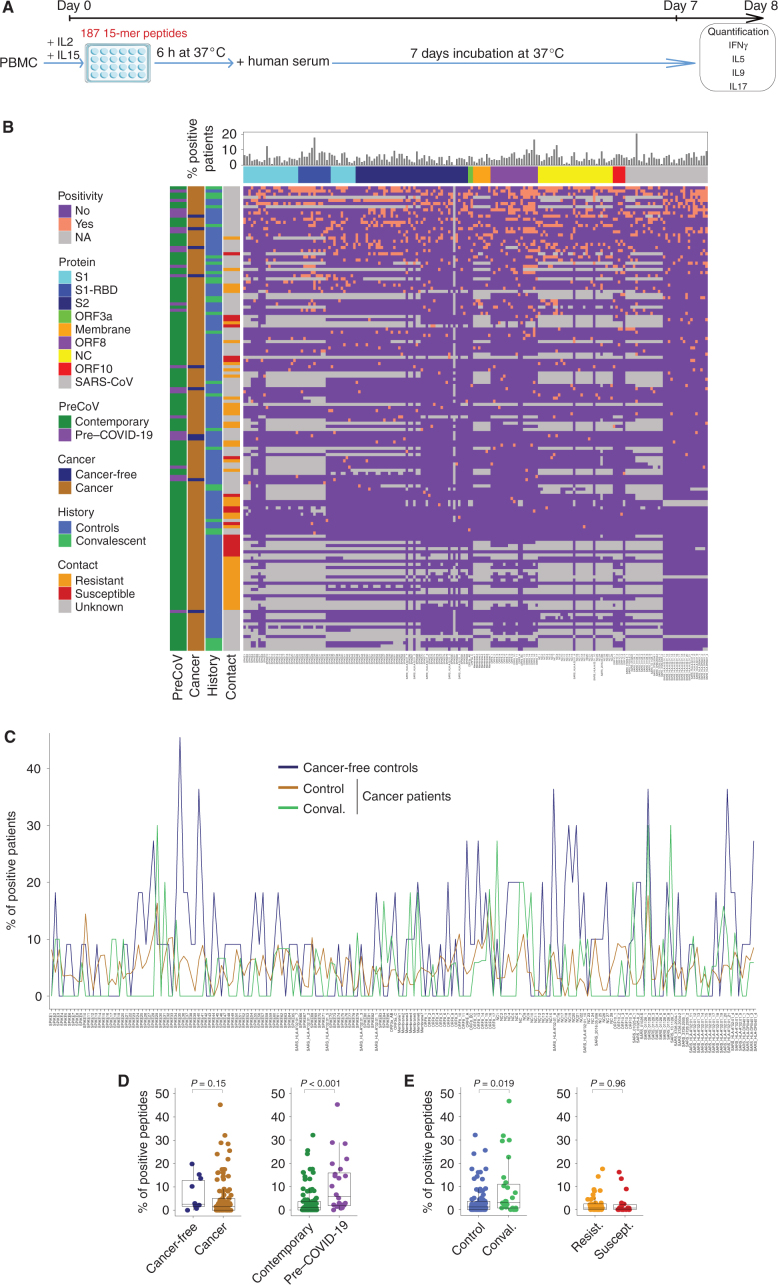
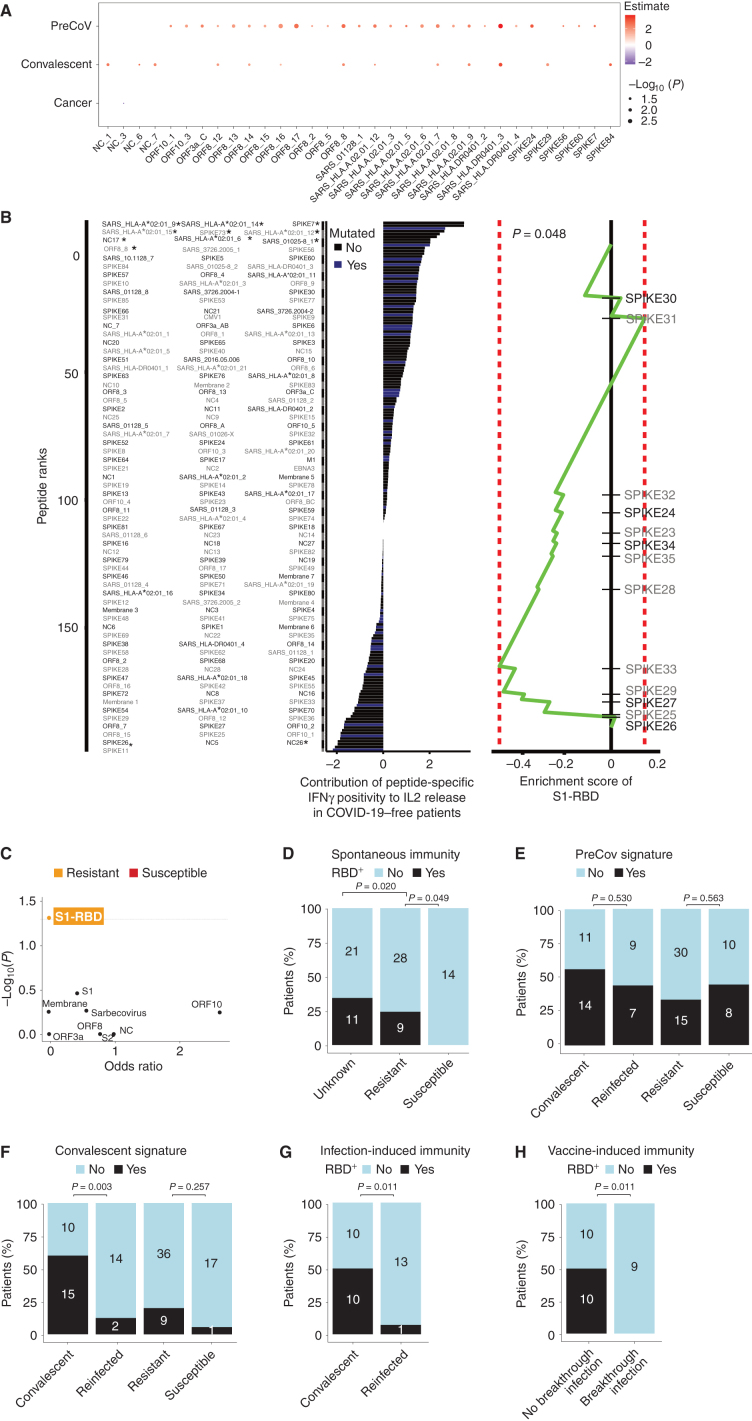
Vaccination against coronavirus disease 2019 (COVID-19) relies on the in-depth understanding of protective immune responses to severe acute respiratory syndrome coronavirus-2 (SARS-CoV-2). We characterized the polarity and specificity of memory T cells directed against SARS-CoV-2 viral lysates and peptides to determine correlates with spontaneous, virus-elicited, or vaccine-induced protection against COVID-19 in disease-free and cancer-bearing individuals. A disbalance between type 1 and 2 cytokine release was associated with high susceptibility to COVID-19. Individuals susceptible to infection exhibited a specific deficit in the T helper 1/T cytotoxic 1 (Th1/Tc1) peptide repertoire affecting the receptor binding domain of the spike protein (S1-RBD), a hotspot of viral mutations. Current vaccines triggered Th1/Tc1 responses in only a fraction of all subject categories, more effectively against the original sequence of S1-RBD than that from viral variants. We speculate that the next generation of vaccines should elicit Th1/Tc1 T-cell responses against the S1-RBD domain of emerging viral variants.
This study prospectively analyzed virus-specific T-cell correlates of protection against COVID-19 in healthy and cancer-bearing individuals. A disbalance between Th1/Th2 recall responses conferred susceptibility to COVID-19 in both populations, coinciding with selective defects in Th1 recognition of the receptor binding domain of spike. See related commentary by McGary and Vardhana, p. 892. This article is highlighted in the In This Issue feature, p. 873.
针对 2019 年冠状病毒病(COVID-19)的疫苗接种依赖于对严重急性呼吸系统综合征冠状病毒 2(SARS-CoV-2)的保护性免疫反应的深入了解。我们对针对 SARS-CoV-2 病毒裂解物和肽的记忆 T 细胞的极性和特异性进行了表征,以确定与无疾病和癌症个体中 COVID-19 的自发、病毒引发或疫苗诱导保护相关的因素。1 型和 2 型细胞因子释放失衡与 COVID-19 的高易感性相关。易感染的个体表现出针对辅助性 T 细胞 1/细胞毒性 T 细胞 1(Th1/Tc1)肽库的特定缺陷,影响刺突蛋白(S1-RBD)的受体结合域,这是病毒突变的热点。当前的疫苗仅在部分受试者类别中引发 Th1/Tc1 反应,对 S1-RBD 的原始序列的效果比病毒变异体更好。我们推测,下一代疫苗应该针对新兴病毒变异体的 S1-RBD 域引发 Th1/Tc1 T 细胞反应。
本研究前瞻性分析了健康和癌症个体中针对 COVID-19 的病毒特异性 T 细胞保护相关因素。在这两种人群中,Th1/Th2 回忆反应的失衡赋予了 COVID-19 的易感性,同时伴随着 Th1 对刺突受体结合域的识别出现选择性缺陷。请参阅 McGary 和 Vardhana 的相关评论,第 892 页。本文在本期特色文章中重点介绍,第 873 页。