Department of Biological Anthropology, University of Szeged, Szeged, Hungary.
Institute of Archaeological Sciences, Eötvös Loránd University, Budapest, Hungary.
PLoS One. 2022 Feb 18;17(2):e0264286. doi: 10.1371/journal.pone.0264286. eCollection 2022.
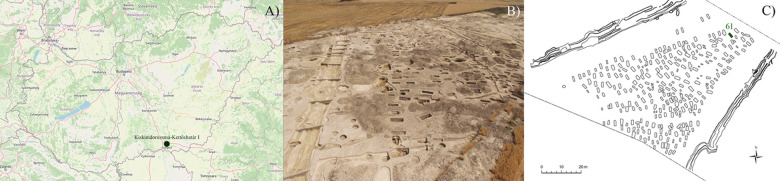
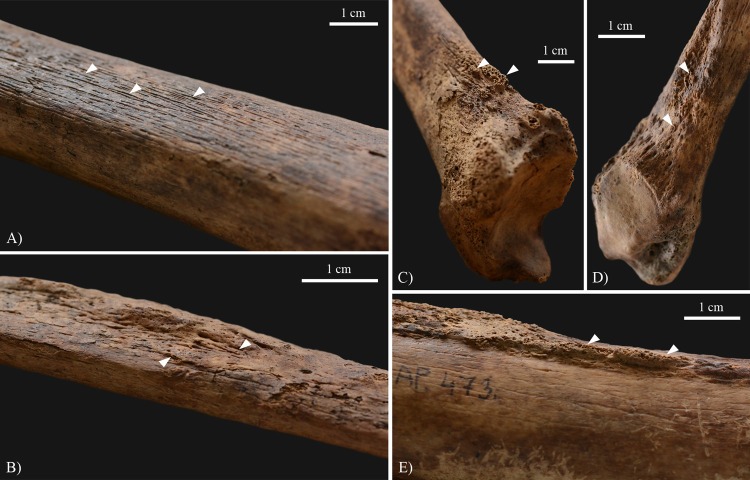
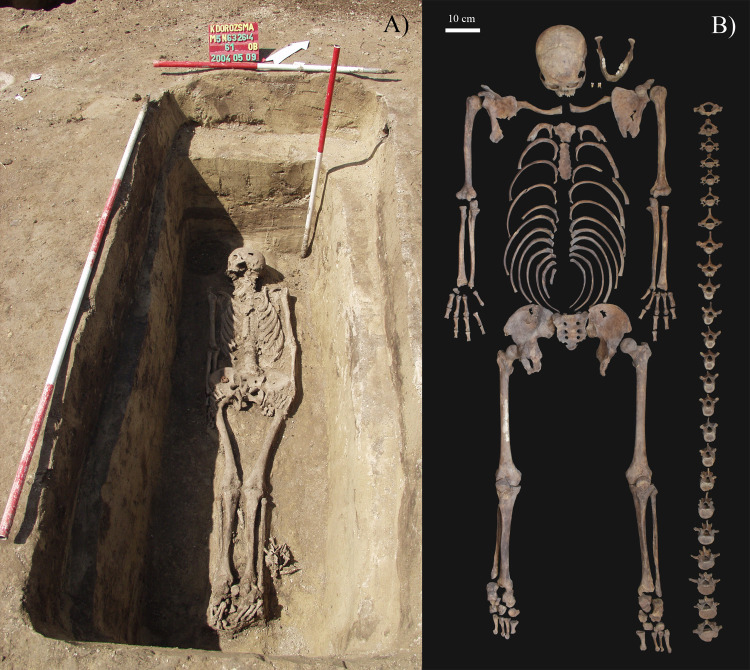
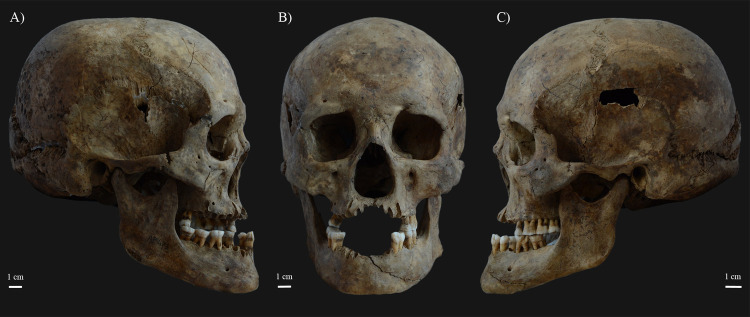
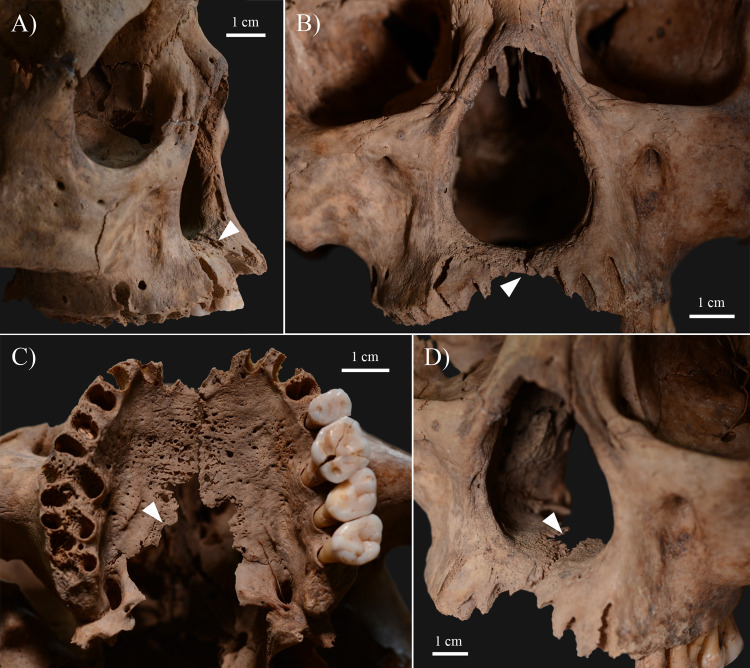
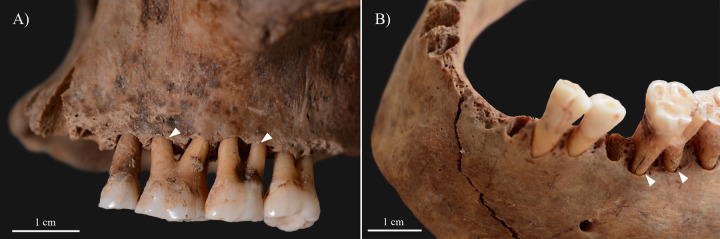
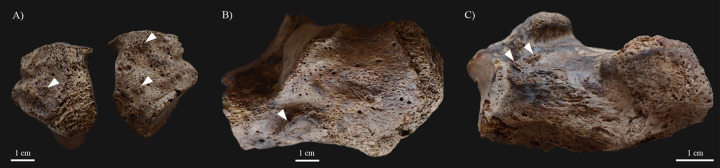
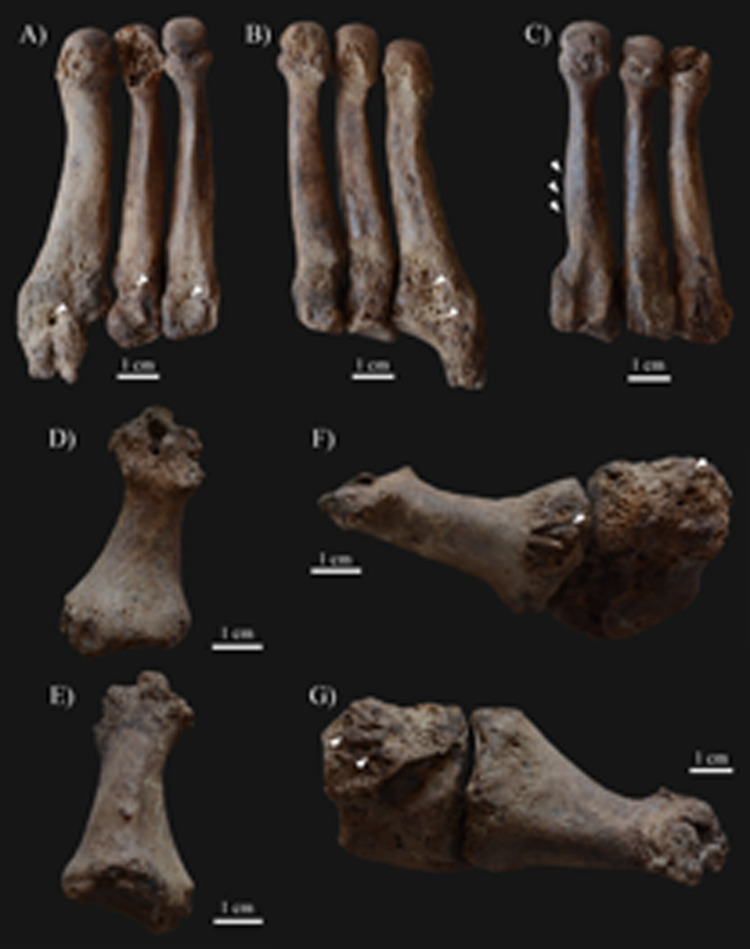
The aim of our paper is to demonstrate a middle-aged male (KK61) from the 8th-century-CE cemetery of Kiskundorozsma-Kettőshatár I (Duna-Tisza Interfluve, Hungary), who appears to represent the lepromatous form of Hansen's disease. Leprosy has affected not only the rhinomaxillary region of his face but also his lower limbs, with severe deformation and disfigurement of the involved anatomical areas (saddle-nose and flat-foot deformity, respectively). Consequently, he would have experienced disability in performing the basic activities of daily living, such as eating, drinking, standing or walking; and thus, he would have required regular and substantial care from others to survive. Despite his very visible disease and associated debility, it seems that KK61 was accepted as a member of the community in death, since he has been buried within the cemetery boundaries, among others from his community. In addition, his grave has conformed to the mortuary practices characteristic of the Kiskundorozsma-Kettőshatár I cemetery (e.g., burial orientation, position of the body in the grave, and type and quantity of accompanying grave goods). Although distinction or segregation in life do not preclude normative treatment in death, the long-lasting survival of KK61 with Hansen's disease implies that he would not have been abandoned but cared for by others. KK61 is one of the few published historic cases with leprosy from the Avar Age of the Hungarian Duna-Tisza Interfluve. His case gives us a unique insight into the biological consequences of living with Hansen's disease and illustrates the social attitude toward leprosy sufferers in early mediaeval Hungary.
我们这篇论文的目的是展示一位来自公元 8 世纪 Kiskundorozsma-Kettőshatár I 墓地(匈牙利多瑙-蒂萨河间地)的中年男性(KK61),他似乎代表了汉森病的瘤型。麻风病不仅影响了他面部的鼻上颌区域,还影响了他的下肢,导致受影响的解剖区域严重变形和毁容(分别为鞍鼻和扁平足畸形)。因此,他在进行日常基本活动(如进食、饮水、站立或行走)时会遇到困难;因此,他需要他人定期提供大量的照顾才能生存。尽管他的疾病和相关残疾非常明显,但似乎 KK61 在死后被社区所接受,因为他被埋葬在墓地范围内,与其他社区成员一起。此外,他的坟墓符合 Kiskundorozsma-Kettőshatár I 墓地的丧葬习俗(例如,埋葬方向、尸体在坟墓中的位置以及随葬品的类型和数量)。尽管生活中的区别或隔离并不排除死亡时的规范治疗,但 KK61 患有麻风病并长期存活,这意味着他不会被遗弃,而是会得到他人的照顾。KK61 是匈牙利多瑙-蒂萨河间地的阿瓦尔时代发表的少数几个有麻风病的历史病例之一。他的病例让我们深入了解了患有汉森病的生物学后果,并说明了中世纪早期匈牙利社会对麻风病患者的态度。