• 文献检索
  • 文档翻译
  • 深度研究
  • 学术资讯
  • Suppr Zotero 插件Zotero 插件
  • 邀请有礼
  • 套餐&价格
  • 历史记录
应用&插件
Suppr Zotero 插件Zotero 插件浏览器插件Mac 客户端Windows 客户端微信小程序
定价
高级版会员购买积分包购买API积分包
服务
文献检索文档翻译深度研究API 文档MCP 服务
关于我们
关于 Suppr公司介绍联系我们用户协议隐私条款
关注我们

Suppr 超能文献

核心技术专利:CN118964589B侵权必究
粤ICP备2023148730 号-1Suppr @ 2026

文献检索

告别复杂PubMed语法,用中文像聊天一样搜索,搜遍4000万医学文献。AI智能推荐,让科研检索更轻松。

立即免费搜索

文件翻译

保留排版,准确专业,支持PDF/Word/PPT等文件格式,支持 12+语言互译。

免费翻译文档

深度研究

AI帮你快速写综述,25分钟生成高质量综述,智能提取关键信息,辅助科研写作。

立即免费体验

非细胞自主的核架构破坏可能是 COVID-19 导致嗅觉丧失的原因。

Non-cell-autonomous disruption of nuclear architecture as a potential cause of COVID-19-induced anosmia.

机构信息

Mortimer B. Zuckerman Mind, and Brain and Behavior Institute, Columbia University, New York, NY 10027, USA.

Mortimer B. Zuckerman Mind, and Brain and Behavior Institute, Columbia University, New York, NY 10027, USA; Department of Genetics and Development, Columbia University Irving Medical Center, Vagelos College of Physicians and Surgeons, Columbia University, New York, NY 10032, USA.

出版信息

Cell. 2022 Mar 17;185(6):1052-1064.e12. doi: 10.1016/j.cell.2022.01.024. Epub 2022 Feb 2.

DOI:10.1016/j.cell.2022.01.024
PMID:35180380
原文链接:https://pmc.ncbi.nlm.nih.gov/articles/PMC8808699/
Abstract

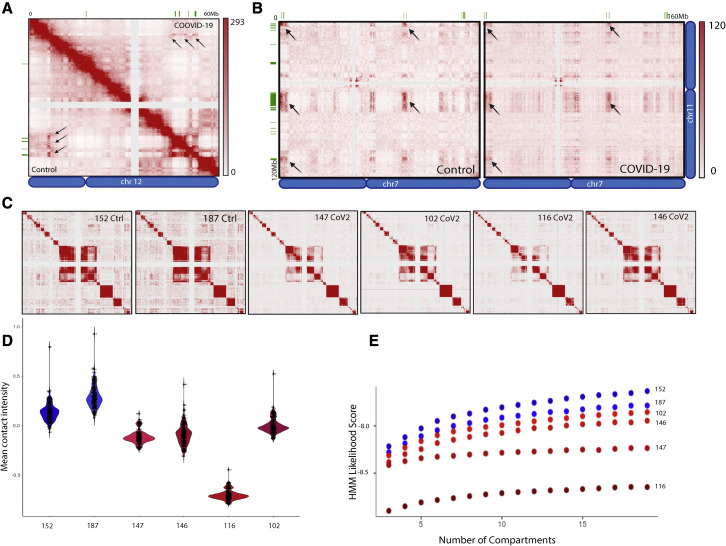
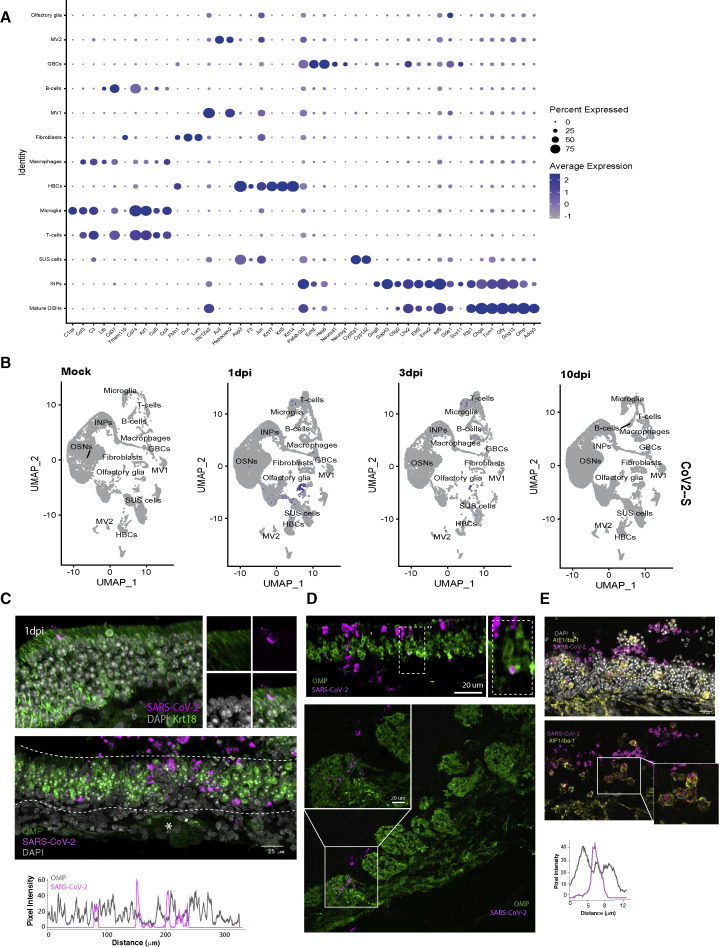
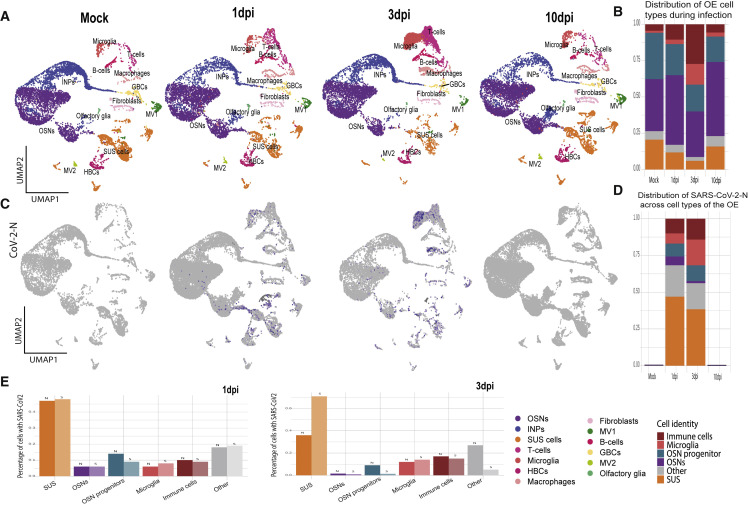
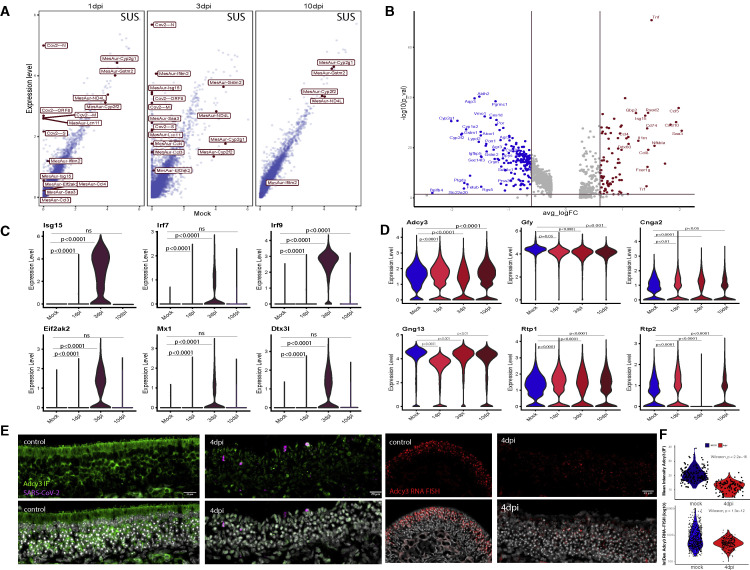
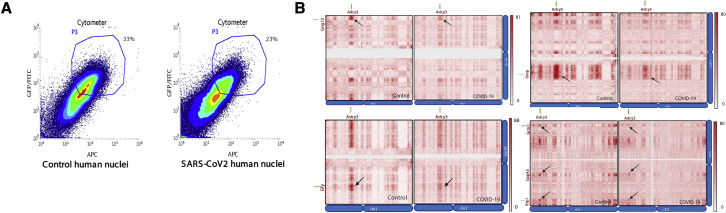
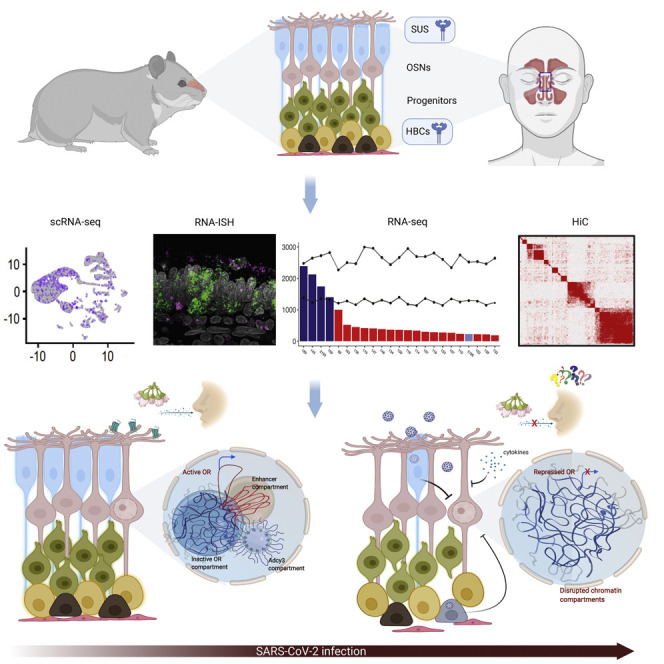
SARS-CoV-2 infects less than 1% of cells in the human body, yet it can cause severe damage in a variety of organs. Thus, deciphering the non-cell-autonomous effects of SARS-CoV-2 infection is imperative for understanding the cellular and molecular disruption it elicits. Neurological and cognitive defects are among the least understood symptoms of COVID-19 patients, with olfactory dysfunction being their most common sensory deficit. Here, we show that both in humans and hamsters, SARS-CoV-2 infection causes widespread downregulation of olfactory receptors (ORs) and of their signaling components. This non-cell-autonomous effect is preceded by a dramatic reorganization of the neuronal nuclear architecture, which results in dissipation of genomic compartments harboring OR genes. Our data provide a potential mechanism by which SARS-CoV-2 infection alters the cellular morphology and the transcriptome of cells it cannot infect, offering insight to its systemic effects in olfaction and beyond.

摘要

SARS-CoV-2 仅感染人体不到 1%的细胞,但它可导致多种器官严重损伤。因此,解析 SARS-CoV-2 感染的非细胞自主效应对理解其引发的细胞和分子紊乱至关重要。神经和认知缺陷是 COVID-19 患者中最不为人知的症状之一,嗅觉功能障碍是他们最常见的感觉缺失。在这里,我们发现,在人类和仓鼠中,SARS-CoV-2 感染都会导致嗅觉受体(OR)及其信号成分的广泛下调。这种非细胞自主效应之前是神经元核结构的剧烈重组,导致包含 OR 基因的基因组区室耗散。我们的数据提供了一种潜在的机制,通过该机制,SARS-CoV-2 感染改变了其无法感染的细胞的形态和转录组,为其在嗅觉及其他方面的全身效应提供了深入了解。
https://cdn.ncbi.nlm.nih.gov/pmc/blobs/f9d8/8808699/19364329571b/gr7_lrg.jpg
https://cdn.ncbi.nlm.nih.gov/pmc/blobs/f9d8/8808699/1a59c61afc01/fx1_lrg.jpg
https://cdn.ncbi.nlm.nih.gov/pmc/blobs/f9d8/8808699/6292b162bef5/figs1_lrg.jpg
https://cdn.ncbi.nlm.nih.gov/pmc/blobs/f9d8/8808699/67e2af2d4854/gr1_lrg.jpg
https://cdn.ncbi.nlm.nih.gov/pmc/blobs/f9d8/8808699/7205f14a3d23/gr2_lrg.jpg
https://cdn.ncbi.nlm.nih.gov/pmc/blobs/f9d8/8808699/f173788095b6/figs2_lrg.jpg
https://cdn.ncbi.nlm.nih.gov/pmc/blobs/f9d8/8808699/64e6d7cf90ff/gr3_lrg.jpg
https://cdn.ncbi.nlm.nih.gov/pmc/blobs/f9d8/8808699/42aa41dcb2cb/figs3_lrg.jpg
https://cdn.ncbi.nlm.nih.gov/pmc/blobs/f9d8/8808699/3777d6355f85/gr4_lrg.jpg
https://cdn.ncbi.nlm.nih.gov/pmc/blobs/f9d8/8808699/ee2cd3a686ae/gr5_lrg.jpg
https://cdn.ncbi.nlm.nih.gov/pmc/blobs/f9d8/8808699/fc9e7c76c2ea/figs4_lrg.jpg
https://cdn.ncbi.nlm.nih.gov/pmc/blobs/f9d8/8808699/f7c69b2b7ba2/figs5_lrg.jpg
https://cdn.ncbi.nlm.nih.gov/pmc/blobs/f9d8/8808699/6fcf63c980e0/gr6_lrg.jpg
https://cdn.ncbi.nlm.nih.gov/pmc/blobs/f9d8/8808699/3c01e624da9c/figs6_lrg.jpg
https://cdn.ncbi.nlm.nih.gov/pmc/blobs/f9d8/8808699/19364329571b/gr7_lrg.jpg
https://cdn.ncbi.nlm.nih.gov/pmc/blobs/f9d8/8808699/1a59c61afc01/fx1_lrg.jpg
https://cdn.ncbi.nlm.nih.gov/pmc/blobs/f9d8/8808699/6292b162bef5/figs1_lrg.jpg
https://cdn.ncbi.nlm.nih.gov/pmc/blobs/f9d8/8808699/67e2af2d4854/gr1_lrg.jpg
https://cdn.ncbi.nlm.nih.gov/pmc/blobs/f9d8/8808699/7205f14a3d23/gr2_lrg.jpg
https://cdn.ncbi.nlm.nih.gov/pmc/blobs/f9d8/8808699/f173788095b6/figs2_lrg.jpg
https://cdn.ncbi.nlm.nih.gov/pmc/blobs/f9d8/8808699/64e6d7cf90ff/gr3_lrg.jpg
https://cdn.ncbi.nlm.nih.gov/pmc/blobs/f9d8/8808699/42aa41dcb2cb/figs3_lrg.jpg
https://cdn.ncbi.nlm.nih.gov/pmc/blobs/f9d8/8808699/3777d6355f85/gr4_lrg.jpg
https://cdn.ncbi.nlm.nih.gov/pmc/blobs/f9d8/8808699/ee2cd3a686ae/gr5_lrg.jpg
https://cdn.ncbi.nlm.nih.gov/pmc/blobs/f9d8/8808699/fc9e7c76c2ea/figs4_lrg.jpg
https://cdn.ncbi.nlm.nih.gov/pmc/blobs/f9d8/8808699/f7c69b2b7ba2/figs5_lrg.jpg
https://cdn.ncbi.nlm.nih.gov/pmc/blobs/f9d8/8808699/6fcf63c980e0/gr6_lrg.jpg
https://cdn.ncbi.nlm.nih.gov/pmc/blobs/f9d8/8808699/3c01e624da9c/figs6_lrg.jpg
https://cdn.ncbi.nlm.nih.gov/pmc/blobs/f9d8/8808699/19364329571b/gr7_lrg.jpg

相似文献

1
Non-cell-autonomous disruption of nuclear architecture as a potential cause of COVID-19-induced anosmia.非细胞自主的核架构破坏可能是 COVID-19 导致嗅觉丧失的原因。
Cell. 2022 Mar 17;185(6):1052-1064.e12. doi: 10.1016/j.cell.2022.01.024. Epub 2022 Feb 2.
2
Disruption of nuclear architecture as a cause of COVID-19 induced anosmia.核结构破坏作为新冠病毒感染所致嗅觉丧失的一个原因。
bioRxiv. 2021 Feb 9:2021.02.09.430314. doi: 10.1101/2021.02.09.430314.
3
Mechanisms of SARS-CoV-2-associated anosmia.SARS-CoV-2 相关嗅觉丧失的机制。
Physiol Rev. 2023 Oct 1;103(4):2759-2766. doi: 10.1152/physrev.00012.2023. Epub 2023 Jun 21.
4
The Molecular Basis of Olfactory Dysfunction in COVID-19 and Long COVID.新冠病毒和长新冠嗅觉功能障碍的分子基础。
Lifestyle Genom. 2024;17(1):42-56. doi: 10.1159/000539292. Epub 2024 May 15.
5
COVID-19-related anosmia is associated with viral persistence and inflammation in human olfactory epithelium and brain infection in hamsters.与COVID-19相关的嗅觉丧失与人类嗅觉上皮中的病毒持续存在和炎症以及仓鼠的脑部感染有关。
Sci Transl Med. 2021 Jun 2;13(596). doi: 10.1126/scitranslmed.abf8396. Epub 2021 May 3.
6
SARS-CoV-2 infection of sustentacular cells disrupts olfactory signaling pathways.SARS-CoV-2 感染支持细胞会破坏嗅觉信号通路。
JCI Insight. 2022 Dec 22;7(24):e160277. doi: 10.1172/jci.insight.160277.
7
Pathophysiological relationship between COVID-19 and olfactory dysfunction: A systematic review.新型冠状病毒肺炎与嗅觉功能障碍的病理生理学关系:系统综述。
Braz J Otorhinolaryngol. 2022 Sep-Oct;88(5):794-802. doi: 10.1016/j.bjorl.2021.04.001. Epub 2021 Apr 25.
8
Can't smell the virus: SARS-CoV-2, chromatin organization, and anosmia.无法嗅到病毒:SARS-CoV-2、染色质组织和嗅觉丧失。
Dev Cell. 2022 May 9;57(9):1081-1082. doi: 10.1016/j.devcel.2022.04.015.
9
Early corticosteroid treatment enhances recovery from SARS-CoV-2 induced loss of smell in hamster.早期皮质类固醇治疗可促进仓鼠由 SARS-CoV-2 引起的嗅觉丧失的恢复。
Brain Behav Immun. 2024 May;118:78-89. doi: 10.1016/j.bbi.2024.02.020. Epub 2024 Feb 15.
10
Neutrophils play a major role in the destruction of the olfactory epithelium during SARS-CoV-2 infection in hamsters.中性粒细胞在 SARS-CoV-2 感染仓鼠期间对嗅上皮的破坏中起主要作用。
Cell Mol Life Sci. 2022 Dec 3;79(12):616. doi: 10.1007/s00018-022-04643-1.

引用本文的文献

1
Taste dysfunction in Long COVID.长期新冠中的味觉功能障碍。
bioRxiv. 2025 Jul 17:2025.07.17.661973. doi: 10.1101/2025.07.17.661973.
2
Insight into NeuroCOVID: neurofilament light chain (NfL) as a biomarker in post-COVID-19 patients with olfactory dysfunctions.深入了解神经新冠:神经丝轻链(NfL)作为新冠后嗅觉功能障碍患者的生物标志物
J Neurol. 2025 Jul 1;272(7):484. doi: 10.1007/s00415-025-13222-w.
3
Differentially expressed ncRNAs as key regulators in infection of human bronchial epithelial cells by the SARS-CoV-2 Delta variant.

本文引用的文献

1
SARS-CoV-2 infection in hamsters and humans results in lasting and unique systemic perturbations after recovery.新冠病毒(SARS-CoV-2)感染仓鼠和人类后,在康复后会导致持久且独特的全身性干扰。
Sci Transl Med. 2022 Sep 28;14(664):eabq3059. doi: 10.1126/scitranslmed.abq3059.
2
Visualizing in deceased COVID-19 patients how SARS-CoV-2 attacks the respiratory and olfactory mucosae but spares the olfactory bulb.在已故的 COVID-19 患者中观察到,SARS-CoV-2 如何攻击呼吸道和嗅觉黏膜,但嗅觉球不受影响。
Cell. 2021 Nov 24;184(24):5932-5949.e15. doi: 10.1016/j.cell.2021.10.027. Epub 2021 Nov 3.
3
Differential olfactory outcomes in COVID-19: A large healthcare system population study.
差异表达的非编码RNA作为严重急性呼吸综合征冠状病毒2(SARS-CoV-2)德尔塔变异株感染人支气管上皮细胞的关键调节因子
Mol Ther Nucleic Acids. 2025 May 14;36(2):102559. doi: 10.1016/j.omtn.2025.102559. eCollection 2025 Jun 10.
4
Post-COVID-19 condition: clinical phenotypes, pathophysiological mechanisms, pathology, and management strategies.新冠后状况:临床表型、病理生理机制、病理学及管理策略
J Pathol. 2025 Aug;266(4-5):369-389. doi: 10.1002/path.6443. Epub 2025 Jun 10.
5
Solid phase transitions as a solution to the genome folding paradox.固相转变作为解决基因组折叠悖论的一种方法。
Nature. 2025 May 14. doi: 10.1038/s41586-025-09043-6.
6
Olfactory receptors and human diseases.嗅觉受体与人类疾病。
Cell Tissue Res. 2025 Apr 25. doi: 10.1007/s00441-025-03971-5.
7
Factors associated with the presence and intensity of ongoing symptoms in Long COVID.与长期新冠持续症状的存在及严重程度相关的因素。
PLoS One. 2025 Apr 23;20(4):e0319874. doi: 10.1371/journal.pone.0319874. eCollection 2025.
8
SARS-CoV-2-induced sensory perturbations: A narrative review of clinical phenotypes, molecular pathologies, and possible interventions.严重急性呼吸综合征冠状病毒2(SARS-CoV-2)引起的感觉障碍:临床表型、分子病理学及可能干预措施的叙述性综述
Brain Behav Immun Health. 2025 Mar 24;45:100983. doi: 10.1016/j.bbih.2025.100983. eCollection 2025 May.
9
Polymer models of chromatin organization in virally infected cells.病毒感染细胞中染色质组织的聚合物模型。
Biochem Soc Trans. 2025 Feb 7;53(1):249-58. doi: 10.1042/BST20240598.
10
Facial Nerve Palsy Amid the SARS-CoV-2 Pandemic: A Pooled Analysis.2019冠状病毒病大流行期间的面神经麻痹:一项汇总分析
J Otolaryngol Head Neck Surg. 2025 Jan-Dec;54:19160216251315057. doi: 10.1177/19160216251315057.
新冠病毒感染中嗅觉的差异结果:一项大型医疗系统人群研究。
Int Forum Allergy Rhinol. 2022 Jan;12(1):108-111. doi: 10.1002/alr.22870. Epub 2021 Jul 21.
4
Long COVID or Post-acute Sequelae of COVID-19 (PASC): An Overview of Biological Factors That May Contribute to Persistent Symptoms.长期新冠或新冠后急性后遗症(PASC):可能导致持续症状的生物学因素概述
Front Microbiol. 2021 Jun 23;12:698169. doi: 10.3389/fmicb.2021.698169. eCollection 2021.
5
Self-reported smell and taste recovery in coronavirus disease 2019 patients: a one-year prospective study.新冠病毒疾病 2019 患者自我报告的嗅觉和味觉恢复情况:一项为期一年的前瞻性研究。
Eur Arch Otorhinolaryngol. 2022 Jan;279(1):515-520. doi: 10.1007/s00405-021-06839-w. Epub 2021 May 7.
6
COVID-19 neuropathology at Columbia University Irving Medical Center/New York Presbyterian Hospital.哥伦比亚大学欧文医学中心/纽约长老会医院的 COVID-19 神经病理学。
Brain. 2021 Oct 22;144(9):2696-2708. doi: 10.1093/brain/awab148.
7
Persistent neurologic symptoms and cognitive dysfunction in non-hospitalized Covid-19 "long haulers".非住院新冠“长新冠”患者持续存在的神经症状和认知功能障碍。
Ann Clin Transl Neurol. 2021 May;8(5):1073-1085. doi: 10.1002/acn3.51350. Epub 2021 Mar 30.
8
Post-acute COVID-19 syndrome.新冠病毒感染后长期综合征。
Nat Med. 2021 Apr;27(4):601-615. doi: 10.1038/s41591-021-01283-z. Epub 2021 Mar 22.
9
Leveraging the antiviral type I interferon system as a first line of defense against SARS-CoV-2 pathogenicity.利用抗病毒I型干扰素系统作为抵御新冠病毒致病性的第一道防线。
Immunity. 2021 Mar 9;54(3):557-570.e5. doi: 10.1016/j.immuni.2021.01.017. Epub 2021 Jan 29.
10
Six-Month Psychophysical Evaluation of Olfactory Dysfunction in Patients with COVID-19.COVID-19 患者嗅觉功能障碍的六个月心理物理学评估。
Chem Senses. 2021 Jan 1;46. doi: 10.1093/chemse/bjab006.