Zimmermann Tanja
Klinik für Psychosomatik und Psychotherapie, Medizinische Hochschule Hannover, Carl-Neuberg-Str. 1, 30625, Hannover, Deutschland.
Bundesgesundheitsblatt Gesundheitsforschung Gesundheitsschutz. 2022 Apr;65(4):446-452. doi: 10.1007/s00103-022-03495-1. Epub 2022 Feb 18.
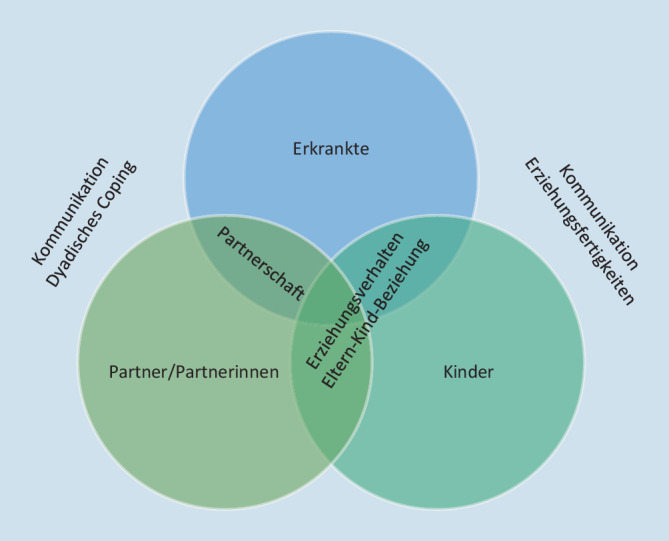
Cancer is not only a challenge for the patient, but can also be associated with psychosocial distress for relatives, especially partners and minor children. Although studies on the long-term effects of cancer on partners, the partnership, and child development are still rare, there are indications that the psychological distress on relatives may become chronic, and that parental illness is a risk factor for a child to develop mental disorders. In addition, a deterioration in partnership satisfaction also increases the risk of separation.Psycho-oncology care should therefore not only consider the patient's psychosocial burden but also that of the partner, as well as its effect on the partnership. Appropriate offers, for example to increase partnership and sexual satisfaction, communication, or dyadic coping, should be made. Children should also be treated as relatives in care. Focusing on both the child's distress and on improving the parent-child relationships and parenting behavior can help children to cope with parental illness in the long term. Thus, cancer should be viewed on the individual, dyadic, and family level, and psychosocial care services should be provided at all levels.
癌症不仅对患者构成挑战,还可能给亲属,尤其是伴侣和未成年子女带来心理社会困扰。尽管关于癌症对伴侣、伴侣关系以及儿童发育的长期影响的研究仍然很少,但有迹象表明,亲属的心理困扰可能会变得长期化,而且父母患病是儿童患精神障碍的一个风险因素。此外,伴侣关系满意度的下降也会增加分居的风险。因此,心理肿瘤学护理不仅应考虑患者的心理社会负担,还应考虑伴侣的负担及其对伴侣关系的影响。应提供适当的服务,例如提高伴侣关系和性满意度、沟通或二元应对。儿童在护理中也应被视为亲属。关注儿童的困扰以及改善亲子关系和养育行为,有助于儿童长期应对父母的疾病。因此,应从个体、二元和家庭层面看待癌症,并在各个层面提供心理社会护理服务。