Laboratory of Plant Biology and Ecology, University Joseph Ki-Zerbo, 03 BP 7021, Ouagadougou 03, Burkina Faso.
Institute of Biological Sciences, Department of Botany, University of Rostock, 18051, Rostock, Germany.
J Ethnobiol Ethnomed. 2022 Feb 19;18(1):8. doi: 10.1186/s13002-022-00508-w.
In Burkina Faso, Sudanian savannas are important ecosystems for conservation of plant diversity. Due to desertification and insecurity, population migration from the North has increased human density and anthropogenic pressure on southern savannas. This study aims to investigate knowledge of local populations on ecosystem services (ES) and perception of their conservation.
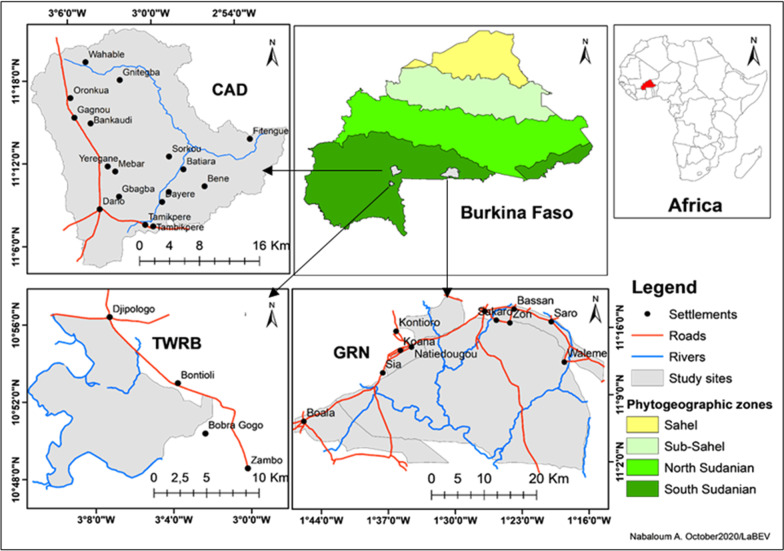
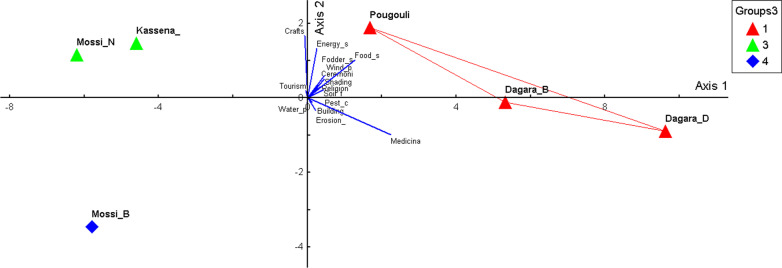
Individual semi-structured interviews about knowledge on ES and ecosystem conservation issues were conducted. Informants were selected according to sociocultural groups and sex in three areas of different land use intensity: the communal area of Dano (CAD), the Total Wildlife Reserve of Bontioli (TWRB) and the Game Ranch of Nazinga (GRN). The use value and vulnerability index of each plant species were determined. A cluster analysis and a principal component analysis were carried out to identify the particular knowledge of different ethnic groups.
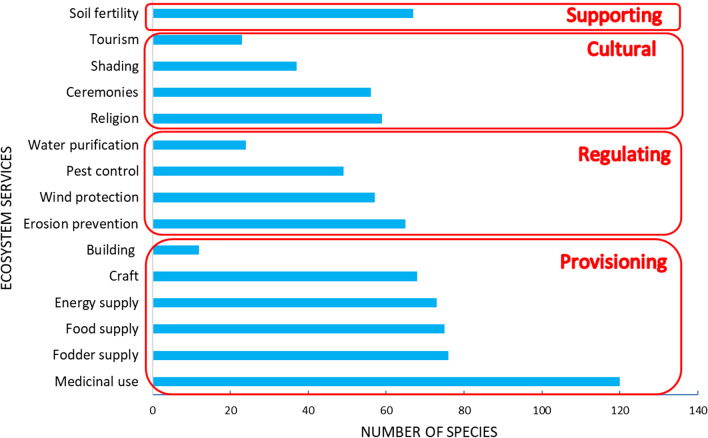
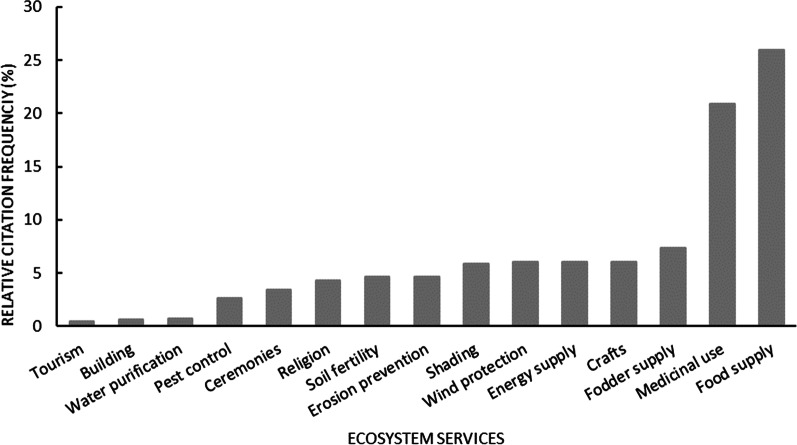
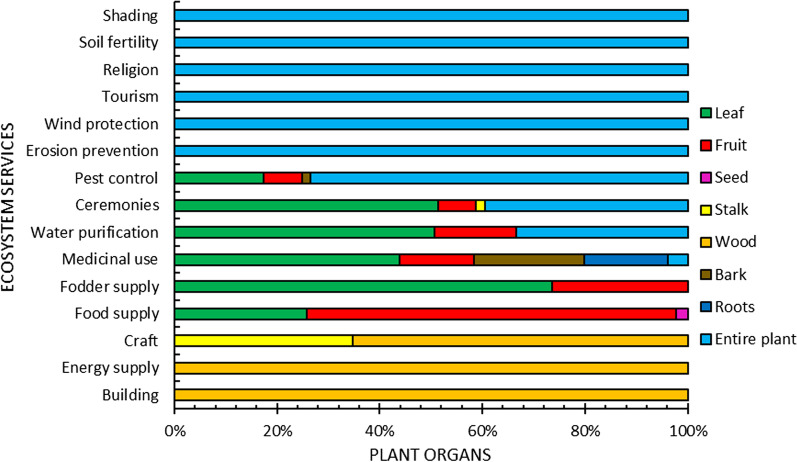
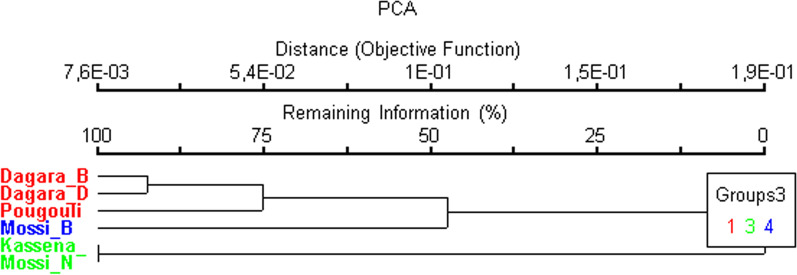
Overall, 163 plant species were cited for fifteen ES. Provisioning services were most frequently cited (100%), regulating services second most frequently (92.47%). Entire plants were exclusively used for ES with non-material benefits (protection against wind, for shading, soil fertility, erosion prevention, tourism and religion). The ten species contributing most to ES provision were Vitellaria paradoxa, Parkia biglobosa, Diospyros mespiliformis, Adansonia digitata, Lannea microcarpa, Faidherbia albida, Khaya senegalensis, Afzelia africana, Ficus sycomorus, Pterocarpus erinaceus. Seven of them were identified as highly vulnerable. Around GRN, migrants and natives shared the same knowledge, while migrants in TWRB used the ES only to a small extent due to restricted contact with the native population. Migrants and natives of GRN had more knowledge on tourism and crafts services while the natives of CAD and TWRB made use of the services that sustain the quality of the agricultural land and meet their primary needs. To reduce further degradation, different communities suggested unanimously raising awareness of the importance of biodiversity and ecosystem conservation. The most quoted motivations to preserve ecosystems were vegetation sustainability and village development.
This study documented important local knowledge-based information to guide cultivation of local multipurpose species and initiation of communities to practice best management strategies for sustainable conservation of biodiversity.
在布基纳法索,苏丹稀树草原是植物多样性保护的重要生态系统。由于荒漠化和不安全因素,北方人口向南方稀树草原迁移,增加了人口密度和人为压力。本研究旨在调查当地居民对生态系统服务(ES)的认识及其对保护的看法。
在三个土地利用强度不同的地区(Dano 的社区区(CAD)、Bontioli 全野生动物保护区(TWRB)和 Nazinga 的狩猎场(GRN)),根据社会文化群体和性别,对有关生态系统服务和生态系统保护问题的知识进行了个人半结构化访谈。确定了每种植物的使用价值和脆弱性指数。进行了聚类分析和主成分分析,以确定不同民族的特殊知识。
总体而言,为 15 项 ES 引用了 163 种植物。供应服务被最频繁地引用(100%),调节服务次之(92.47%)。整个植物仅用于具有非物质效益的 ES(防风、遮荫、土壤肥力、防止侵蚀、旅游和宗教)。对 ES 供应贡献最大的十种物种是 Vitellaria paradoxa、Parkia biglobosa、Diospyros mespiliformis、Adansonia digitata、Lannea microcarpa、Faidherbia albida、Khaya senegalensis、Afzelia africana、Ficus sycomorus、Pterocarpus erinaceus。其中七种被认为高度脆弱。在 GRN 周围,移民和本地人共享相同的知识,而在 TWRB 的移民由于与本地居民的接触有限,仅在很小程度上利用这些服务。GRN 的移民和本地人对旅游和手工艺服务有更多的了解,而 CAD 和 TWRB 的本地人则利用维持农业土地质量和满足其基本需求的服务。为了进一步减少退化,不同社区一致建议提高对生物多样性和生态系统保护重要性的认识。最常被引用的保护生态系统的动机是植被的可持续性和村庄的发展。
本研究记录了重要的基于本地知识的信息,以指导本地多用途物种的种植,并促使社区采取最佳管理策略,以实现生物多样性的可持续保护。