Department of Biochemistry, University of Washington, Seattle, Washington 98195, United States.
Institute for Systems Biology, Seattle, Washington 98109, United States.
Anal Chem. 2022 Mar 1;94(8):3501-3509. doi: 10.1021/acs.analchem.1c04101. Epub 2022 Feb 20.
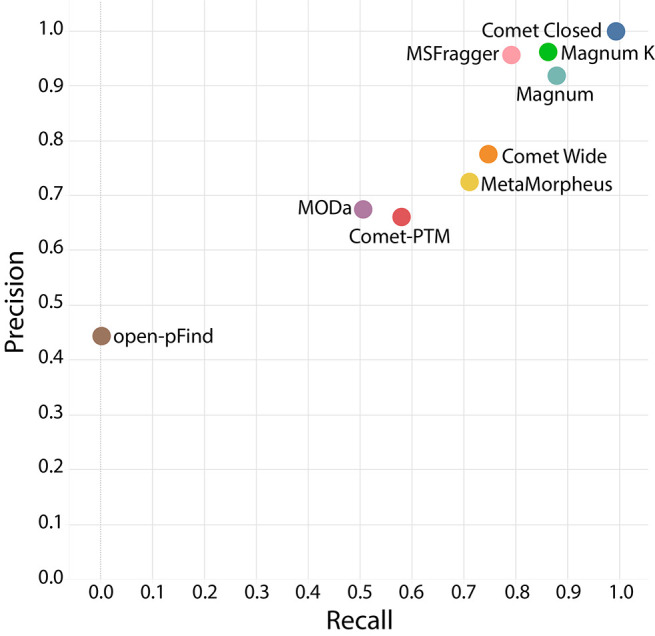
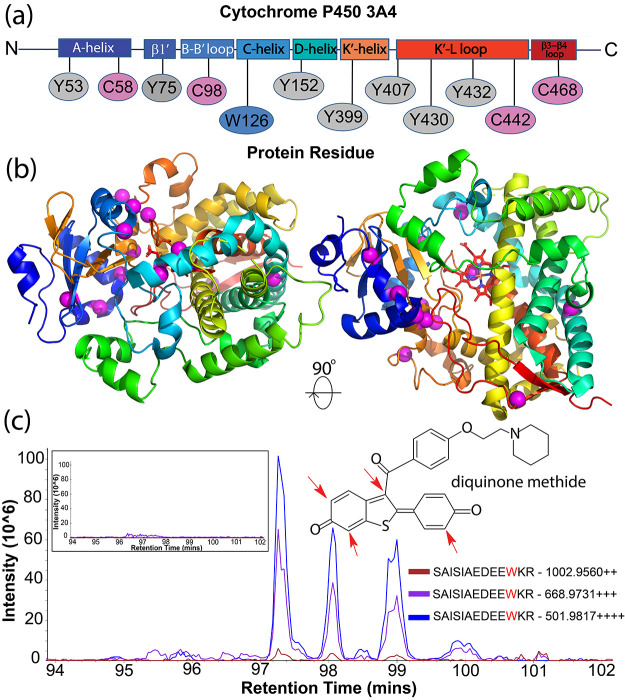
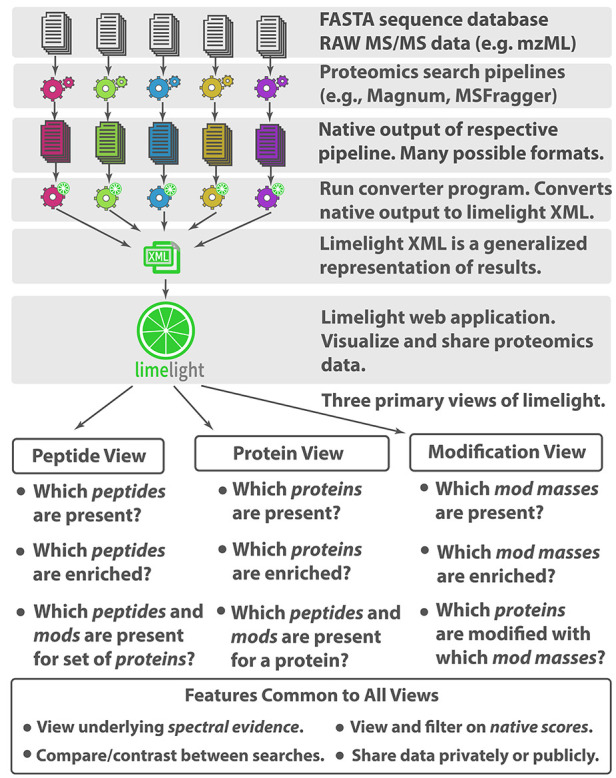
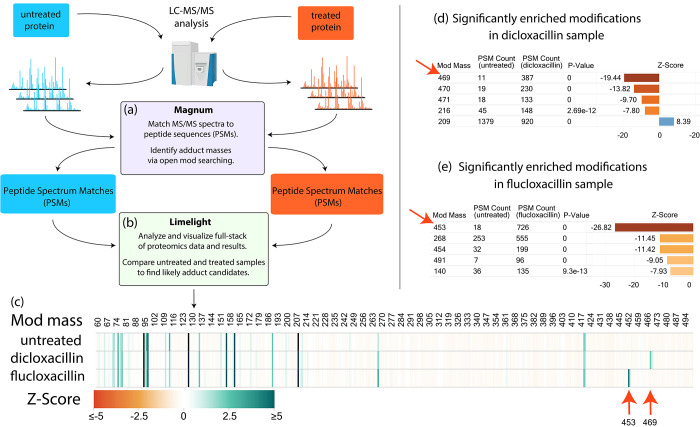
Drugs are often metabolized to reactive intermediates that form protein adducts. Adducts can inhibit protein activity, elicit immune responses, and cause life-threatening adverse drug reactions. The masses of reactive metabolites are frequently unknown, rendering traditional mass spectrometry-based proteomics approaches incapable of adduct identification. Here, we present Magnum, an open-mass search algorithm optimized for adduct identification, and Limelight, a web-based data processing package for analysis and visualization of data from all existing algorithms. Limelight incorporates tools for sample comparisons and xenobiotic-adduct discovery. We validate our tools with three drug/protein combinations and apply our label-free workflow to identify novel xenobiotic-protein adducts in CYP3A4. Our new methods and software enable accurate identification of xenobiotic-protein adducts with no prior knowledge of adduct masses or protein targets. Magnum outperforms existing label-free tools in xenobiotic-protein adduct discovery, while Limelight fulfills a major need in the rapidly developing field of open-mass searching, which until now lacked comprehensive data visualization tools.
药物通常代谢为形成蛋白质加合物的反应性中间产物。加合物可以抑制蛋白质活性、引发免疫反应,并导致危及生命的药物不良反应。反应性代谢物的质量通常未知,这使得基于传统质谱的蛋白质组学方法无法识别加合物。在这里,我们介绍了 Magnum,这是一种针对加合物识别进行了优化的开放质量搜索算法,以及 Limelight,这是一个基于网络的数据处理包,用于分析和可视化来自所有现有算法的数据。Limelight 包含用于样品比较和外源性物质-加合物发现的工具。我们使用三种药物/蛋白质组合验证了我们的工具,并应用我们的无标记工作流程来鉴定 CYP3A4 中的新型外源性物质-蛋白质加合物。我们的新方法和软件能够在没有加合物质量或蛋白质靶标先验知识的情况下准确识别外源性物质-蛋白质加合物。Magnum 在发现外源性物质-蛋白质加合物方面优于现有的无标记工具,而 Limelight 满足了开放质量搜索这一快速发展领域的主要需求,该领域迄今为止缺乏全面的数据可视化工具。