Department of Orthopedics, Shanghai Jiaotong University Affiliated Sixth People's Hospital, No. 600 Yishan Road, Shanghai, 200233, China.
J Orthop Surg Res. 2022 Feb 20;17(1):108. doi: 10.1186/s13018-022-03005-8.
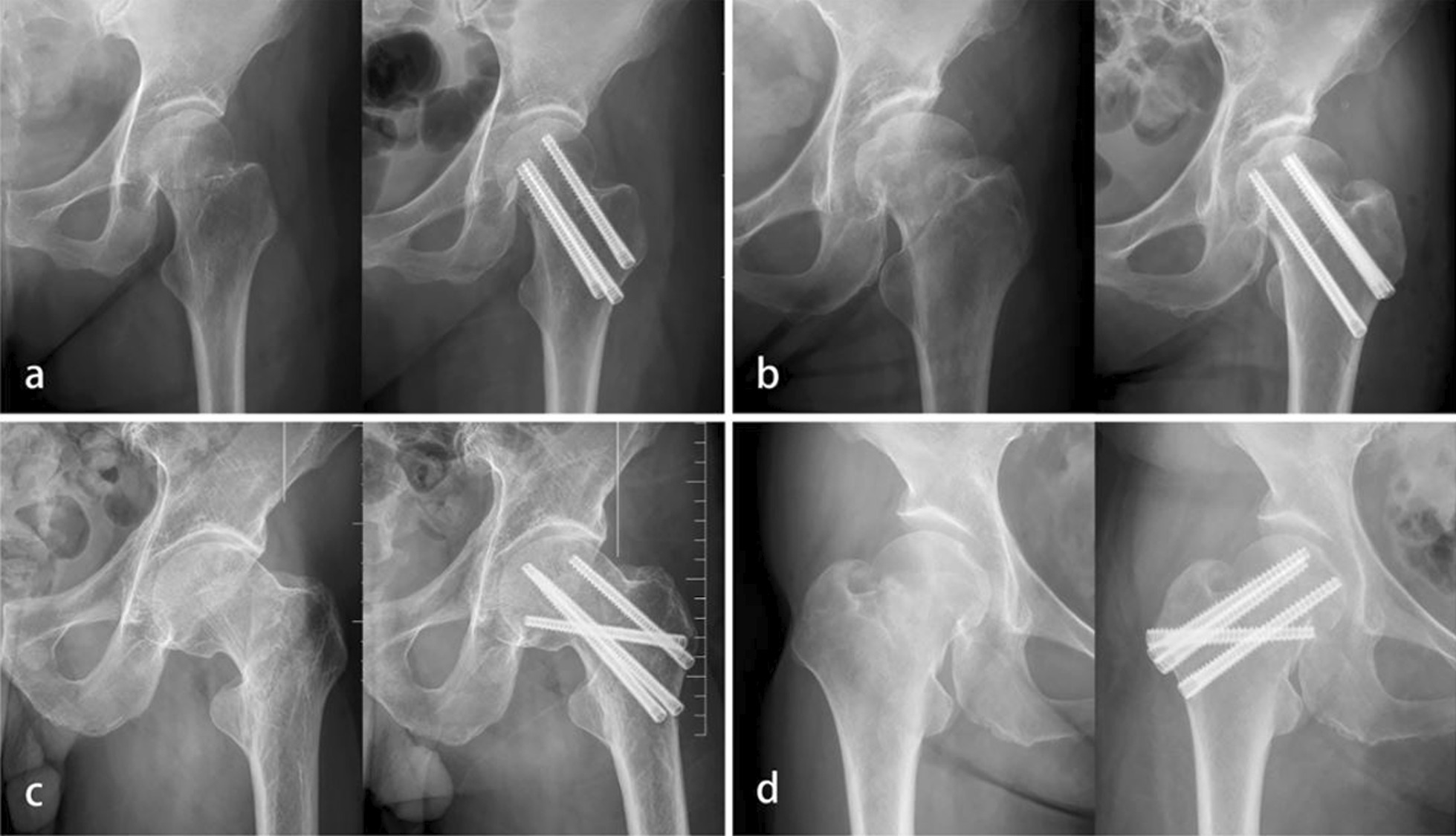
Internal fixation with multiple cannulated compression screws is an optional treatment for femoral neck fracture. Recently, fully threaded cannulated compression screws (FTCCS) have been introduced to fix fresh femoral neck fractures (FNF). The purpose of this study was to investigate the effectiveness of FTCCS.
Patients with FNF fixed by multiple FTCCS from February 1st, 2014 to August 31st, 2017 were included in this study. They were followed for at least 12 months postoperatively. Nonunion, osteonecrosis of the femoral head (ONFH), fixation failure, reoperation, and femoral neck shortening (FNS) were used to evaluate the outcomes. Risk factors including age, sex, fracture side, fracture displacement, fracture stability, fixation configuration, and screw numbers were analyzed.
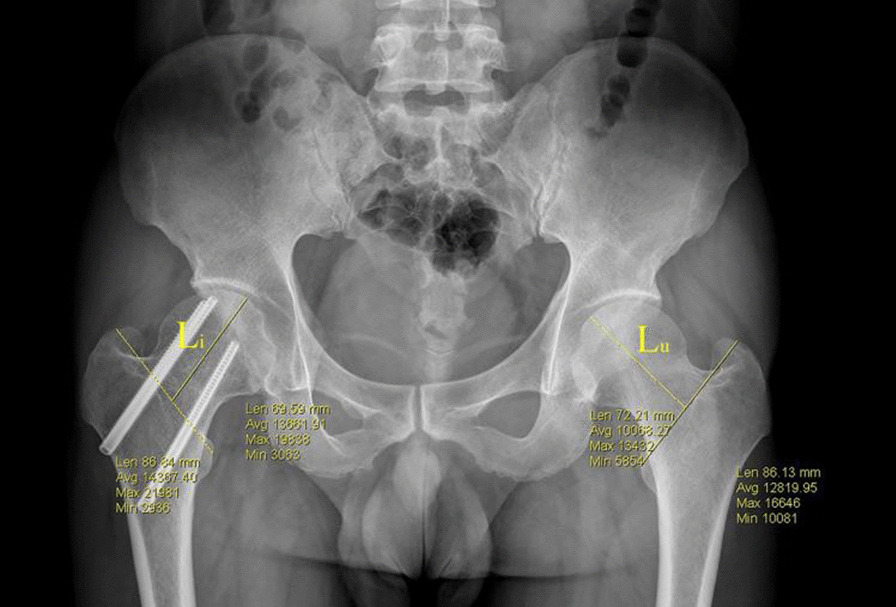
A total of 113 patients including 67 males and 46 females with an average age of 48.4 ± 13.4 years were included. The mean duration of follow-up was 27.1 months (range: 12-51 months). The incidence of nonunion, ONFH, fixation failure, and reoperation was 15.9%, 22.1%, 8.8%, and 24.8%, respectively. The rates of nonunion and reoperation were significantly higher in displaced fractures and unstable fractures. And patients with an unstable fracture had a higher risk of internal fixation failure. The median length of FNS was 2.9 mm (interquartile range: 0.9-6.5 mm, range: 0-17.5 mm). Age was a significant risk factor for FNS.
The screw fixation method with FTCCS provided encouraging clinical results which may be a rational choice for the treatment of fresh FNF. Displaced fractures and unstable fractures were attributed to the higher incidence of complications.
ChiCTR, ChiCTR1800017200. Registered 17 July 2018-Retrospectively registered, http: www.chictr.org.cn/showprojen.aspx?proj=29182 .
对于股骨颈骨折,采用多枚空心加压螺钉内固定是一种可选的治疗方法。最近,全螺纹空心加压螺钉(FTCCS)已被引入用于固定新鲜股骨颈骨折(FNF)。本研究旨在探讨 FTCCS 的疗效。
本研究纳入了 2014 年 2 月 1 日至 2017 年 8 月 31 日期间采用多枚 FTCCS 固定的 FNF 患者。所有患者均至少随访 12 个月。采用骨不连、股骨头坏死(ONFH)、固定失败、再次手术和股骨颈缩短(FNS)来评估疗效。分析了年龄、性别、骨折侧别、骨折移位、骨折稳定性、固定方式和螺钉数量等相关因素。
共纳入 113 例患者,其中男 67 例,女 46 例,平均年龄为 48.4±13.4 岁。平均随访时间为 27.1 个月(12-51 个月)。骨不连、ONFH、固定失败和再次手术的发生率分别为 15.9%、22.1%、8.8%和 24.8%。移位骨折和不稳定骨折的骨不连和再次手术发生率更高。不稳定骨折患者内固定失败的风险更高。FNS 的中位数为 2.9mm(四分位距:0.9-6.5mm,范围:0-17.5mm)。年龄是 FNS 的显著危险因素。
采用 FTCCS 的螺钉固定方法取得了令人鼓舞的临床效果,可能是治疗新鲜 FNF 的合理选择。移位骨折和不稳定骨折与并发症发生率较高相关。
ChiCTR,ChiCTR1800017200。注册于 2018 年 7 月 17 日-回顾性注册,http:www.chictr.org.cn/showprojen.aspx?proj=29182。