
可生物降解聚乳酸/羟基磷灰石复合骨板3D打印参数的优化
Optimization of 3D Printing Parameters of Biodegradable Polylactic Acid/Hydroxyapatite Composite Bone Plates.
作者信息
Aihemaiti Patiguli, Jiang Houfeng, Aiyiti Wurikaixi, Kasimu Ayiguli
机构信息
School of Mechanical Engineering, Xinjiang University, Urumqi 830000, PR China.
出版信息
Int J Bioprint. 2021 Dec 17;8(1):490. doi: 10.18063/ijb.v8i1.490. eCollection 2022.
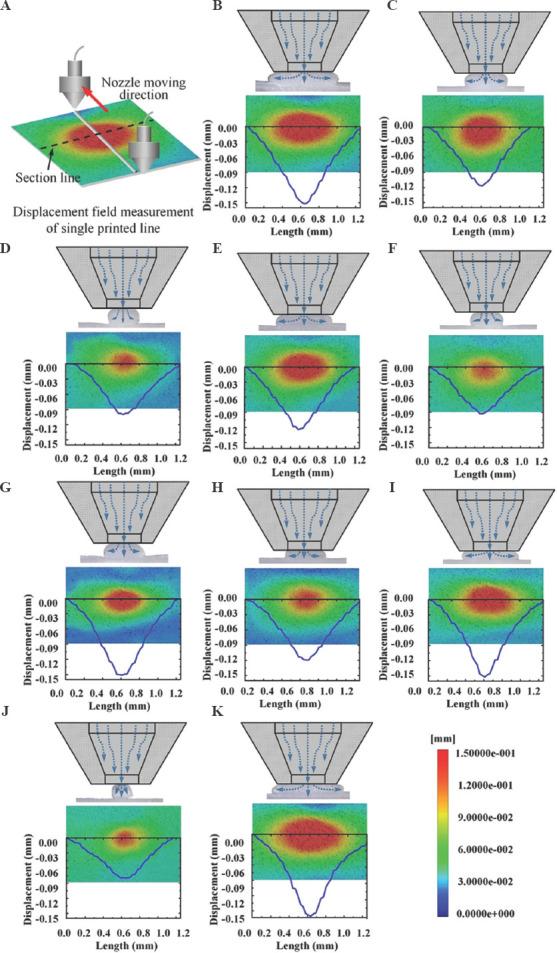
The building parameters of three-dimensional (3D) printed polylactic acid/hydroxyapatite (HA) composite bone plates were optimized by an orthogonal experiment, and the effects of the layer thickness, printing speed, filament feeding speed, and HA content on the bending strengths of the specimens were analyzed. The deformation characteristics of the specimens were studied by 3D full-field strain analysis, and the internal defects of the specimens were analyzed. The effects of different combinations of the process parameters on the cross-sectional shape of the single deposited line, printing temperature, and pressure of the molten material were further analyzed. The results showed that the factors affecting the bending properties were the layer thickness, printing speed, filament feeding speed, and HA content, successively. The optimized process parameters were an HA content of 10%, a layer thickness of 0.1 mm, a printing speed of 30 mm/s, and a filament feeding speed of 0.8 mm/s, and the optimized specimen bending strength was 103.1 ± 5.24 MPa. The deposited line with a flat section shape and width greater than the print spacing helped to reduce the porosity of the specimens. The process parameters that resulted in large high-temperature areas and a high extrusion pressure could better promote material fusion.
通过正交试验对三维(3D)打印聚乳酸/羟基磷灰石(HA)复合骨板的成型参数进行优化,分析层厚、打印速度、送丝速度和HA含量对试样弯曲强度的影响。采用3D全场应变分析研究试样的变形特性,并分析试样内部缺陷。进一步分析工艺参数的不同组合对单条熔敷线截面形状、打印温度和熔料压力的影响。结果表明,影响弯曲性能的因素依次为层厚、打印速度、送丝速度和HA含量。优化后的工艺参数为:HA含量10%、层厚0.1mm、打印速度30mm/s、送丝速度0.8mm/s,优化后试样的弯曲强度为103.1±5.24MPa。截面形状扁平且宽度大于打印间距的熔敷线有助于降低试样的孔隙率。导致高温区域大且挤出压力高的工艺参数能更好地促进材料融合。


 Zotero 插件