Department of Neurosurgery, West China Hospital, Sichuan University, Chengdu, China.
Department of Gynecological Nursing, West China Second University Hospital, West China School of Nursing, Key Laboratory of Birth Defects and Related Diseases of Women and Children (Ministry of Education), Sichuan University, Chengdu, China.
Cell Prolif. 2022 Apr;55(4):e13206. doi: 10.1111/cpr.13206. Epub 2022 Feb 21.
The purpose of this study was to investigate the treatment effect and molecular mechanism of tetrahedral framework nucleic acids (tFNAs), novel self-assembled nucleic acid nanomaterials, in diffuse BMEC injury after SAH.
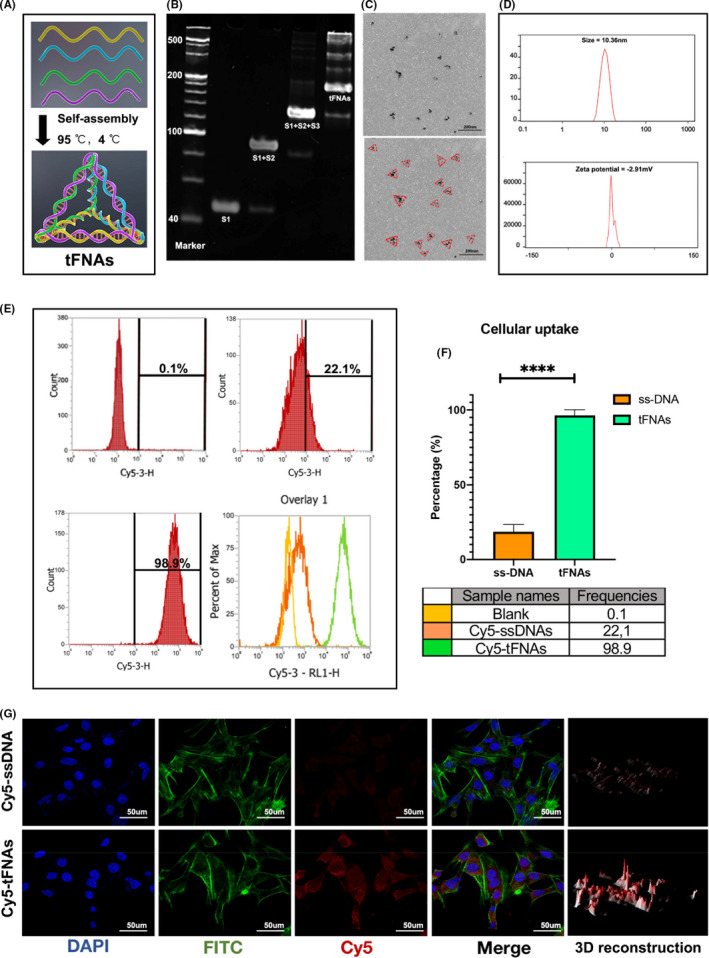
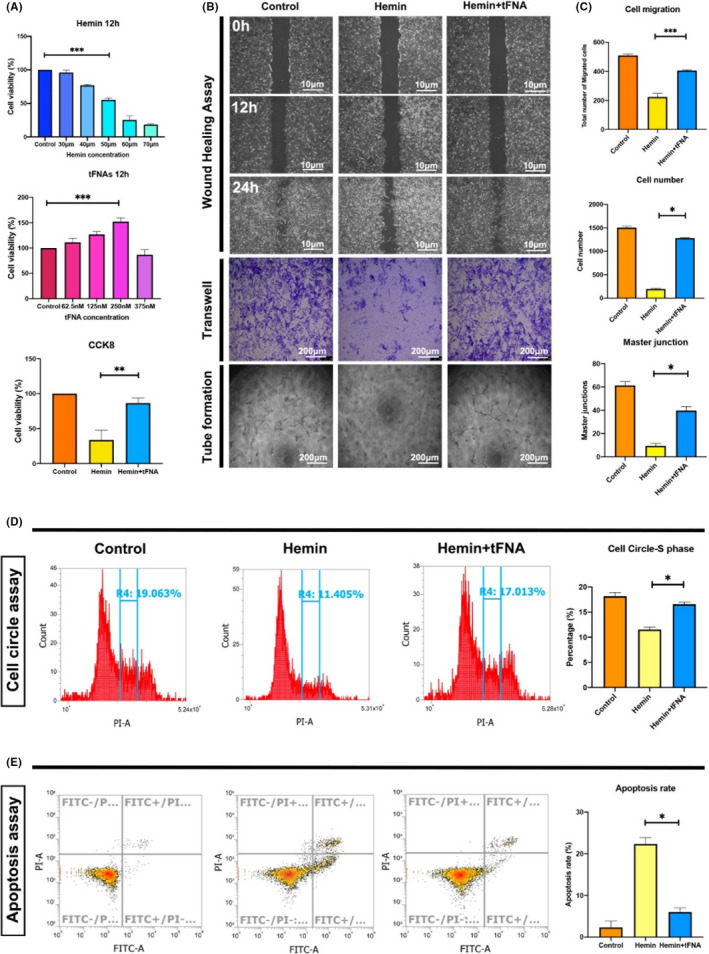
tFNAs were synthesized from four ssDNAs. The effects of tFNAs on SAH-induced diffuse BMEC injury were explored by a cytotoxicity model induced by hemin, a breakdown product of hemoglobin, in vitro and a mouse model of SAH via internal carotid artery puncture in vivo. Cell viability assays, wound healing assays, transwell assays, and tube formation assays were performed to explore cellular function like angiogenesis.
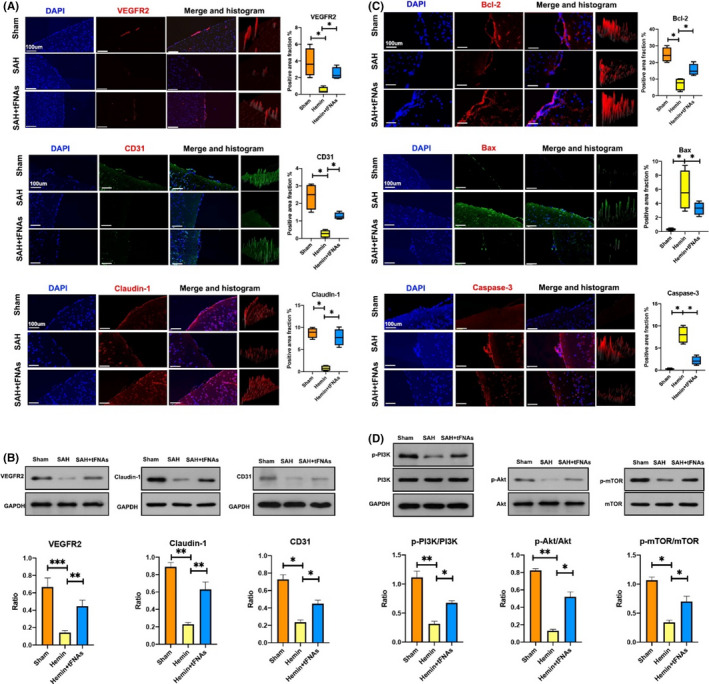
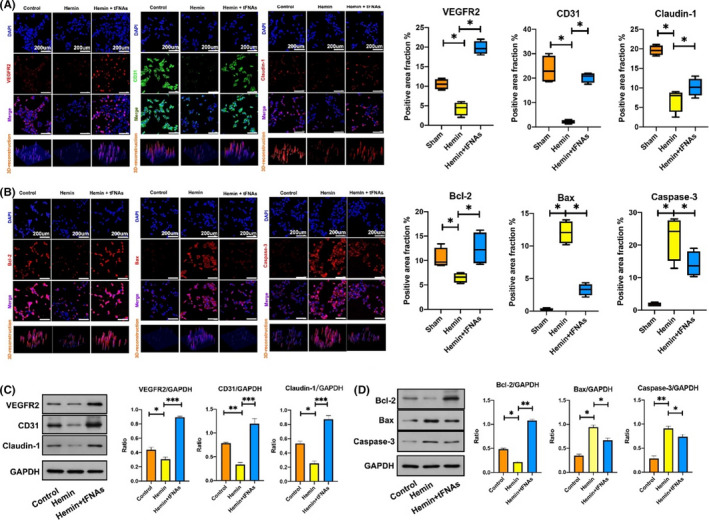
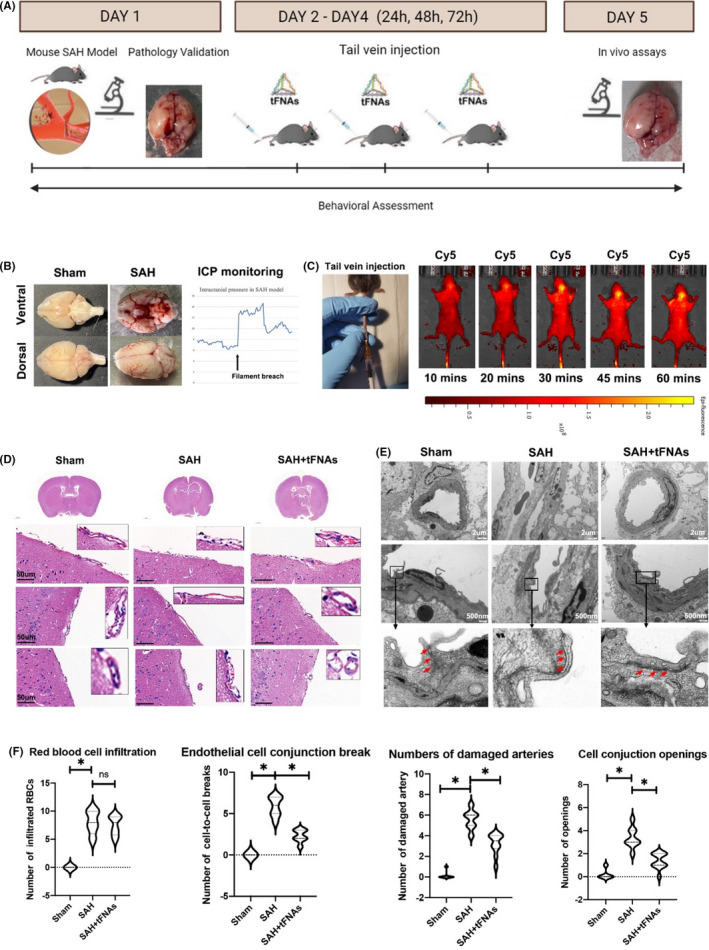
In vitro cellular function assays demonstrated that tFNAs could alleviate hemin-induced injury, promote angiogenesis, and inhibit apoptosis in hemin cytotoxicity model. In vivo study using H&E and TEM results jointly indicated that the tFNAs attenuate the damage caused by SAH in situ, showing restored number of BMECs in the endothelium layer and more tight intercellular connectivity. Histological examination of SAH model animals confirmed the results of the in vitro study, as tFNAs exhibited treatment effects against diffuse BMEC injury in the cerebral microvascular bed.
Our study suggests the potential of tFNAs in ameliorating diffuse injury to BMECs after SAH, which laid theoretical foundation for the further study and use of these nucleic acid nanomaterials for tissue engineering vascularization.
本研究旨在探讨四面体框架核酸(tFNAs)——一种新型自组装核酸纳米材料——在蛛网膜下腔出血(SAH)后弥漫性 BMEC 损伤中的治疗效果和分子机制。
tFNAs 由四条 ssDNA 合成。通过体外血红素(血红蛋白的降解产物)诱导的细胞毒性模型和体内通过颈内动脉穿刺的 SAH 小鼠模型,研究 tFNAs 对 SAH 诱导的弥漫性 BMEC 损伤的影响。进行细胞活力测定、划痕愈合测定、Transwell 测定和管形成测定,以探索血管生成等细胞功能。
体外细胞功能测定表明,tFNAs 可减轻血红素诱导的损伤,促进血红素细胞毒性模型中的血管生成和抑制细胞凋亡。使用 H&E 和 TEM 结果的体内研究共同表明,tFNAs 可减轻原位 SAH 引起的损伤,表现为内皮细胞层中 BMEC 数量的恢复和细胞间连接的更加紧密。对 SAH 模型动物的组织学检查证实了体外研究的结果,因为 tFNAs 对脑微血管床中的弥漫性 BMEC 损伤表现出治疗作用。
本研究表明 tFNAs 具有改善 SAH 后 BMEC 弥漫性损伤的潜力,为进一步研究和使用这些核酸纳米材料进行组织工程血管化奠定了理论基础。