Motta Erick V S, Powell J Elijah, Moran Nancy A
Department of Integrative Biology, University of Texas at Austin, 2506 Speedway, Austin, TX, 78712, USA.
Anim Microbiome. 2022 Feb 22;4(1):16. doi: 10.1186/s42523-022-00165-0.
Similar to many other animals, the honey bee Apis mellifera relies on a beneficial gut microbiota for regulation of immune homeostasis. Honey bees exposed to agrochemicals, such as the herbicide glyphosate or antibiotics, usually exhibit dysbiosis and increased susceptibility to bacterial infection. Considering the relevance of the microbiota-immunity axis for host health, we hypothesized that glyphosate exposure could potentially affect other components of the honey bee physiology, such as the immune system.
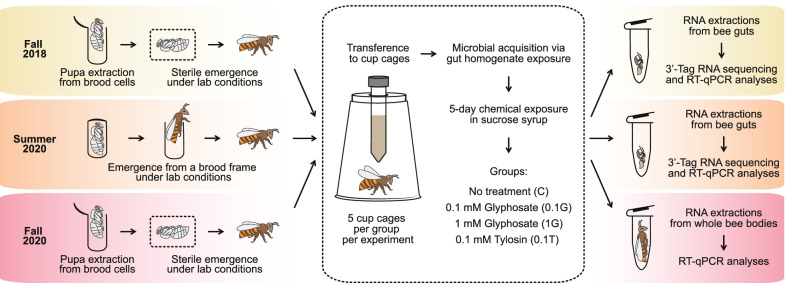
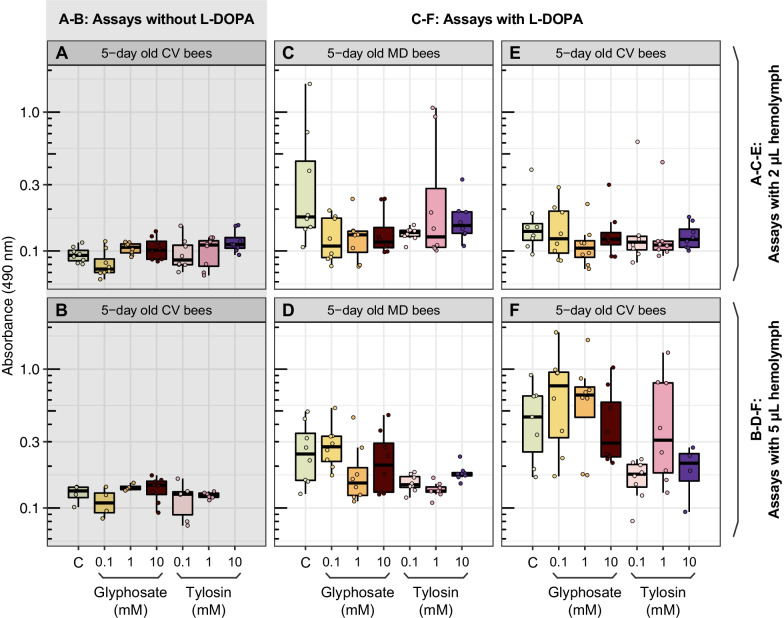
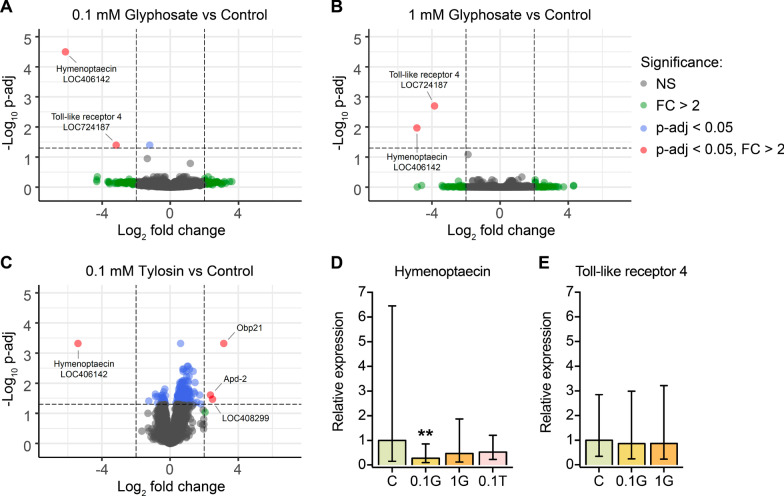
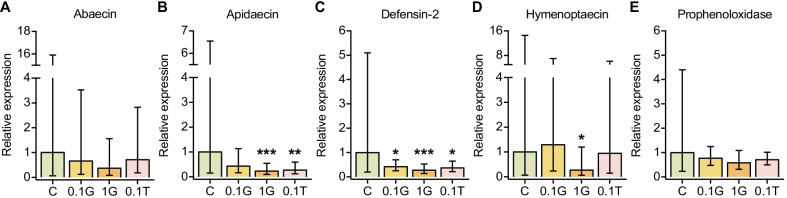
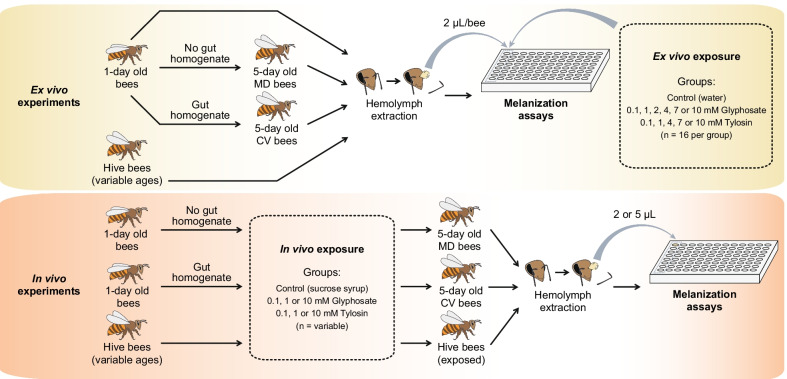
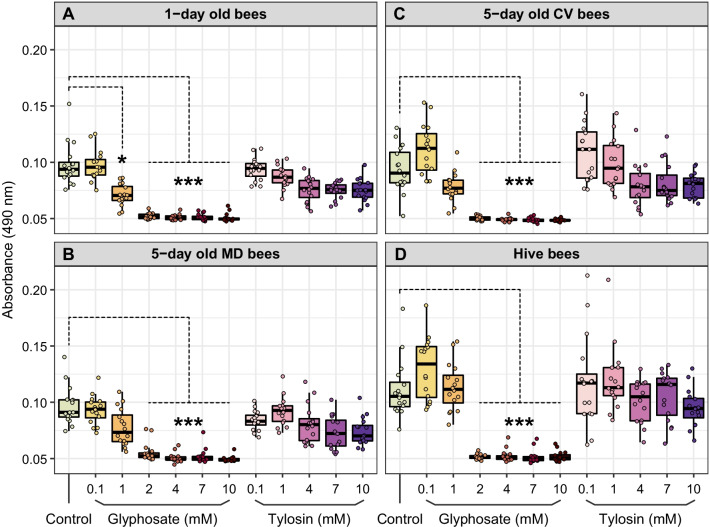
In this study, we investigated whether glyphosate, besides affecting the gut microbiota, could compromise two components of honey bee innate immunity: the expression of genes encoding antimicrobial peptides (humoral immunity) and the melanization pathway (cellular immunity). We also compared the effects of glyphosate on the bee immune system with those of tylosin, an antibiotic commonly used in beekeeping. We found that both glyphosate and tylosin decreased the expression of some antimicrobial peptides, such as apidaecin, defensin and hymenoptaecin, in exposed honey bees, but only glyphosate was able to inhibit melanization in the bee hemolymph.
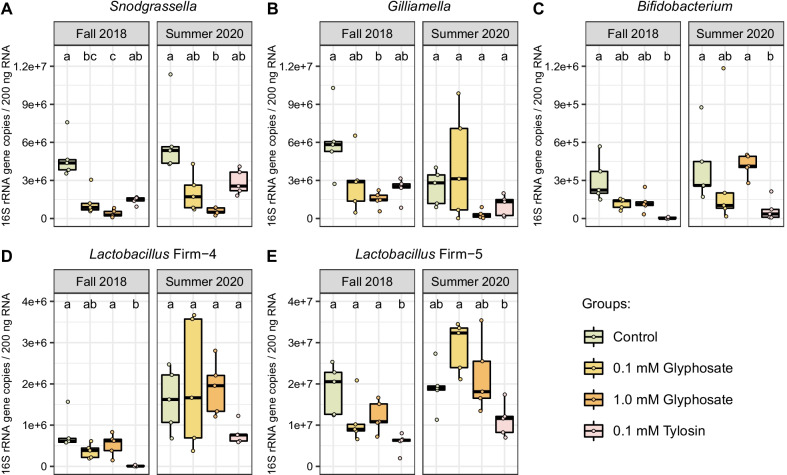
Exposure of honey bees to glyphosate or tylosin can reduce the abundance of beneficial gut bacteria and lead to immune dysregulation.
与许多其他动物类似,蜜蜂(西方蜜蜂)依赖有益的肠道微生物群来调节免疫稳态。接触农用化学品(如除草剂草甘膦)或抗生素的蜜蜂通常会出现微生物群失调,并增加对细菌感染的易感性。考虑到微生物群 - 免疫轴对宿主健康的相关性,我们推测草甘膦暴露可能会潜在地影响蜜蜂生理学的其他组成部分,如免疫系统。
在本研究中,我们调查了草甘膦除了影响肠道微生物群外,是否会损害蜜蜂先天免疫的两个组成部分:编码抗菌肽的基因表达(体液免疫)和黑化途径(细胞免疫)。我们还比较了草甘膦与泰乐菌素(养蜂中常用的一种抗生素)对蜜蜂免疫系统的影响。我们发现,草甘膦和泰乐菌素都会降低暴露蜜蜂中一些抗菌肽(如蜜蜂防御肽、防御素和膜翅目防御素)的表达,但只有草甘膦能够抑制蜜蜂血淋巴中的黑化。
蜜蜂接触草甘膦或泰乐菌素会减少有益肠道细菌的数量,并导致免疫失调。