Rems Lea, Tang Xinru, Zhao Fangwei, Pérez-Conesa Sergio, Testa Ilaria, Delemotte Lucie
KTH Royal Institute of Technology, Dept. Applied Physics, Science for Life Laboratory, Solna, Sweden.
University of Ljubljana, Faculty of Electrical Engineering, Ljubljana, Slovenia.
Elife. 2022 Feb 23;11:e74773. doi: 10.7554/eLife.74773.
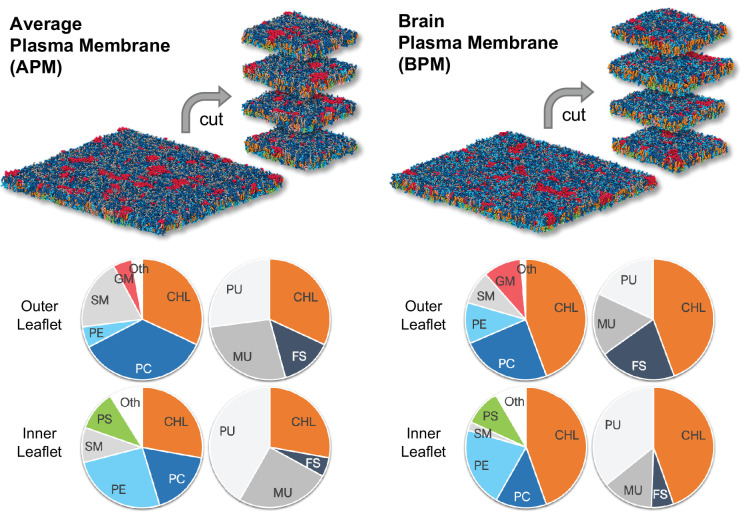
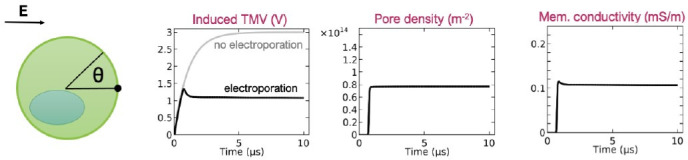
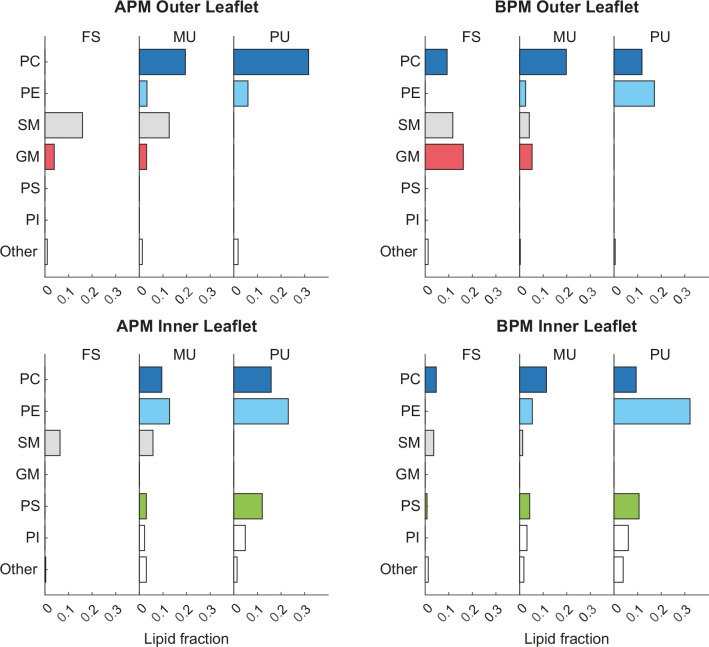
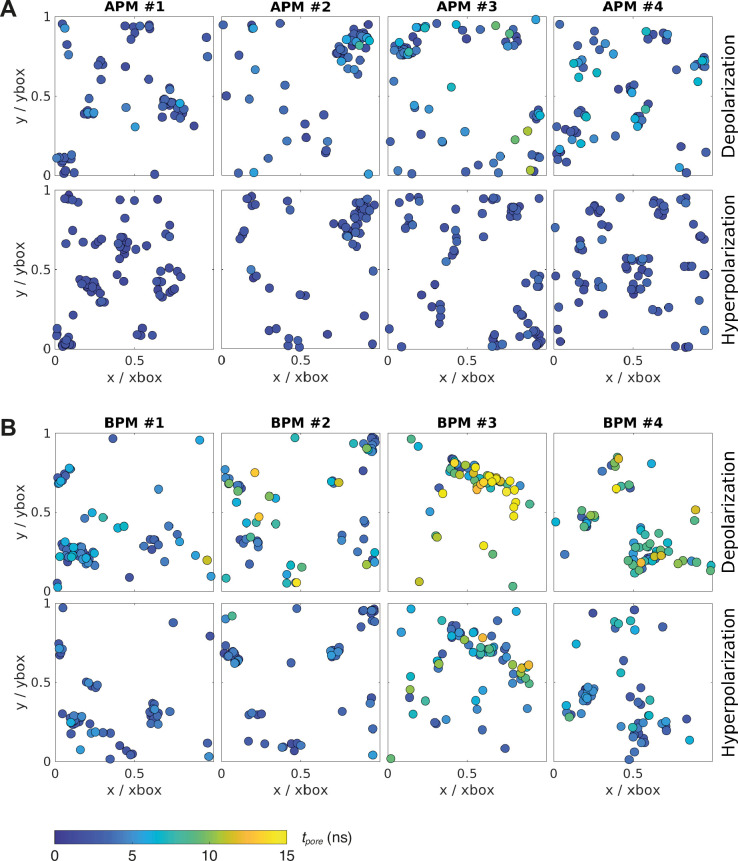
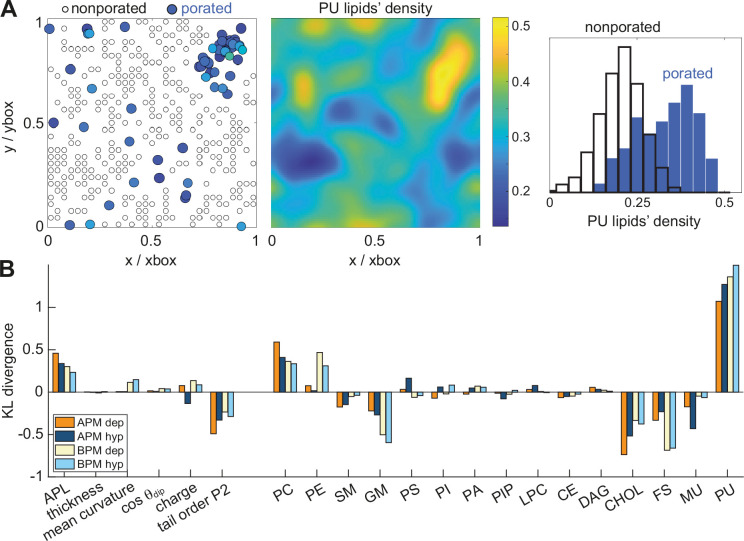
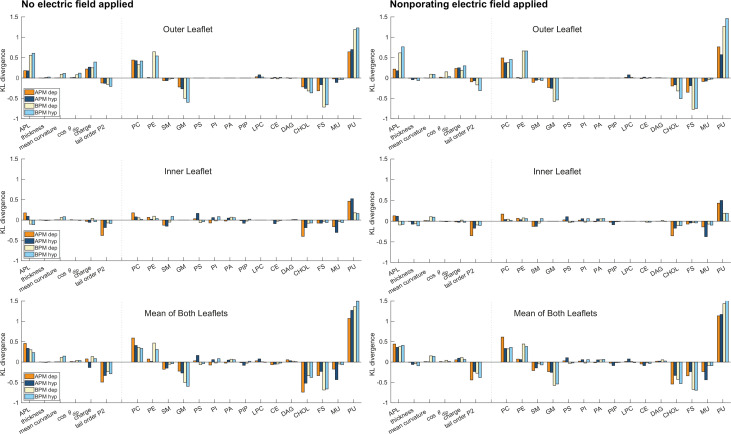
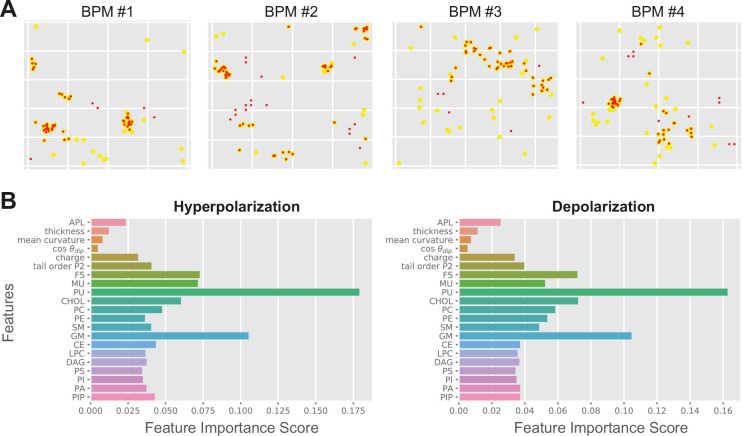
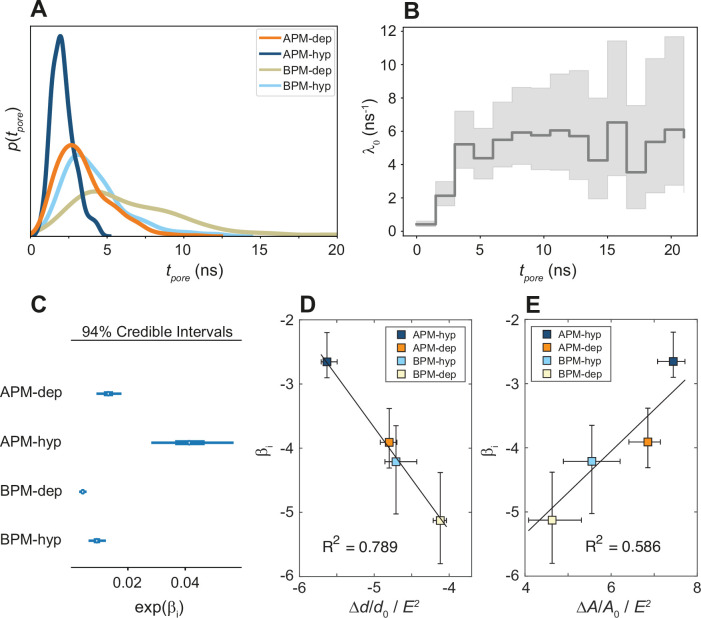
The plasma membrane of a biological cell is a complex assembly of lipids and membrane proteins, which tightly regulate transmembrane transport. When a cell is exposed to strong electric field, the membrane integrity becomes transiently disrupted by formation of transmembrane pores. This phenomenon termed electroporation is already utilized in many rapidly developing applications in medicine including gene therapy, cancer treatment, and treatment of cardiac arrhythmias. However, the molecular mechanisms of electroporation are not yet sufficiently well understood; in particular, it is unclear where exactly pores form in the complex organization of the plasma membrane. In this study, we combine coarse-grained molecular dynamics simulations, machine learning methods, and Bayesian survival analysis to identify how formation of pores depends on the local lipid organization. We show that pores do not form homogeneously across the membrane, but colocalize with domains that have specific features, the most important being high density of polyunsaturated lipids. We further show that knowing the lipid organization is sufficient to reliably predict poration sites with machine learning. Additionally, by analysing poration kinetics with Bayesian survival analysis we show that poration does not depend solely on local lipid arrangement, but also on membrane mechanical properties and the polarity of the electric field. Finally, we discuss how the combination of atomistic and coarse-grained molecular dynamics simulations, machine learning methods, and Bayesian survival analysis can guide the design of future experiments and help us to develop an accurate description of plasma membrane electroporation on the whole-cell level. Achieving this will allow us to shift the optimization of electroporation applications from blind trial-and-error approaches to mechanistic-driven design.
生物细胞的质膜是脂质和膜蛋白的复杂集合体,它严格调控跨膜运输。当细胞暴露于强电场时,跨膜孔的形成会使膜的完整性暂时遭到破坏。这种被称为电穿孔的现象已在医学领域许多快速发展的应用中得到利用,包括基因治疗、癌症治疗和心律失常治疗。然而,电穿孔的分子机制尚未得到充分理解;特别是,在质膜复杂的组织结构中,孔究竟在何处形成尚不清楚。在本研究中,我们结合粗粒度分子动力学模拟、机器学习方法和贝叶斯生存分析,以确定孔的形成如何依赖于局部脂质组织。我们发现,孔并非在整个膜上均匀形成,而是与具有特定特征的区域共定位,其中最重要的特征是多不饱和脂质的高密度。我们进一步表明,了解脂质组织足以通过机器学习可靠地预测穿孔位点。此外,通过用贝叶斯生存分析来分析穿孔动力学,我们发现穿孔不仅取决于局部脂质排列,还取决于膜的机械性能和电场的极性。最后,我们讨论了原子尺度和粗粒度分子动力学模拟、机器学习方法以及贝叶斯生存分析的结合如何能够指导未来实验的设计,并帮助我们在全细胞水平上准确描述质膜电穿孔。实现这一点将使我们能够将电穿孔应用的优化从盲目试错方法转变为机制驱动的设计。